Cyclone – brings strangers, raises brows!

Published in South Express on 6.12.25

Yes, I am referring to the Amur falcons that were carried to Point Caimere by the strong winds during the recent cyclone. This attracted media attention and raised the eyebrows of environmentalists. It is but natural that a cyclone creates havoc. Obviously, Cyclone Ditwah also brought heavy rain and strong winds to the Tamil Nadu and Puducherry coast. After creating havoc in Sri Lanka, it has slowly lost its intensity as it crossed the Indian shore. But there were some unusual developments during this cyclone. Various marine species and birds were washed ashore. Two Amur falcons were blown off course during their migration and landed on the Point Calimere (Kodiakarai) coast. These birds are passage migrants and typically migrate through Gujarat and Maharashtra, but the cyclone forced them to divert from their usual route. Are these isolated cases, and could they be neglected? We need to wait and see whether these falcons will stay in the eastern coast or will return to their regular migration route in the western shore. In general, the Amur Falcon stays in India for a brief time. We do not know how the stranded birds will respond to this change. (Picture courtesy: birds of the Indian Subcontinent by Richard Garmmett & others)

This is just one side of the game. I recently came across a viral video showing an elephant saving a spotted deer stranded in floodwaters caused by the cyclone. In another instance, a leopard climbs onto an elephant to escape the floods. These animal behaviours are abnormal and misleading. Comments have already indicated that these video clips are AI-generated. Why these social media champions pass false and fabricated videos is anyone’s guess. Perhaps, more followers may help them monetise their page. But in the process, they pass on misinformation. Today’s netizens must ensure twice that a viral video is genuine or doctored. Else the misinformation would spread like wildfire. The fallout of such misinformation will be harmful and create disturbance to the behavioural pattern of human beings.

Cyclone is a serious matter. Today, Sri Lanka is under a nationwide state of emergency after Cyclone Ditwah triggered catastrophic flooding across the western provinces, killing at least 366 people and leaving entire neighbourhoods submerged. Residents wade through chest-high waters, stranded without food or shelter as they plead for urgent assistance. It seems to be the worst disaster in the country’s history. According to the Disaster Management Centre, key infrastructure like roads and bridges, power and rail networks are damaged and over a million people are affected. While Cyclone Ditwah has weakened into a deep depression near Tamil Nadu, officials warn that floodwaters may take days to recede. Under such a serious calamity, spreading rumours and misinformation will add more damage than good

Where are the migratory ducks?

Sardar Charan Singh appeared downcast when we boarded his e Rickshaw from the hotel where we stayed. E-Rickshaw No. 66 had not seen many tourists this season. As a senior birding guide with four decades of experience, Charan Singh, the authorised rickshaw driver, is more than just a driver. He shares insights about the woolly-necked stork, shovellers, Garganey, comb ducks, and the collared scops owl. While these uncommon bird species may not be so important to normal tourists, seasoned birders often seek out such unique names while chatting with the rickshaw drivers. To successfully capture images of birds like the Garganey, Gadwall, Red-crested Pochard, Comb Duck, Black Bittern, or Nightjar, birdwatchers often rely on the expertise of guides. Sardar knows exactly where the Nightjars are likely to be perched, ensuring that his customers leave delighted. However, Charan Singh was feeling dissatisfied this time. Due to the El Niño effect, the weather was unusually hot, even for November. Typically, this time of year would attract many migratory birds to Bharatpur. But Charan Singh is determined to show some special birds to the bird lovers. So, even before the birders get disappointed, he seeks permission to go to a nearby area, about a KM away from the national park.  Though initially it appeared a typical guide mindset to market something, a drive with him was not disappointing. The birds seemed to have taken a new abode, it looked like. We had a glimpse of all three species of Cormorants, Spoonbills, Openbills and night herons besides the usual egrets, jacanas, coots and moorhens. Thousands of water birds congregated here for hatching and breeding. It appears that the Rajasthan Govt had decided to convert this place into a heronry. At least this is what a rusted board indicated. When we returned to the Sanctuary and started moving inside, we were a little bit disappointed as there were not many water birds except Painted Storks in thousands. Charan Singh said that the breeding of Painted storks was delayed this year. Some common birds were also missing. Saurus crane was not seen anywhere. We were looking for migrants but were disappointed. Initially, we thought of making two rounds, one in the morning and another in the evening. But, realising that migrants were missing, we packed up and wanted to return. But Charan Singh took us around on unknown routes, trying to help us spot a few uncommon birds. Of course, it helped us to spot a Jackal and a spotted deer. But that is not what we looked for. Though the local guides still pin hope on the arrival of migratory ducks by November end, the fact of delay in migration clearly indicates that the El Niño situation may be intensified into climate change. In old books, there is evidence for counting 500- 600 species; the present-day guides estimate 300 to 400 species during the migratory season. The global hotspot, Keoladeo National Park, which looks deserted and dry, does not appear to have any hope for tomorrow. However, we could record 82 species of birds in 4 hours

Birds are vanishing fast!

Published in South Express on 18.10.25

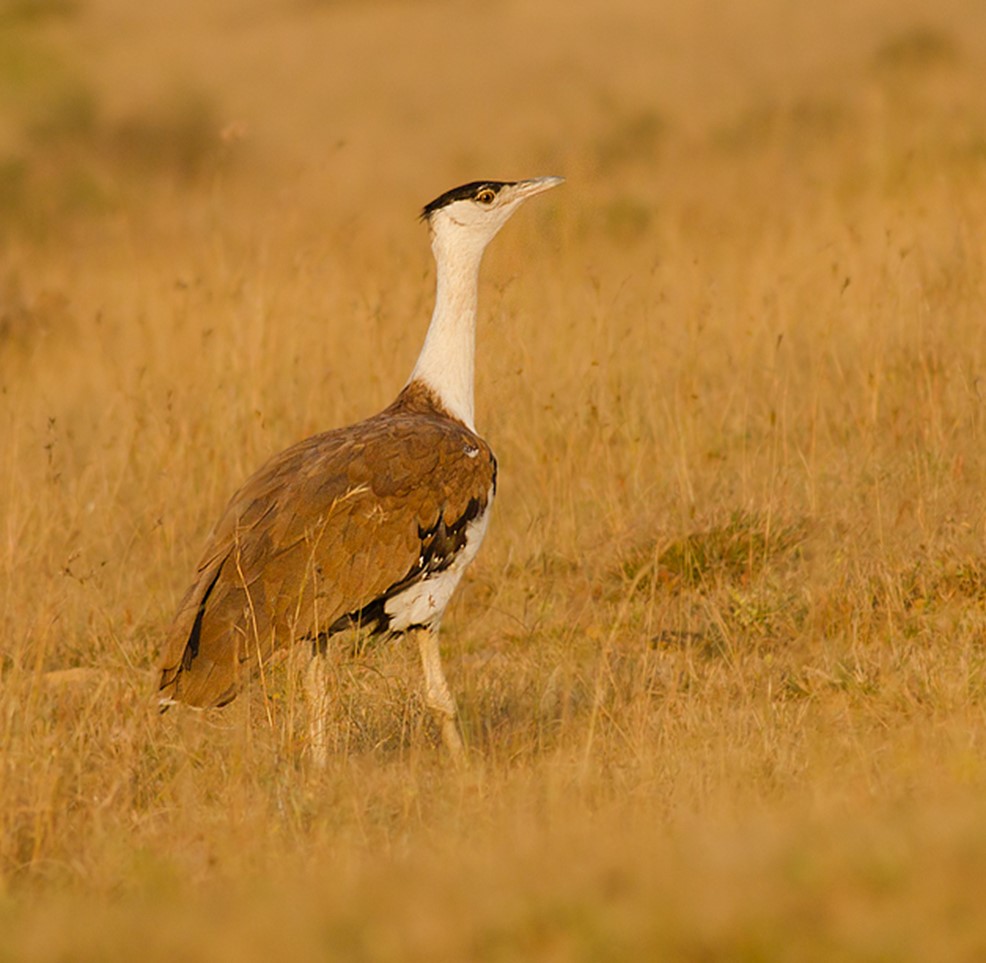
Where No Vultures Fly, a 1951 British film directed by Harry Watt and starring Antony Steel and Dinah Sheridan, was an adventure movie based on the real-life story of the conservator Mervyn Cowie in the jungles of Kenya. Now vultures are rarely seen. I still remember the Gole market in Karol Bagh, which had meat shops in the 90s. I used to wonder at the huge flock of giant-sized vultures waiting for the leftovers. When I used to travel by a scooter from Gole Market towards East Patel Nagar, enjoying the winter weather, I never missed the migratory Swallows gregariously flying low and near me, while waiting at signals. Gone are those days, as flyovers and metro pillars dominate most signals. The Great Indian Bustard (GIB) is the state bird of Rajasthan. Recently, I saw a video clip in social media that tends to promote a whiskey brand called Godawan 173, relating it to the near extinction of GIB. The Rs 500000 per bottle of whiskey is Indian-made (Is it self-reliance?) Yes, you read it correctly. It is Rs 5 lac, coming in a beautiful Jaipur Blue bottle. While the researchers dispute the actual number of birds (not 173, they claim), it is a shame that a whiskey brand is promoting conservation of GIB without even caring to contribute to the conservation

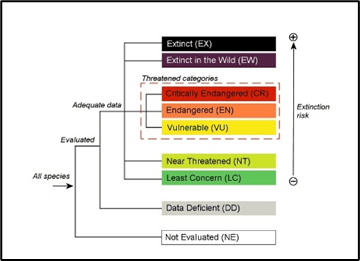
Rapid urbanization has taken its toll. Even the most common sparrow has become uncommon in cities and towns. But still, they are part of rural India. Recently, it was reported that the India Roller, Karnataka’s state bird (neelkanta in Kannada) has been downgraded to the ‘Near Threatened (NT)’ category by the International Union for Conservation of Nature (IUCN) from the earlier category of ‘Least Concern (LC)’. Whenever we go birdwatching in natural areas like lakes and rural scrub jungles, we seek out the Indian Roller, which is often regarded as one of the most beautiful birds. I still remember seeing this bird perched on power lines in large numbers back in the 90s. While travelling by train, it was fascinating to observe this bird, with its distinctive big head and bright blue colour, as it flew by. Unfortunately, it has now become a rarity. In Bangalore, the winter season has nearly begun, but migratory bird species are notably absent. Man-made climate change is believed to be the primary cause of the rapid decline of these rare species. This trend is evident in other regions as well. For instance, in Rajasthan’s Bharatpur National Park, migration has yet to start. Similar situations are occurring in many other places. Activities such as the beautification of water bodies, unregulated ecotourism, and careless development projects are causing us to lose our valuable natural assets. The vanishing of the bird species is a stark reality of how fragile migratory birds have become. Stronger global action is needed to protect rare species before they too vanish.  (Photo courtesy: Karthik, Bangalore, and IUCN website)

“Tree falling: natural or man-made?”

‘Massive tree falls on a car’ the caption is almost a daily affair in any newspaper, especially during the rainy season. Whenever some car is damaged or someone gets severely wounded, the usual mudslinging game starts. The municipality is at fault, according to a resident always. Why does a tree fall? It may be due to various reasons. One excuse is that the tree has become old. Sometimes, termites kill a tree. Mostly the falling of a tree is during a monsoon time. Heavy rains, cyclones, or floods may uproot a tree. While natural disasters are also mostly due to human apathy, this may be excused as acts of God and beyond control.

But man-made tree falls cannot be exempted.  India has been losing its forest cover drastically over the last few years. Urbanization has taken a heavy toll on urban green cover. Bangalore, once lauded as a garden city has shed its tag now. Some signature trees are seen here and there. But the age-old trees are falling victim to the axes of the Municipality which once felt proud of greening the city. About two years back, the Bruhat Bengaluru Mahanagara Palike (BBMP) went for a massive plantation along the roadsides. The same BBMP is cutting huge branches of well-grown trees as they are creating impediments to traffic. In some of the main roads like Palace Road, trees were felled to expand the roads. It is not just Bangalore that has lost its charm. Many cities face the same fate. Deeply concerned residents raise their voices against felling here and there. But authorities do not seem to heed to the feeble voice of the people.

Why do trees fall suddenly? During a recent tree-falling incident, residents insisted that the white topping was the major reason. White topping is a technique used to resurface roads by laying a layer of Portland Cement Concrete (PCC) on top of an existing road. It is claimed that white topping is a long-term solution for strengthening or rehabilitating roads and is often used to address potholes and poor drainage. For instance, on the road from Mekhri Circle to IISC in Bangalore, where white topping was attempted, there was no need to axe the trees, as the purpose was not road expansion, but to strengthen the road. The authorities made a grave mistake. Similarly, in Delhi, the Delhi Tree Preservation Act advocates a penalty for concretization of the tree base. Trees lose their breathing space because of the cementing of the base. Cutting off the taproots or secondary roots while laying underground cables destabilizes trees. Sometimes, nailing the barks to fix the ad boards weakens the trees or tying serial lights to decorate places like banquet halls and malls. We only blame the authorities vehemently but when it comes to civic responsibilities, the common man is also to blame as he lacks civic sense. Road widening for infra projects has become a major excuse for uprooting well-grown trees. The tree falling is primarily a man-made activity but the blame is shifted to natural calamity conveniently. Nature obviously will take its toll if she is not cared for properly. (Courtesy: Representative picture from the internet)

‘Great Indian Bustard’ or ‘Green Energy’

Published in Dwarka Express on 14.4.24

Who cares Great Indian Bustards (GIB)? It is almost extinct and just about 150 birds are left out. Maybe the research community is cared, for submitting papers on the status or a few nature lovers may cry that the bird should exist for posterity. How many of us are thinking of the extinct birds namely white-rumped vulture or lesser adjutant stork or Nicobar pigeon. Forget these unfamiliar names. What about our House Sparrows? Many of us do not even remember how a sparrow looks like. Kids search google to do a school project on sparrow. When that is the case for sparrows, who knows how a GIB looks like? Interestingly, GIB is the state bird of Rajasthan and deserves special status for conservation.

But the story is different in Supreme Court. The court is forced to strike a balance between green energy and bird conservation. And that too, when India is committed to ZERO EMISSION by 2070. Last week, Supreme Court was on the reverse gear to revisit its 2019 decision 2019 decision restricted overhead transmission of solar and other renewable energy in GIB area of 90000 Sq km. This will impede the ambitious renewable energy capacity of 450 gigawatts by 2030. SC in 2019 suggested underground cables in this area but the task of laying underground cables is near impossible.

Now there is a catch 22 situation. Whether to save GIBs or produce green energy? Court now considers the green energy over GIBs. Logically it may sound correct. But as usual the victims are going to be the voiceless creatures.  SC has appointed a 7-member experts committee to determine the core area of GIB. The committee is expected to submit its findings by July 24. While Green energy is the need of the hour, we hope that certain justification will also be available to the Rajasthan’s state bird. (Picture source: Wikipedia online)