
Your latest smartphone you bought in 2022 is having trouble or certain features are not working. It is not smarter anymore. You have visited the service centre at the other end of the city several times but to no avail. Or, the bill handed by the service centre is alarming. Now you are fed up and plan to dump the phone. What is to be done with the condemned smartphone? Either it reaches the landfill or is struck up in a local repair house. It is the same case with the laptop you bought 3 years ago.
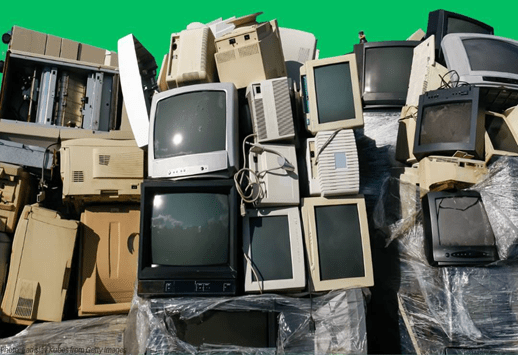
Neither can you boot the system nor is it free from viral attack. If you confront such situations, be cool, you are not the only one on earth. Billions of electronic gadgets are being dumped every day because they are irreparable. Every day a new product is being discovered. Ranging from an electronic microchip or data card to giant digital frameworks and electrical equipment with electronic components consume our space, posing a threat to the environment. Considering the threat to the environment by e-waste, The Environment Protection Act 1986, amended from time to time incorporated the E-Waste (Management Rules) 2016 in India. It also has undergone a lot of changes. The latest E-Waste (Management) Rules 2022 came into force on 1.4.2023. The Central Pollution Control Board monitors the implementation of the rules through its state pollution control boards. The above rules specify the responsibilities of the manufacturer, producer, refurbisher, and recycler. The idea is to ensure that the manufactured electric and electronic goods are properly recycled. 100s of electric and electronic items listed in the rules are meant to be recycled. All said and done, recycling the e-waste does not seem easy. While the speed at which the gadgets become obsolete is alarming, many of us do not discard the used gadgets on one pretext or other. This means that documenting data on the total e-waste itself has become near-impossible. By definition, e-waste is any discarded product with a plug or battery and electronic goods that form health and environmental hazards, containing toxic additives or hazardous substances such as mercury, which can damage the human brain and coordination system. E-waste is the biggest worry all over the world. The world’s generation of electronic waste is rising five times faster than documented e-waste recycling, the UN’s Global E-waste Monitor (GEM) reveals today. In other words, only 20% of the e-waste generated is recycled approximately. The 62 million tonnes of e-waste generated in 2022 would fill 1.55 million 40-tonne trucks, roughly enough to form a bumper-to-bumper line encircling the equator, says the UN Institute for Training and Research. Worldwide, the generation of e-waste is rising by 2.6 million tonnes annually, to reach 82 million tonnes by 2030. This is going to be a tough job to manage the e-waste soon!


 Dr V Selvarajan