PET bottles are not our Pets!

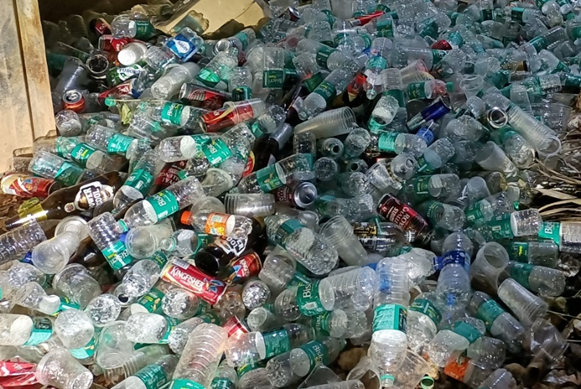
“Do not keep PET bottles on the stage during the event,” instructed an event manager at a national conference on climate change. He was extra cautious and wanted to protect himself from sharp remarks. Whenever an environmental event is planned, the organizers often meet and discuss how to make it eco-friendly. One school chief said that they do not accept anything that is not eco-friendly and even she refused to accept a cup won by students representing some inter-school nature contest. When we pointed out how her school had plastic chairs and tables, she had enough excuses like the plastic tables are used for a long time. Plastic manufacturers and consumers have ready-made excuses. It is indeed hard to completely avoid plastic as of now. Interestingly, though the PET bottles are of single-use, our question is why the Indian Government had not included them under the 21 SUP items that were banned on July 1st, 2022. Is there scope for managing these single-use plastic (SUP) bottles? The abbreviation PET is derived from the chemical name Polyethylene Terephthalate. The bottles made from PET are meant for single use. The manufacturers also claim that the PET bottles are recyclable and assert that 80% of used PET bottles are recycled. After accounting losses during sorting and processing, it is understood that 64% are effectively recycled into usable materials, especially in the textile industry. It is further learnt that 75% of such recycled PET (rPET) account for polyester fibres.   If such a wonderful recycling opportunity is there, why are our water bodies, forests, green belts, and garbage dumps often seen cluttered with PET bottles? Prompt comes the reply. They are not PET bottles. They are thinner than PET material. Most of the PET water bottles are indeed made of thinner materials such as polyethylene (PE), polypropylene (PP), and polystyrene (PS). These plastics are often not recyclable or are difficult to recycle, leading to a significant amount of plastic waste ending up in landfills or polluting our oceans and natural habitats. So, it may be concluded that more studies must be made to explore whether all SUP bottles are recyclable. The urgent need is to identify non-recyclable plastic materials and include them under the SUP-banned items list. If no timely action is taken, the very purpose of the SUP ban will be meaningless
Mining matters in Tamil Nadu!

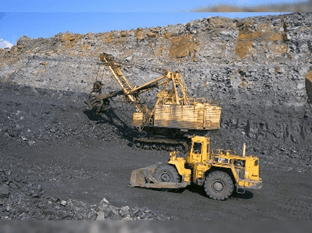
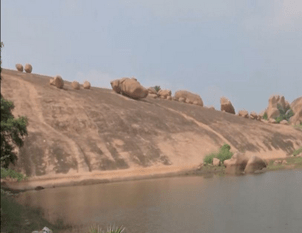
We never learn from our past!  After 4 decades, the Union Carbide instrumental in the Bhopal gas tragedy has been forgotten completely. Similarly, it appears that the Vedanta group will also fall in line one day. Vedanta (Sterlite Industry) of Thoothukudi Tamil Nadu is a name that no one can forget, especially in Tamil Nadu. Sterlite operated the largest copper smelter plant in India, in Thoothukudi from 1998 to 2018. The plant has not been operational since March 2018 and was shut down on 28th May 2018 after protests from locals. The plant also included a refinery, a phosphoric acid plant, and a sulphuric acid plant.  The Supreme Court dismissed a plea to reopen the plant in March 2024. Tamil Nadu opposed Vedanta’s suggestion to form an expert committee to decide on resuming operations, citing evidence of pollution by the plant. The Thoothukudi Copper Smelting plant has been long-opposed by the residents for polluting their environment and causing a range of health problems and was subject to several closures, on grounds of violating environmental norms. Now once again the Vedanta group is in the headlines. The only difference is the product, earlier it was copper and now it is tungsten. The issue is the same. The Union Ministry of Mines had auctioned 8 blocks for mining Tungsten in various parts of the country such as Maharashtra, Karnataka, Andhra Pradesh, and Tamil Nadu. Tungsten is in high demand for defense and other hi-tech industries, which is expected to be a strategic metal. In Tamil Nadu, every political party is against the proposed Tungsten or Wolfrum mining project in Nayakkarpatti Tungsten Block in Madurai district. This block is stated to overlap with the state’s Arittapatti Biodiversity Heritage Site, the first of its kind, spanning 193,215 hectares across the Arittapatti and Meenakshipuram villages in the Madurai district. The Tamil Nadu government declared this area a BHS on November 22, 2022, under the Biological Diversity Act of 2002. The block has already faced public protests and opposition from the Tamil Nadu Government. The project proponents say that the heritage area is just 193 Sq km out of the demarcated project area of 2016 Sq km that houses temples like Panchapandava temple and Jain Cave temple. On Dec 9th, the Tamil Nadu Assembly passed a resolution unanimously, rejecting the project. While we agree that development is essential for economic growth, the environment and ecology cannot be conveniently forgotten.

The area proposed for the mining activity is ecologically sensitive and was declared a biodiversity hotspot. Additionally, the identified mining activity will destroy the great heritage. Now we hope that the Ministry of Mining will give up the project. However, since the mining rights are now vested with the Centre as the Parliament has passed a bill taking over the rights in 2022, we do not know whether a positive decision would be taken to drop the proposed activity. In democracy the good old Latin quote ‘vox populi, vox Dei matters much. Let us wait and watch what is in store for us! (Picture Courtesy: Representative Internet photo)

A hunter turned Birdman of India

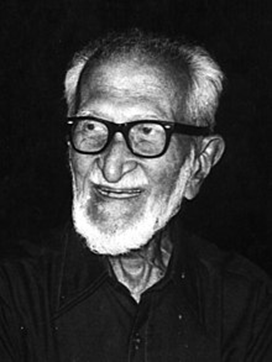
Dr Salim Ali was a bird hunter at a young age. Jim Corbett was a hunter in the beginning. History has many examples to demonstrate that some significant moment in life transforms a man to emerge as a renowned person. On Nov 12th of every year, we remember Dr Salim Moizuddin Abdul Ali, fondly called Birdman of India and this is his 128th birthday. Born in Mumbai, he dedicated his life to birds. Even today, his book is referred to by many for reference. Let me share an interesting moment in my life. Three decades ago, while some of us were roaming in the Sathyamangalam forests, we spotted a bright brown bird in a tall tree and were curious to identify it. Its tail was not long but it resembled a Paradise flycatcher. In those days, we had no other reference books except Dr Salim Ali’s book.

We all started birding as it was an opportunity to visit places and see different habitats. My journey as an environmental activist began with such visits. Today we have hundreds of books like Grimmett, Grewal, etc. Even your smartphone can help. You have a lot of mobile apps like iNatural, eBird, or Google Lens to help. Even the entire team had only one binocular.  We had nothing with us except Dr Ali’s book in which it was mentioned that the female Paradise Flycatcher has a short tail, unlike the male. This incident raised my admiration for Dr Ali multi-fold. Similarly, if one had observed some strange behaviour pattern of a bird, mostly that behaviour might have been mentioned in Salim Ali’s book. ‘The Book of Indian Birds’ by Salim Ali is the first of its kind. I still have the 1996 Salim Ali Centenary edition with me and I do refer to the book even now, though several books have come up with colourful bird photos. The interesting fact about Dr Ali’s book was that he described even unusual behaviours of birds. I wonder how he has documented all the minute details of the birds. He mentions how many eggs a bird lays, and the colour and size of the eggs in his book. He has recorded the calls. He even kept track of the nesting season. About migration also, he mentions where the birds visit and where one cannot find the species. Such amazing details come in handy for the birders. Today, e-bird portal keeps millions of recordings taking advantage of electronic platforms and AI potential. But think of 20th century when electronics were in a rudimentary stage.  If there are thousands of birders in India now, it is because of the efforts and interest created by him. Dr Salim Ali lives in our minds