
“Let’s go boating… let us have a food court… Let us have an open gym!”
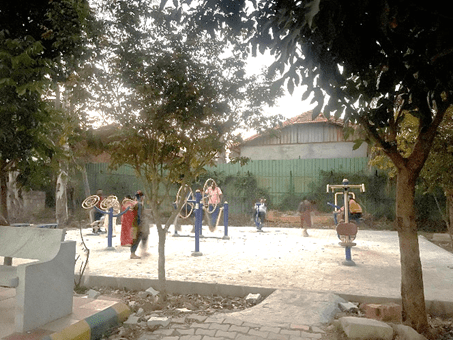
There is no dearth of ideas! The general perception of a layman or user is that the urban water body is an entertainment center. For the local politician, the common man’s demand is the Magna Carta, as he perceives the public as his vote bank. For him, visibility is more important. According to him, all those visible cosmetic creations get converted into votes. In Bangalore, visionaries like Kempe Gowda, while building the city five centuries ago, were very particular about digging tanks and storing water for dry seasons. It is because of their far-sightedness that the city came into existence. The Mysore kings, including Krishnaraja Wodeyar and Tipu Sultan, and German botanist Gustav Hermann Krumbiegel, are responsible for making Bengaluru the “Garden City of India.” Bangalore is also known as lake city. Once more than 1000 lakes were in Bangalore. Now, the number of lakes has shrunk to less than 200. Majestic bus stand, hockey, and football stadia were once scenic lakes. If the situation continues, Bangalore will have only a few lakes, left out. However, the common man is interested in providing a walking track, Gym, and children’s play areas in the left-out lakes. Some demand a gym, some insist on street lights, and thus facilities and conveniences are added to entertain users. Some lakes provide boating facilities. In some lakes, there comes a musical fountain and a toy train. Thus, the lakes turn into an entertainment hub. In a nutshell, such activities are cosmetic and are made to satisfy the vote bank of the politicians. Most of the lakes are encircled by walking tracks. Though tiling or cementing of the walking tracks may help walkers to make a smooth walk, the cementing prevents water percolation and destroys the natural bunding that existed for centuries. Instead of encouraging native trees, exotic trees are planted in the bunds. Artificial sheds and shades are constructed on the bunds in some lakes. But this main focus of the lakes has taken a backseat. The water quality and biodiversity of a lake define its health. These two are indeed interdependent. Parameters like pH, Dissolved oxygen, and turbidity determine the aquatic flora and fauna. The lake ecosystem ensures support for hundreds of microorganisms and aquatic life. Unfortunately, biodiversity conservation is not at all a priority for authorities. Even if some attention is given, it is done just for the namesake. The important function of the lakes is water storage apart from groundwater recharge. Water quality is the first and foremost concern. However untreated sewage is being let into the lakes in many places. De-weeding is not conducted scientifically, which weeds away the valuable water plants and grasslands. Desilting and dredging are not periodically undertaken to clean up sedimentation. If we want to save the existing lakes, awareness must increase among the people, politicians, and bureaucrats about the importance of lake ecosystem conservation.
The lacklustre attitude to lakes will wipe out groundwater and natural rainwater storage in cities.
 Dr V Selvarajan