
Dry leaves are a menace! We are fed up with them when the trees shed their leaves during dry periods!
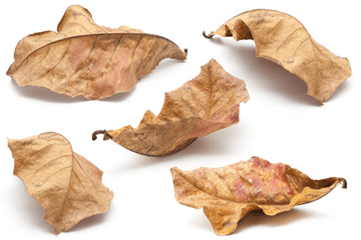
It is quite strange to see many getting disturbed about the dry leaves. More often, we find people burning the fallen leaves because they do not know what to do with them. Of course, the ‘easiest’ way to dispose of waste, garbage, and plastic items seems to be burning. Burning releases the carbon trapped in dry leaves, emitting harmful gases and even worse particulate matter. In India, there are generally two dry seasons during which leaves are shed, namely, just before the monsoon and summer. The most common of these are Neem, Populus, Maple tree, and Peach. Leaves reappear with the arrival of the spring season. This process of shedding leaves is called as abscission or leaf fall.
The trees that shed leaves are called deciduous trees. Before shedding, leaves change colour from green to yellow or red/brown and finally fall. Such fallen leaves are a valuable resource for gardening and landscaping. Dry leaves are a type of organic matter that is high in carbon and low in nitrogen. They are often dry, brittle, and may retain their original structure. Used as mulch, they can retain soil moisture, insulate plants from cold, and suppress weeds. Dry leaves may become compost and contribute to soil health by providing a natural fertilizer. Additionally, they can be used in craft projects and even as insulation for garden sheds. A healthy soil consists of humus, the organic component of soil, primarily composed of decayed plant and animal matter. It includes carbon, nitrogen, and other elements like phosphorus and sulfur.
The best way of managing dry leaves is to leave them where they fell. Perhaps some may be skeptical when I say this. But consider this. There are vast areas of forests where, every season, trees shed leaves, but no one is concerned about that. What happens to these leaves? They decay, decompose, and become the organic component of the soil, namely humus. This enables new trees to get manure from decomposed animal and plant matter. Soil that consists of sand particles only has no nutritional value except that it holds the roots. It is the organic matter that further gets converted into nutrients, such as nitrogen (N), phosphorus (P), and potassium (K), as well as organic compounds and essential elements necessary for plant growth. If someone still wants to treat the dry leaves, they can try composting or using them as mulch. Composting helps improve soil, while mulching provides moisture retention and weed control. In the 90s, I used to trek into the dense evergreen forests (Sholas) of Kodaikanal, which are known for their spongy floor. The floor may hold fallen leaves that could be dated a few thousand years. The leaves mix with rainwater to serve as a blotting paper, giving a cushioning effect while walking. If one experiments digging to trace the rock bottom, it may be about one or two meters deep sometimes. These are all the sources of fertility of the soil. Dry leaves and dead animals are great contributors to soil fertility. They are not a menace. Nature has appointed them to do so. We should not create a barren land, but leave the dry leaves as such.
 Dr V Selvarajan