
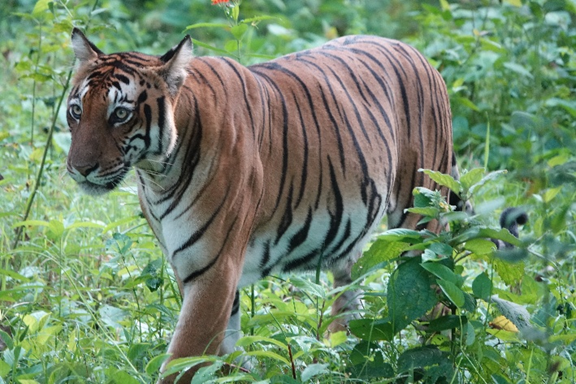
International Tiger Day (also known as Global Tiger Day) is celebrated every year on 29 July to raise awareness about tiger conservation and the urgent need to preserve their natural habitats. The day highlights ongoing threats such as poaching, habitat loss, and human-animal conflict that have led to a sharp decline in the global tiger population. Approximately 5,574 wild tigers remain worldwide, based on the Global Tiger Forum’s 2023 estimate, out of which India proudly houses 3,682 wild tigers. There are tigers in captivity also. India’s tiger population represents 75% of the world’s total, yet they occupy only 18% of the global land available for their survival. In many areas, humans are sharing the land with animals, which increases the likelihood of conflicts between them. While we Indians may take pride in having the largest tiger population, it is concerning that the forest area housing them is diminishing. During a recent workshop for children, I asked the participants if they had ever seen a tiger. Almost all of them nodded in agreement. Most had seen tigers in circuses and zoos, or through pictures and films. While encountering a tiger in its natural habitat is uncommon, it is clear that their population is declining. Ecotourism has brought both excitement and challenges to the world of wildlife. Unfortunately, the surge in crowded safaris and the exuberance of tourists can intrude on the natural privacy that these majestic animals need. During one safari, a tigress was observed moving casually despite the presence of numerous jeeps nearby. The jeep drivers communicated with each other to inform their peers about tiger sightings, leading to a situation where almost 100 jeeps surrounded the animal. Despite the activity around her, the tigress fell asleep, showing no signs of aggression towards the surrounding vehicles and their occupants. As the world celebrates International Tiger Day, it is essential to ensure that these animals are effectively protected. The maximum lifespan of a tiger is 20 years, and if we ignore the conservation efforts for a few year, we are sure to downgrade the animal to the ‘critically endangered’ category. Then tiger “nahi zinda hoga”
 Dr V Selvarajan