BBMP to GBA, is it ‘old wine in a new bottle’?

Published in South Express on 27.9.25

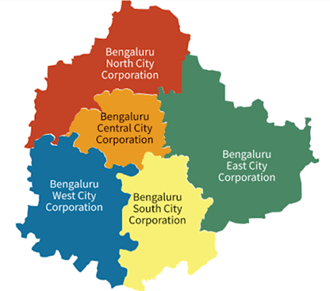
Will the Bruhat Bengaluru Mahanagara Palike (BBMP) perform better after being renamed as the Greater Bengaluru Authority (GBA)? Will the split of BBMP, now renamed as GBA work better? Will the five zones, that have now been formed serve the purpose for which they have been formed? GBA formed in May 2025, became fully operational in September 2025. The Authority has a three-tier governance structure, comprising the Authority at the apex, multiple City Corporations, and Ward Committees. It is hoped that the ward elections kept pending for more than 5 years will soon be held. As of now 350 wards are there in GBA’s jurisdiction. Even in 2015, it was decided to split the erstwhile BBMP into small corporations. The reason tabled by the Govt was that it was difficult to manage the city by a single corporation, given the ever-increasing population of Bangalore. The decision to split the former BBMP into smaller corporations was made in 2015. The government cited the growing population of Bengaluru as the reason, stating that managing the city with a single corporation had become increasingly challenging. In recent years, residents of Bengaluru have noticed a decline in the city’s overall condition, which is evident in areas such as garbage clearance, green cover, infrastructure maintenance, and other related services. Smaller municipalities achieve greater decentralisation, a key hallmark of good governance. There may also be a larger voice for the citizens and greater accountability towards them. In this regard, it may not be out of place to compare Delhi with Bangalore
In Delhi, there was a single corporation called ‘Municipal Corporation of Delhi (MCD)’ up to 2011. In 2012, the MCD was divided into three separate corporations: North, South, and East. The goal was to enhance regional efficiency since the area was twice the size of Bangalore. Delhi is not just another city. As the country’s capital, its governance has some special requirements. The trifurcation has led to economic imbalances, in addition to causing political controversies. In 2022,  Delhi reversed its decision and returned to a single corporation. Though there was a political hue and cry, it was finally decided to merge all three corporations. MCD thus had a rebirth. The citizens supported the remerger of the corporations since they hoped to get good governance, characterized by efficient and transparent service delivery.

In Bangalore, some experts believe that the division was unnecessary and implemented in a manner that will lead to uneven development in the city. Leaving aside politics, an effective decentralization will be in place if the authority is delegated to a dedicated committee. The city has to hold its Municipal elections immediately to ensure effective micro-management. Imbalances between corporations should be eliminated by apex-level policy management by the Greater Bengaluru Authority. The city is facing major problems, namely garbage clearance, potholed roads, overflowing drains, irregular water supply, and ever-rising traffic congestion. If decentralization can’t address these issues, then it will be nothing but old wine in a new bottle

(representative picture from the net)

Are cloudbursts due to climate change?

Published in South Express on 20.9.25

Cloudbursts are unpredictable events that occur within just a few seconds. A cloudburst refers to a sudden and heavy rainfall in a localized area. This phenomenon typically happens when warm, moisture-laden air rapidly rises, often due to local topography such as mountains or convection. This rapid ascent leads to intense condensation, resulting in a significant amount of rainfall over a short period. The recent cloudbursts in Uttarkashi, Uttarakhand and Kishtwar, Jammu and Kashmir have created havoc and taken a heavy toll. The question is whether the cloudbursts are natural or manmade. It is not a new phenomenon. The 2013 cloudburst in Kedarnath is still fresh in memory. In fact, cloudbursts occur especially in mountainous regions like the Himalayas or Western Ghats, not in plains.

Now, the common question is whether the frequent cloudbursts are unnatural. While cloudbursts are natural, the frequency is high due to anthropogenic activities. The atmospheric heat is amplified more than the average warmth. This, in turn, increases the rainfall intensity.  Climate change is affecting the monsoon patterns, resulting in flooding and devastation. Losses due to cloudbursts are huge when constructions are in flood-prone zones. In the name of promoting eco-tourism, ruthless construction and infrastructure development activities take place in the hills. So, climate change is increasing the frequency and intensity of cloudbursts by raising atmospheric moisture levels and destabilizing local weather systems.

In the Himalayas, the mountains are steep and tall. The valleys are narrow and bowl-shaped. Clouds become trapped in this area and cannot move out, leading to a literal explosion. Valleys are often crowded due to mushrooming ecotourism spots. This is the main reason for significant human losses. The visuals on TV channels paint a gloomy picture. We saw many multi-storeyed buildings that collapsed like a house of cards. There were alarming scenes of structures buried under mud and slush. We are all aware that man’s greed is endless. Acting without regard for the ground realities or conveniently ignoring nature’s course will only lead to disaster, if not today, then tomorrow. Immediate Government intervention is necessary to stop congestion in hill areas. Allowing such construction must be minimal, and after a proper study of environmental impacts.

Stay away from wild animals!

Published in South Express on 13.9.25

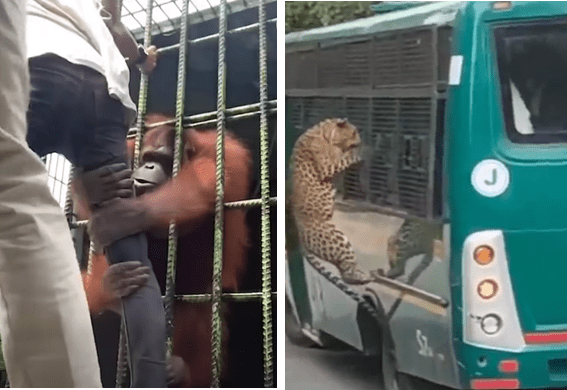
Recently, in the Bannerghatta forest area in Karnataka, a leopard climbed onto a safari jeep that was completely secured with a grill. The leopard attacked a boy inside the jeep by reaching its foreleg through the viewing hole. The incident was captured on video and went viral, as the boy was hospitalized for minor bruises. It’s important to remember that animals often act spontaneously and defensively. As for the safety measures in this case, there does not seem to have been any lapse on the part of the forest department. Even the boy was not at fault. An investigation is probing the cause. Perhaps the animal may have sensed a threat from the tourists and reacted accordingly. As the viewing hole was small, the animal could not enter the jeep.

Ecotourism everywhere has become a menace, disturbing the privacy of the wild animals. The tourists must indeed keep a safe distance from wild animals. More so in the case of stray animals. In one of the safaris, I found myself very close to a tigress. The jeep did not have grills to secure the tourists. In their excitement to capture close-up photographs, tourists often tend to put their heads and hands outside the jeep. Additionally, safari drivers quickly share information with other jeeps via wireless communication. In no minute, all the jeeps parade in the spot to get better scores from their passengers. Tourists comfortably forget that they are disturbing the privacy of the animals. Many instances of attacks by wild animals have been reported from various parts of the country. While wild animals are making headlines, we must also acknowledge the issue of stray dogs.

The behavior of stray animals is often unpredictable. Animals behave instinctively, while humans are rational beings. Neither the animals nor the affected people should be neglected. The grim stories about stray dogs continue. Even as the man-animal conflicts continue, both need a better deal. The revised court order gave some respite for stray dog enthusiasts. But the victims of stray dog attacks are at large. We should not forget that although humans are at the top of the food chain, they cannot live without other living organisms, right from carnivores to street dogs. The Government should take balanced action to protect both human beings and animals, as it is bound by the constitutional obligation to provide a better livelihood to all living beings. 

Lord Ganesha is not for polluting our environment!

‘Ganesh Bappa Maurya!’

The sounds resonate through the sky, capturing the deep faith of the devotees dedicated to the Elephant God. It is a significant moment for them as they bid farewell to their deity. However, we must remember that God does not want us to pollute the soil and water bodies with non-biodegradable substances. From Ahmedabad, an environmental activist says, ‘There is no law enforcement and so no political will to stop POP. While clay is increasingly being used, the progress is slow. Large idols present a significant challenge since they cannot be made from clay. Although immersion ponds are created along riverbanks for this purpose, some people still drop the idols wherever they find it convenient. This situation highlights a troubling reality

In Hyderabad, free clay Ganesha-making camps were organized, and free clay idols were distributed at the Press Club. In Bangalore, people tend to prefer POP idols because they are more affordable than pure clay ones. This allows them to purchase larger POP idols at a reasonable price. Additionally, many believe that POP idols are more visually appealing. Another contributing factor is tradition; older generations often choose to bring home the “fancy” idols they have used in the past. Chennai, which previously had little idol business due to Dravidian culture, is now gradually adopting the idol practices seen in Mumbai. In Chennai, idols were traditionally immersed in the ocean. But no one ic concerned about keeping the ocean clean. They only curse the environmentalists and social workers who want their water bodies to remain cleaner.

POP contains chemicals such as gypsum, sulphur, phosphorus, and magnesium. The dyes used to colour these idols may also contain mercury, cadmium, arsenic, lead, and carbon. Plastic and thermocol accessories are used to decorate these idols. Such materials are not biodegradable, hence are toxic when immersed in water bodies. The revised rules for idol immersion by the Central Pollution Control Board (CPCB) in 2020 stipulate detailed norms for manufacturers, local authorities, and guidelines for idol immersion in water bodies and the sea. As far as possible, low height and eco-friendly idols (made with natural clay, idols stuffed with eco-friendly food materials such as corn, spinach, wheat and vegetable powder), idols decorated with biodegradable, organic colours such as turmeric, chandan and gerua etc., There is no dearth of rules and norms in our country. Though the younger generation is slowly understanding the need to preserve our natural assets, society in general is not mature enough to abide by the law. Both the environment and Lord Ganesha deserve better care and treatment.