
‘Ganesh Bappa Maurya!’
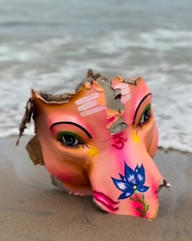
The sounds resonate through the sky, capturing the deep faith of the devotees dedicated to the Elephant God. It is a significant moment for them as they bid farewell to their deity. However, we must remember that God does not want us to pollute the soil and water bodies with non-biodegradable substances. From Ahmedabad, an environmental activist says, ‘There is no law enforcement and so no political will to stop POP. While clay is increasingly being used, the progress is slow. Large idols present a significant challenge since they cannot be made from clay. Although immersion ponds are created along riverbanks for this purpose, some people still drop the idols wherever they find it convenient. This situation highlights a troubling reality
In Hyderabad, free clay Ganesha-making camps were organized, and free clay idols were distributed at the Press Club. In Bangalore, people tend to prefer POP idols because they are more affordable than pure clay ones. This allows them to purchase larger POP idols at a reasonable price. Additionally, many believe that POP idols are more visually appealing. Another contributing factor is tradition; older generations often choose to bring home the “fancy” idols they have used in the past. Chennai, which previously had little idol business due to Dravidian culture, is now gradually adopting the idol practices seen in Mumbai. In Chennai, idols were traditionally immersed in the ocean. But no one ic concerned about keeping the ocean clean. They only curse the environmentalists and social workers who want their water bodies to remain cleaner.
POP contains chemicals such as gypsum, sulphur, phosphorus, and magnesium. The dyes used to colour these idols may also contain mercury, cadmium, arsenic, lead, and carbon. Plastic and thermocol accessories are used to decorate these idols. Such materials are not biodegradable, hence are toxic when immersed in water bodies. The revised rules for idol immersion by the Central Pollution Control Board (CPCB) in 2020 stipulate detailed norms for manufacturers, local authorities, and guidelines for idol immersion in water bodies and the sea. As far as possible, low height and eco-friendly idols (made with natural clay, idols stuffed with eco-friendly food materials such as corn, spinach, wheat and vegetable powder), idols decorated with biodegradable, organic colours such as turmeric, chandan and gerua etc., There is no dearth of rules and norms in our country. Though the younger generation is slowly understanding the need to preserve our natural assets, society in general is not mature enough to abide by the law. Both the environment and Lord Ganesha deserve better care and treatment.
 Dr V Selvarajan