Environment can’t be saved in air-conditioned halls!

Published in South Express on 25.10.25
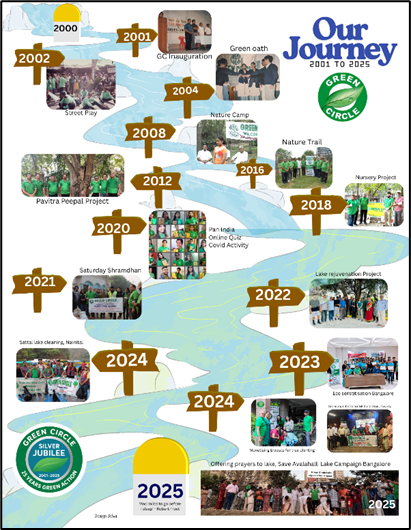
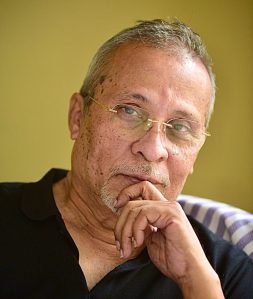
‘Banker by profession, Birder by choice!’ Yes! This is how I want to reflect on my personal journey. I wish to deviate from my usual editorial to share my thoughts on environmental activism and whether I am fit for the passion chosen! During my college education in zoology, I became fascinated by bird migration, a topic that my professor handled amazingly. This inspired me to take up birdwatching as a hobby. Through watching birds, I became motivated to engage in conservation, which ultimately led me to environmental activism. Pursuing a career in banking while doing some justice to conservation was not that easy. I took to environmental activities four decades back to start my first conservation work in Tamil Nadu. After spending nearly four decades as an environmental activist, I am not confident whether I do justice to this title. To truly make a difference for our environment, we need to roll up our sleeves and get to work at the grassroots level! The Rio De Janeiro Earth Summit in the 90s awakened many of us to think globally and act locally.  I put a question, ‘Why should I wait for my retirement?’ Let me start doing something! So, I contemplated forming a social organisation with the support of enlightened friends, and took efforts to get a lake declared as a Bird Sanctuary in Tamil Nadu, where a huge number of birds were present. Then came the jolt that I was transferred to Delhi by my Bank. I took 7 years to find a like-minded team in Delhi to continue my mission. At last, I founded Green Circle in Dwarka, New Delhi, in 2001. I could have chosen to be an independent environmentalist or could have written books on birds and wildlife. However, my inner voice guided me to focus on making small collective efforts, believing that a team can create a more powerful impact than an individual. Green Circle has now traversed 25 years of environmental action, during which I have gained more valuable lessons than I would have through solo efforts. Looking back, I feel proud of what I’ve accomplished. From designing flyers to maintaining accounts and organizing dharnas, rallies, and grassroots climate action programs, namely, plogging and tree planting, I’ve engaged deeply with environmental efforts. I’ve also presented at seminars alongside esteemed scholars, all under the Green Circle banner with a dedicated team. However, I believe our actions must lead to real conservation. Merely holding poster-making competitions or presenting papers in air-conditioned halls won’t combat climate change. Many global conventions face the same fate. As we approach our Silver Jubilee celebration on November 1, 2025, in Dwarka, New Delhi, I urge my fellow Green Circle members to reflect on these thoughts seriously.

Green Circle celebrates Silver Jubilee in Dwarka, New Delhi
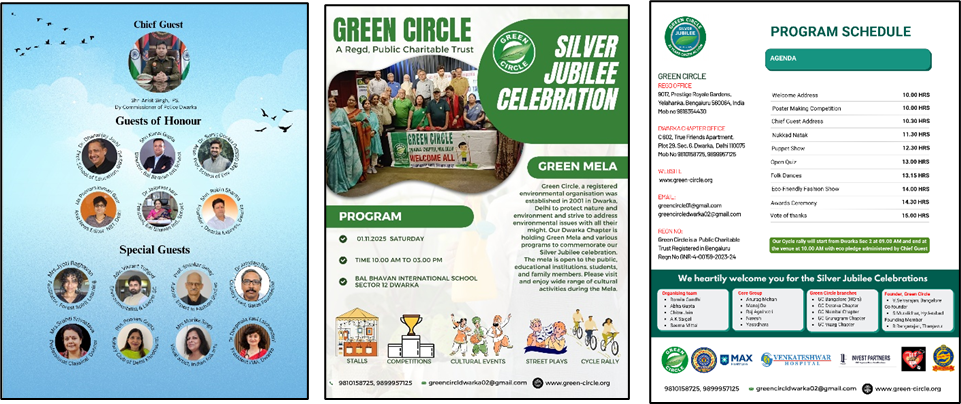
Green Circle, a voluntary environmental organization that began its journey in Dwarka 25 years ago, proudly celebrates its Silver Jubilee Year. Founded with the vision of creating a cleaner, greener, and more sustainable community, Green Circle has grown into one of the most active and respected environmental groups in the region. Over the years, Green Circle has undertaken a wide range of impactful initiatives to promote environmental awareness, community participation, and ecological preservation. Its consistent efforts have inspired citizens, schools, and institutions to join the green movement. To commemorate its Silver Jubilee, Green Circle is organizing a grand community event, “Green Mela 2025” on 1st November 2025 at Bal Bhawan International School, Sector-12, Dwarka. The Chief Guest of the day is Shri Ankit Singh IPS, Deputy Commissioner of Police, Dwarka. The Guests of Honour are: Dr Dhananjay Joshi, Professor GGSIP, Kunal Gupta, Director Bal Bhavan International School, Dr Sumit Dookia- Professor GGSIPU, Poonam K Gaur, Asst. News Editor NBT, Dr Jaspreet Kaur, Principal Bal Bhavan International School, and Robin Sharma, Founder Dwarka Express. Eminent persons like Adv. Vikrant Tongad, Dr.Deepmala, Jyoti Raghavan Dr Arindam Ray, Shristi Srivasthava, Prof. Shankar Sahay, Poonam Gupta and Monika Singh will be the special guests. The event will bring together 50+ schools and over 1000 participants, featuring eco-stalls, painting and poster competitions, street plays, cultural performances, and interactive environmental sessions under the theme “Environment First, Efforts Must.” An estimated 2,500 footfalls are expected.

Birds are vanishing fast!

Published in South Express on 18.10.25

Where No Vultures Fly, a 1951 British film directed by Harry Watt and starring Antony Steel and Dinah Sheridan, was an adventure movie based on the real-life story of the conservator Mervyn Cowie in the jungles of Kenya. Now vultures are rarely seen. I still remember the Gole market in Karol Bagh, which had meat shops in the 90s. I used to wonder at the huge flock of giant-sized vultures waiting for the leftovers. When I used to travel by a scooter from Gole Market towards East Patel Nagar, enjoying the winter weather, I never missed the migratory Swallows gregariously flying low and near me, while waiting at signals. Gone are those days, as flyovers and metro pillars dominate most signals. The Great Indian Bustard (GIB) is the state bird of Rajasthan. Recently, I saw a video clip in social media that tends to promote a whiskey brand called Godawan 173, relating it to the near extinction of GIB. The Rs 500000 per bottle of whiskey is Indian-made (Is it self-reliance?) Yes, you read it correctly. It is Rs 5 lac, coming in a beautiful Jaipur Blue bottle. While the researchers dispute the actual number of birds (not 173, they claim), it is a shame that a whiskey brand is promoting conservation of GIB without even caring to contribute to the conservation

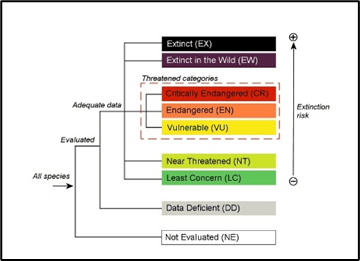
Rapid urbanization has taken its toll. Even the most common sparrow has become uncommon in cities and towns. But still, they are part of rural India. Recently, it was reported that the India Roller, Karnataka’s state bird (neelkanta in Kannada) has been downgraded to the ‘Near Threatened (NT)’ category by the International Union for Conservation of Nature (IUCN) from the earlier category of ‘Least Concern (LC)’. Whenever we go birdwatching in natural areas like lakes and rural scrub jungles, we seek out the Indian Roller, which is often regarded as one of the most beautiful birds. I still remember seeing this bird perched on power lines in large numbers back in the 90s. While travelling by train, it was fascinating to observe this bird, with its distinctive big head and bright blue colour, as it flew by. Unfortunately, it has now become a rarity. In Bangalore, the winter season has nearly begun, but migratory bird species are notably absent. Man-made climate change is believed to be the primary cause of the rapid decline of these rare species. This trend is evident in other regions as well. For instance, in Rajasthan’s Bharatpur National Park, migration has yet to start. Similar situations are occurring in many other places. Activities such as the beautification of water bodies, unregulated ecotourism, and careless development projects are causing us to lose our valuable natural assets. The vanishing of the bird species is a stark reality of how fragile migratory birds have become. Stronger global action is needed to protect rare species before they too vanish.  (Photo courtesy: Karthik, Bangalore, and IUCN website)

Stop torturing trees!

Published in South Express on 11.10.25

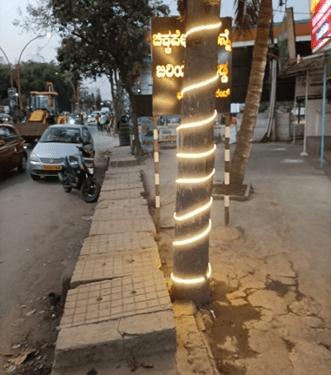
“Save trees! Plant more trees!” These are the most common slogans heard in any town. I wonder whether we truly care about the trees. Day in and day out, we encounter attacks on trees, especially in urban areas. Anurag ventilates his anger in social media when a poster or banner is nailed to a tree. Aswinikumar becomes vociferous about the concretization of the trees, which slowly destabilizes a tree. Kumar says that commercial organisations like hotels or malls seek publicity by using serial lights around trees without realizing that the electrification of a tree heats its bark and destabilizes its growth. But then, if there is no one to question, the bureaucrats and political parties will never bother. Recently, in Tamil Nadu, during a political rally by a film star, the crowd climbed a tree to avoid being crushed in a stampede. In the process, the branch of a tree broke down, wounding all those who climbed up the tree. When such conditions prevail, the tree is the victim. During the monsoon, trees reportedly fall due to heavy rain. But if we look at the fallen tree closely, we will realize that it was due to heavy concretization of the root zone. Nowadays, for every development project, trees are felled or transplanted. The common man has no clue about the number of trees felled or transplanted. We believe the data given by the authorities. Whenever some mass cutting is contemplated, environmentally conscious people raise their voice. If our voice is feeble, then the development project goes further without any checks.

Nails puncture the bark, damaging the inner layers, including the xylem and phloem, which are responsible for transporting water and nutrients throughout the tree. The protective bark of a tree shields the inner living tissue from pathogens and insects. Nailing punctures this defense, creating an entry point for infection. A healthy tree may grow over the wound, but a weak or young tree may not recover. Similarly, artificial lights wrapped around trees as decoration affect the lifecycle of the trees and the animals and birds associated with these trees. light at night can disturb the tree’s natural resting cycle and interfere with its process of photosynthesis. Similarly, covering the roots with concrete suffocates and starves the tree by preventing essential water, air, and nutrients from reaching its root system. Right from nailing to transplanting, trees are subject to untold miseries. India is the country that demonstrated to the world that trees are our brothers and sisters. Chipko movement raised the brows of world leaders who were awestricken at the kind of love shown by Indians. Trees occupy a very important role in our literature. Trees do not speak, yet they breathe life into everything around us. Let us become their voice, their guardians, and their companions in survival. For when a tree falls, a part of humanity falls with it.

Why do people throw garbage in unauthorised areas?

Published in South Express on 4.10.25

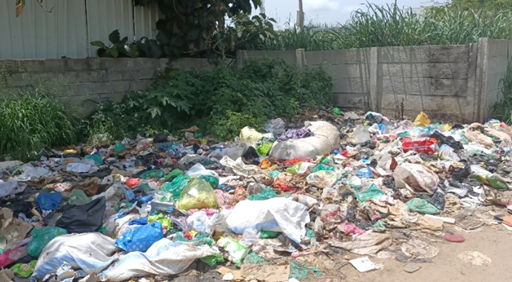
Swachh Bharat Abhiyan or Clean India Mission is a country-wide campaign initiated by the Government of India on 2 October 2014 to eliminate open defecation and improve solid waste management, and to create Open Defecation Free villages. As we enter the 12th year of Swachh Bharat Abhiyan, it is unfortunate that the mission has not evoked much interest. In other words, there is not much visible change in the garbage handling. Almost every municipality is struggling to manage the ever-increasing amount of garbage. I asked a question in a WhatsApp group to understand why individuals tend to throw garbage. From your WhatsApp survey, it seems people are aware of the problem but frustrated. Optimism exists, but anger dominates—showing that citizens want change but don’t feel empowered to make it happen. A few of the views that came up are as under “People lack civic consciousness.” “No dedicated garbage bins, periodically cleared.”“Independent houses have no lifting facility like apartments. “People don’t want to pay for garbage.” “No strict rules or enforcement of penalties.”

One member added, “7 years back, I was staying in Amrutahalli, Bengaluru. It was not so developed during those days. But garbage vans used to come, whistle near every house, and used to pick up garbage. The garbage pickers were responsible during those days.” In fact, this system is in vogue in some municipalities where even publicity songs are played by the collection van. Users put the garbage in the van daily. But all said and done, we still see the eyesore dumps in all cities. Talking about penalties, another member added, “Garbage cess is already imposed. Not sure whether the collection started? Community composting, as done in the HSR layout, is one option that can be thought of. Every street or group of streets can have a dedicated place for community composting for all the wet waste generated in the area.”  

It is a fact that civic sense and responsibility are missing or perhaps not much developed in India. Bengaluru was ranked the fifth dirtiest city in India in the Swachh Survekshan 2025 survey. Of course, this survey was made among the cities with a population above one million. Along with Bengaluru, Ranchi, Chennai, Ludhiana, and Madurai were ranked the top dirtiest cities. Unfortunately, some of the southern states that claim the highest percentage of education level have more unauthorized garbage dumping. Cleanliness is everyone’s responsibility. It is not fair if somebody keeps his home very clean but does not care about the surroundings. Every year, we remember Mahatma Gandhi on Oct 2nd, because not only is it his birthday, but also that the Swachh Bharat Abhiyan was rightly started by the PM on this day.