Torturing animals is suicidal!

Published in South Express on 13.12.25

Disturbing visual! Why don’t admins remove video clips of animals being tortured?

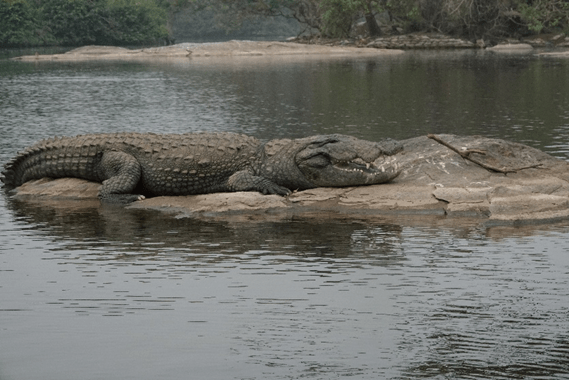
A social media post caught the attention of the admins in a WhatsApp group. Indeed, the clip was quite disturbing! It showed a live crocodile being skinned. A Chinese woman used a knife to remove the top layer of a crocodile’s skin to create a stylish ladies’ handbag. If a weak-hearted person sees the clip, he would even faint. Now the question is whether the post is scary or the action. In another clip, it was explained how shuttlecocks are manufactured using feathers plucked from live pigeons. Shockingly, millions of feathers are taken from these birds while they are still alive. We do not want to debate whether such practices should be banned, but it is a fact that animals are being tortured. Cruelty toward animals for meat, milk, eggs, leather, wool, or silk is a major ethical concern worldwide. We cannot stop killing animals for meat. Any debate for this will end in controversy. But unconfirmed sources quote the world’s non-vegetarians as between 75% and 90%. However, in India, A 2021 survey found that about 39% of Indian adults describe themselves as “vegetarian.”  Slaughterhouses, in general, claim to kill animals at one go and without torture. This is what we understand, and we may be wrong. The animals are part of the food chain, which we acknowledge. Our concern lies with the cruelty inflicted on animals.

What is more painful to hear is that many wild animals and birds are tortured and killed for purposes other than food. Tigers are poached for their nails, teeth and bones. Metal traps used for killing them cause slow and painful death. Monkeys are forced to perform in street shows, kept in chains, and beaten until they obey commands. In traditional practices like “dancing bears” (now banned), bears had their teeth broken and noses pierced with hot rods. Crocodiles are killed brutally or skinned while alive for leather. Snakes are nailed to trees and skinned alive in illegal markets. Snake charmers remove fangs, causing infection and starvation. In Tamil Nadu, for kili josiyam (parrot astrology), flight feathers of rose-ringed parakeets are cut painfully so they cannot fly away and are used to pick fortune cards, even though they are protected under Schedule 4 of the Wildlife Act. It is an offence as per the law. The above are only indicative examples, not exhaustive. Instead of condemning social media posts that show cruelty towards animals, just because they induce palpitations, group members must come forward to become the voice for the voiceless. People who forward such posts must add a sentence cautioning the weak-hearted people to avoid seeing them. In our opinion, bringing such horrible episodes to the limelight will help create awareness and stop cruelty to animals.

Cyclone – brings strangers, raises brows!

Published in South Express on 6.12.25

Yes, I am referring to the Amur falcons that were carried to Point Caimere by the strong winds during the recent cyclone. This attracted media attention and raised the eyebrows of environmentalists. It is but natural that a cyclone creates havoc. Obviously, Cyclone Ditwah also brought heavy rain and strong winds to the Tamil Nadu and Puducherry coast. After creating havoc in Sri Lanka, it has slowly lost its intensity as it crossed the Indian shore. But there were some unusual developments during this cyclone. Various marine species and birds were washed ashore. Two Amur falcons were blown off course during their migration and landed on the Point Calimere (Kodiakarai) coast. These birds are passage migrants and typically migrate through Gujarat and Maharashtra, but the cyclone forced them to divert from their usual route. Are these isolated cases, and could they be neglected? We need to wait and see whether these falcons will stay in the eastern coast or will return to their regular migration route in the western shore. In general, the Amur Falcon stays in India for a brief time. We do not know how the stranded birds will respond to this change. (Picture courtesy: birds of the Indian Subcontinent by Richard Garmmett & others)

This is just one side of the game. I recently came across a viral video showing an elephant saving a spotted deer stranded in floodwaters caused by the cyclone. In another instance, a leopard climbs onto an elephant to escape the floods. These animal behaviours are abnormal and misleading. Comments have already indicated that these video clips are AI-generated. Why these social media champions pass false and fabricated videos is anyone’s guess. Perhaps, more followers may help them monetise their page. But in the process, they pass on misinformation. Today’s netizens must ensure twice that a viral video is genuine or doctored. Else the misinformation would spread like wildfire. The fallout of such misinformation will be harmful and create disturbance to the behavioural pattern of human beings.

Cyclone is a serious matter. Today, Sri Lanka is under a nationwide state of emergency after Cyclone Ditwah triggered catastrophic flooding across the western provinces, killing at least 366 people and leaving entire neighbourhoods submerged. Residents wade through chest-high waters, stranded without food or shelter as they plead for urgent assistance. It seems to be the worst disaster in the country’s history. According to the Disaster Management Centre, key infrastructure like roads and bridges, power and rail networks are damaged and over a million people are affected. While Cyclone Ditwah has weakened into a deep depression near Tamil Nadu, officials warn that floodwaters may take days to recede. Under such a serious calamity, spreading rumours and misinformation will add more damage than good