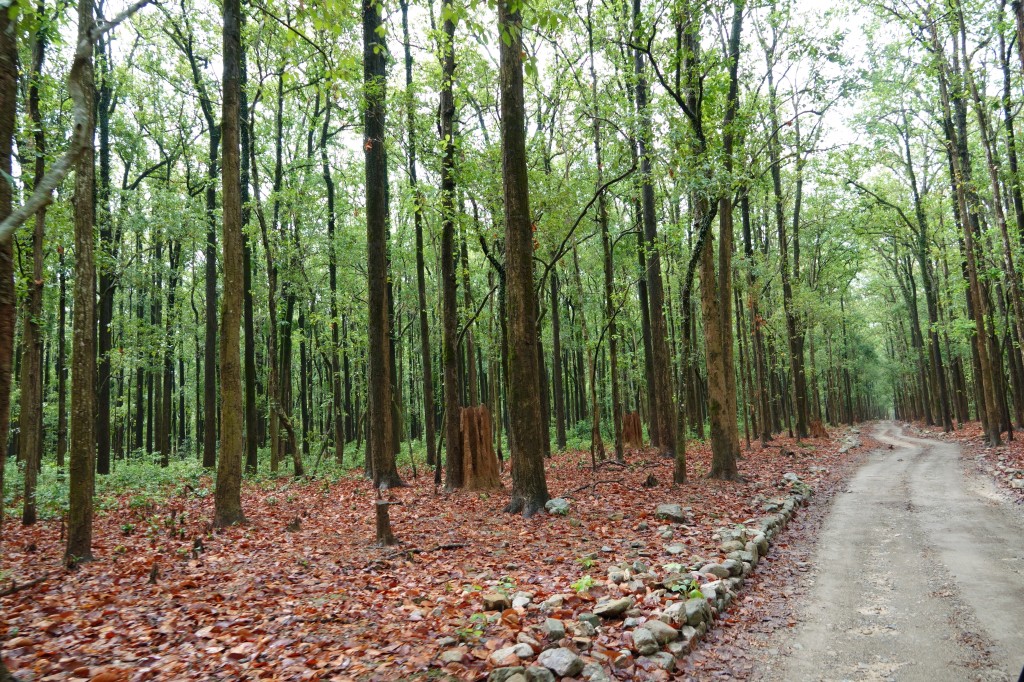
No magic could bring Monsoon!

Published in Dwarka Express on 26.8.23

Monsoon has deceived one and all this year. South Karnataka is worst affected. The month of August had a dry spell. “Rain, Rain don’t go away, Come again daily. We are drying out”, cry the lakes and water bodies. For instance, in Bangalore itself, there are 144 lakes as per records, out of which 46 are inside the city while 98 are in the rural areas of Bangalore. When one comes out of Bangalore airport, a tall statue of Kempe Gowda will welcome him. Truly, he was a visionary and had been instrumental in digging 100s of waterbodies called kere in 16th Century.  He is the architect of modern-day Bangalore which was once upon a time a garden city in its real meaning. Today the silicon city is in doldrums. Unprecedented urbanization and mushrooming of multinational establishments have taken its toll. Octogenarian Bengalurians recollect the bygone era. Gone are the days when Bangalore was a dream city for the dwellers of the other cities. Tall trees were felled despite strong protest by loyal residents. For instance, Sankey area is an eyesore now. Has anyone heard of FIRs against individual marchers who exhibited their concern for saving a lake from encroachment? Perhaps, during British Raj, it all happened. 94 lakes in Bangalore are only hold water to the brim whereas 70% of the lakes are dry, says a media report. In fact, 10% of the 3600+ Karnataka lakes are parched, while more than 1000 lakes are holding less than 30% of their capacity. Interestingly the North Karnataka districts which used to be dry are getting full rains.

At the same time, when we look at the North India, it is reported that there are umpteen cloud bursts, floods and landslides in Himalayan areas especially. Arid areas are getting unprecedented rains. Such natural phenomena are viewed by some environmental researchers as the fall out of man-made climate change, though research needs conclusive evidence. Yet the lakes are the natural reservoirs to hold rainwater. Strom water drains in Bangalore are also known as rajakaluve and are instrumental inter connecting several lakes. Excess water used to flow down in slopes and reach the lake in the down terrains. Unfortunately, unplanned urbanization and alleged corruption in manipulating survey numbers lead to encroachment of buffer zones of rajakaluve which culminate in clogging of inlets and outlets. Ultimately water either dries out due to summer heat or perhaps due to other factors such as eutrophication, weeding and sedimentation. Lakes and waterbodies must be maintained with scientific interventions and corrective measures. These are the real natural rain water reservoirs and can recharge ground water and meet the dry season water demand. Monsoon may fail but man should not fail!

An elephant, a lion and a wolf!

Published in Dwarka Express on 19.8.23

What is the relevance of these three animals we are talking about? Lions day on 10th Aug, Elephant Day on 12th Aug and Wolf Day on 13th Aug. So, all three days were observed in the last week. It is indeed a good gesture that the world observes these days together, to draw the world’s attention to these slowly disappearing wild animals. But how many of us gave serious attention to some ecards which were posted in groups or some painting/quiz competition held by some NGOs/schools and colleges. The reality is such things do not draw our attention, in our busy schedule. When an elephant or a lion does not draw our attention that the poor owl would have attracted any attention. Yes, on Aug 4th, the world also observed International Owl Awareness Day, for sure. The significance of observing these days is obviously to give a caution that these are under threat and may become extinct if conservation measures are not envisaged.

It is not a new phenomenon that the wild animals enter into human territory. Elephants are the glaring victim of human perception that they have entered into the human territory. Three million years ago, lions roamed in Africa and Eurasia freely. Now their homes have shrunk and sometimes they come out of jungles in search of food. While life risk for man cannot be ignored, its also essential that these animals deserve justice. The international days should not be a one-day affair or just to draw a lion or an elephant picture. Conservation efforts are needed, not only to retain their population but also increase them. There is a serious threat to our conservation efforts in the wake of amended Forest Conservation Act. This needs to be revisited and remedial measures must be taken.             

Monkey menace or human irrational behaviour?

Published in Dwarka Express on 12.8.2023

Surprisingly the otherwise lacklustre WhatsApp group of the Residents Welfare Association was brimming with texts and pics. The residents of the apartment were fuming. An annoyed Gupta wrote in the group that monkey population (he means the real monkeys only) is increasing in the apartment and yelled that the Resident welfare association is ineffective since it failed to chase them away. Shyam gave an expert advice, ‘Bring a langur to scare the monkeys away’ while the most vociferous Ramkumar bated for a ‘No Confidence’ against the Management Committee.  ‘PEACE’ (WhatsApp name of a member) wanted stringent action against bees, as they have started building hives near his tenth-floor balcony. ‘DO NOT DISTRUB’ (another WhatsApp warrior) was disturbed by pigeon droppings which could cause 60 diseases. He posted a YouTube link to support his view. ‘LOVE ALL’, another ‘anonymous’ guy posted a photo of a snake in the group and spit venom, forgetting that his mobile nomenclature is LOVE ALL. Encouraged by the post, Sheila was critical of a stray dog roaming in the apartment. ‘NO WORRY’ posted a picture of an exotic love bird, and was worried that the bird had been sitting in the glass window of her apartment and wanted to know whether anyone else had missed the caged bird.

Precisely, residents were not happy to see any animal around except their pets. Perhaps, there’s a logic in all their concerns. When the flat was bought, there was no monkey, no bee and no pigeon. But they comfortably forget that the apartment was either built on a dead lake or a scrub jungle and all monkeys and bees were living there only. It is we who had simply relied on representative pictures, virtual tours or fascinated by serene landscape. Animals either come to an apartment in search of food or because it is its territory. A monkey or bee never ever would have guessed that their own land would be snatched by the human beings arbitrarily. Neither they had strength to fight the powerful Homo Sapien.  Very few social organizations raise their feeble VOICE FOR THE VOICELESS.

Animals have only five senses and can’t think rationally. In an evolutionary pyramid, man is in top and the food chain connects the human beings to all other living organisms. It is not possible to live without this support system which includes all living beings. We must not forget that we have encroached the animals’ space and make a hue and cry when an elephant or a tiger intrudes human colonies. It is essential that the man-animal conflict has to handled judiciously as man is said to be a ‘rational animal’

V Selvarajan

‘Ease of doing business’ will affect our biodiversity!

Published in Dwarka Express on 5.8.23

The new Biological Diversity Amendment bill is now an Act, as the parliament passes the bill on July 25th, 2023. The idea of the bill is to preserve the Biological Diversity and it comes as an amendment to the existing 2002 Act as claimed by the Minister of Environment.  The act inter alia decriminalizes certain offences against biological diversity, which is the bone of contention for environmentalists.

‘Ease of doing business’ is a buzz word in political circles nowadays. Under the garb of making quick clearances, One of the largest and richest diversities hotspots, India is being put to vulnerability, fumes the environmentalists.  The amendment is expected to exempt traditional medicine producers and AYUSH (Ayurveda, Yoga, Unani, Siddha and Homoeopathy) companies for using the codified traditional knowledge to a large extent according to the Ministry of Environment, Forests and Climate Change. This means that the Indian profit-making pharma companies dealing with Indian plants for medicines in (AYUSH) need not share the profit with the Government. Neither they need to seek approval from National Biodiversity Authority.

The minister claimed that that the bill was ‘significant’ in the light of the ongoing global climate crisis, desertification and loss of biological resources. Interestingly, all the three aspects are connected to conservation of natural resources. When the bill was introduced in 2021, experts and MPs wanted the bill to be moved to a joint parliamentary committee as the proposed amendments were favouring industry and were against the ideals of the global Convention on Biological Diversity (CBD)

In fact, the bill ‘simplifies’ the patent application process of the bio products. One cannot forget how India’s Basmati rice lost its patent right long back and how it is no more an Indian product. Like that, many of our biological products would have been stolen, had we not brought the patent right and established the original act in 2002. After 20 years, the Minister is of the opinion that the Act would impede the ease of doing business, if we don’t bring amendments. Environmentalists are not convinced and raised concerns that the local communities will be deprived of benefit sharing with the profit-making businesses in AYUSH segment.

“What is a forest?”, our grandchildren will ask soon!

Year 2100… Imagine a scene like this. A young dad, using AI (Artificial Intelligence) shows a forest scene to his kid. The kid doesn’t understand and so he plans to take her by a supersonic aircraft to Singapore museum to show the tropical rainforests. Perhaps this may become a reality even before 2100. Yes, the last nail has been fixed on the coffin as the Forest Conservation Amendment (FCA) bill is passed in the Parliament during the ongoing monsoon session (July 2023) without discussion. It is another matter that the sessions were washed out due to uproar on Manipur issue. Earlier, the environmental activists took to social media platform against amendments and had gone for a signature campaign. The bone of contention is

  1. 15% of Indian forests will disappear overnight  
  2. Especially the biodiversity hotspots in North East and Uttarakhand would be lost for strategic projects.
  3. Drilling for natural gases and oil can take place in forests
  4. Forests can be replaced by zoos, safaris and eco-tourism
  5. Environmental clearances will be gone for most projects
  6. The forest dwelling tribes can be put to risk

It is feared that 197,159 sq. km of forests (15% of existing forest cover) will lose protection, leaving it open for destruction. Forest lands within 100 kms of the borders are going to be used for strategic linear projects of national importance. Our border areas are extending from Gujrat to north eastern states through Rajasthan, Punjab, Jammu Kashmir, Himachal Pradesh and Sikkim. India is one of the 17 global biodiversity countries which is under tremendous pressure because of this amendment. Blanket permission is given for drilling the affected areas for extraction of natural gas and oil. Wild animals will lose their natural homes. They may be required to live in cages, if the bill is passed. Why animals, even tribals will lose their dwelling places.

The joint parliamentary committee does not include experts. Instead, the bill should have been given to Parliamentary Standing Committee for Science & Technology, Environment and Forests for review. When Public opinion was sought, about 1200 objections and suggestions were made by NGOs and experts. But none of them were considered. Instead, the bill has reached the hands of the JPC without any discussion. With the absolute majority in the houses of parliament, the elected Govt passed the bill and made it a law. So in future, courts will take cognizance of the amendments easily to give clean chit to mega projects even if there is a strong case for saving the forests. So, the amendments have literally snatched the rights of posterity. Days are not far off when a kid will wonder what a jungle is. The future researchers will do their empirical studies on degeneration of the tropical forest during 21st century for their PhDs!

Is Single Use Plastic ban successful?

Published in Dwarka Express on 22.7.23

One year back, from July 1st, 2022, Single Use Plastic (SUP) was banned all over India as per CPCB directive, heeding to the clarion call of the Prime Minister of India. Will banning SUP eliminate plastic? In fact the ban was severely criticized from its inception because the portion of SUP may be 2%-3% of the total plastic waste generated in India, as per industry estimates. So critics were not enthusiastic about the ban. The list of banned items includes -ear buds with plastic sticks, plastic sticks for balloons, plastic flags, candy sticks, ice-cream sticks, plastic plates, cups, glasses, cutlery, wrapping or packing films around sweet boxes, invitation cards, cigarette packets, plastic or PVC banners less than 100 micron, etc. And it was optimistically hoped that the ban would eliminate SUPs at the first instance. Secondly the thinner plastic material will clog the drains and do much harm that the reusable plastics.

But unfortunately, if any researcher makes an analysis of the impact of SUP Ban, he would find the apparent results. Perhaps, his conclusions might be “Ban of SUP has little impact or negligible results” Even today, when we reach any vegetable vendor without a bag, the thin SUP carry bag comes handy for the seller as well as the buyer. Seller uses it because of his helplessness and lack of awareness. The educated buyers, which includes all of us, have the feeling that one polythene bag would not affect environment. Or he may not regret much and would simply blame Government and manufacturers for the failure of the ban. He perhaps is partially true, because the ban on manufacturing is not completely followed or monitored effectively. On the part of the consumer, social consciousness is lacking

All over the world, 300 million tons of plastics are produced and a whooping 91% of the same is not recycled at all. When plastic has become an integral part of our life, it is not possible to completely eliminate the same. Stopping the production will end in loss of employment. It is therefore necessary that SUP at least be completely eliminated from circulation. It is possible with more tab on production ban on one hand and stricter penalties for the usage. In India, it is not that the rules are broken by all. While corporates like Big Basket have started giving compostable bags in lieu of SUP bags. Many medical shops, provision shops and many super markets offer paper bags. But the movement is not gaining momentum. Even now, it is reliably learnt that polythene bags, are available online from leading online companies.

Dr V Selvarajan

Tree felling- Is it unavoidable?

Published in Dwarka Express on 8.7.23

Recently some like-minded activists wanted to try a Miyawaki type forest and planned to plant 5000 trees. But where is space in urban areas? They could not locate the land and therefore approached the local authorities. After a lot of hesitation, they spotted some location and came forward to allot the land for plantation. The activists carried out a soil test for ascertaining suitability and finally they came to the MoU stage. The activists asked for a assurance that these trees will not be felled for any development purpose. When asked the school authorities who owned the land, they refused to give anything in writing. The project has gone to cold storage because there is no guarantee for felling the trees for development activities.  The earth below me seemed to jolt as I read in social media that 2 lacs trees are going to be felled near Nagpur. Massive felling has become the order of the day. We need road, we need power projects, we need dams. We do not deny. But why this crazy felling of trees in pristine jungles. At this rate we are going to lose the natural resources which is the prime asset in India.

Felling a tree or two that comes in the way for a road or a building is understandable though not tolerable. And if under the tree preservation act of the respective states, if the local Govts order planting of 10 saplings in lieu of felling one tree, we can understand that some compensatory plantation is done in order to try some damage control. During Dwarka Expressway construction in Delhi, 1000s of trees were felled and was also told that they were transplanted. It is also an open secret that many of the transplanted trees stand as dead wood as the transplantation drive was just an eyewash. Even if we consider the rough estimate value of one full grown tree is about a Crore rupee, imagine the loss for felling 2 lac trees. Environmental clearances are becoming mockery of the system and proving to be just paper works.

To nurture a tree for 50 years just to make it fall a prey to the evil axe of the wood cutters is not acceptable. In Delhi, I remember that the amazing canopy of the narrow PUSA Road was completely wiped out by using chainsaws, overnight when Metro Rail corporation (DMRC) built the pillars. Tears dropped down when I saw huge trunks felled trees lying for months at Vande Madhram Marg, almost daily. Later on, DMRC learnt the art of felling huge trees and removing them without anyone’s notice overnight. In those days, I used to travel by scooter in PUSA road to my office in Old Rajinder Nagar. In fact, no one could even identify the spot where the trees stood. The magic of disappearing trees was a routine affair for me until the blue line Metro got constructed. The current metro users might not realize the pain that seniors like me might have experienced. Yes, today, the blue line carries millions but the environmental & emotional damage to a boulevard like PUSA cannot be measured.

Similarly, Bangalore, the once garden city is now slowly turning into a garbage city. We need to bring up roads and other infra structure projects. But let the policy makers apply their mind before acting. Let us not denude mother Earth, lest we will not be able to compensate the irreparable losses.

Dr V Selvarajan

Corporate Culture, Caring Nature!

Published in Dwarka Express on 1.7.23

It was an MNC (Multi-National Corporations) in Gurugram, Haryana! After signing in, a guest entered the restroom. The mirror in restroom of an MNC welcomed him with the slogan ‘SAVE ENVIRONMENT’! The tissue dispenser cautioned him, ‘Do you really need a second tissue, just think of ME (Tree),’ (with a tree pic). He showed his hands in the wash bowl. The sensor enabled tap, dispensed water for 7 seconds. He got into snack bar to have a coffee and searched for a disposable paper cup, but instead, there was a reusable mug at coffee dispenser, with an instruction to ‘wash and reuse’. One who was environmentally conscious, would have felt delighted at all such eco-friendly efforts. In fact, MNCs care nature, not just in words, but also in deeds. Simultaneously we also hear someone whispering that the entire building is air-conditioned and huge electricity consumption destroys nature. That is also true.  There are many ways that a corporate could contribute to environment besides planting trees and ideas mentioned above. Dry wet waste segregation is one area which has been always ignored. It is true that the corporates provide separate bins for both non-biodegradable and biodegradable waste. But it is often seen that the users drop waste unmindful of what is written on the bins. One area where the corporates are successful is paperless communications. Internet communication has eliminated the usage of paper and thereby tree felling is remarkably reduced. Digitalization has minimized the use of paper currency. However ever increasing infra development projects are posing challenge to the green cover. It is essential that corporates double up their ecofriendly ways.

Reducing carbon emissions is one of the vital CSR (Corporate Social responsibility) directives in all countries. In terms of the latest Egypt convention, the large institutions in all countries. should have specific and time bound targets to reduce carbon footprints. While providing visual delight in the form of well-maintained greeneries and stylish reception halls with ecofriendly slogans, displays, products made from waste and landscape wall paintings add aesthetic value to the ambience, it is necessary that large institutions like resorts, hotels, MNCs, Gyms, restaurants, professionally managed gated communities etc should make small efforts to keep the environment clean and green. Undoubtedly ambience is essential to pursue the aesthetic lifestyle on the one hand and to promote business on the other. However ecofriendly environment is not always emphasized by all quite a lot of Indian Corporates with a few exceptions. The Corporate and Institutional sector occupies a major percentage in Indian economy. No economy may survive without the care for ecology. Under this backdrop, the pivotal role played by corporates assumes importance in the upkeep of the environment.

Dr V Selvarajan

South Express completes one year!

Published in Dwarka Express on 17.6.23

It is indeed a milestone for South Express, as we have completed the first year and during this period, we have brought out 50 weekly issues. A year ago, the Founder of the Delhi based weekly newspaper, Dwarka Express,  Robin Sharma ji, a social activist himself, called me to expand his paper in South India. Before that, as a Dwarkaite, I used to interact with him about various environmental issues when I was in Dwarka. I accepted this job on honorary basis, and asked him whether we should cover political and socio-cultural contents, he surprised me, saying, “kindly cover environment only as that is the need of the hour. There are many newspapers and channels to cover various other contents and features, but environment gets neglected”. South Express, ever since focused on environment and nature mainly. I must thank all our readers who give a lot of suggestions and feedback. From December 2022, Dwarka Express having a circulation of about 100000 print copies of their weekly paper in Delhi, has gone online besides e-copies. Now South Express also posts all its e-paper contents online and are available at any time to readers.

Kindly read all South Express contents now in online platform of Dwarka Express in the following exclusive page at  https://www.dwarkaexpress.org/category.php?catid=5  or simply go to the website of https://www.dwarkaexpress.org and look for the South Express page. The idea of this page is to encourage all those who are doing good work in the field of environment and nature and showcase the hidden talents. We request readers to share articles, research papers and stories on their experience and experiment. In fact, many people from South India settled in other parts of the country are also showing interest in our paper. We get many success stories on the achievements of budding environmental entrepreneurs also.

Ecology and Environment need attention and concern. Entire world is striving to keep the global temperature at less than 1.5 degree more than the pre industrialization era but it is also a known fact that the temperature has breached the cutoff point and is heralding to 1.7 degree which is formidable. Warning bells have rung already. What are we going to do? Are we going to mend our ways or bend our heads before the nature’s fury. We need to leave green trails, not carbon footprints to posterity.

Please do not hesitate to contact us through the email IDs and numbers given. Your experience may help or inspire someone to resort to an eco-friendly way of living. From Dwarka Express, we thank you once again for your patronage to this mission. Dr V Selvarajan

Solutions to Plastic Pollution!

Published in Dwarka Express on 10.6.23

June 5th 2023. World Environment Day. This year marks the 50th anniversary of World Environment Day, which focuses on solutions to plastic pollution, using the hashtag and slogan #BeatPlasticPollution. The whole world is showing concerns to the plastic trash. Our oceans are filled with plastic bottles and we have been seeing a lot of video clips in social media of turtles and whales being caught into the fisherman’s plastic nets. In the last fifty years, there is incredible growth of plastic. Plastic has become an inevitable and integral part of our lives. Out of 430 million tonnes of plastic produced and used every year worldwide, less than 10 per cent is recycled. It is estimated that 19-23 million tonnes end up in lakes, rivers and seas annually. 

The most dangerous Microplastics (tiny plastic particles up to 5mm in diameter) are going into our stomach along with our food, water and air. It is estimated that each person on the planet consumes more than 50,000 plastic particles per year. Next time when you are proudly holding your paper cup with coffee, please be rest assured that those paper cups have also some micro plastic elements in their making. In July 2022, when the GOI banned the use of single use plastics, we were all breathing easy and thought that the single use plastic will be completely eliminated. But still we have not come out of its grip. Discarded or burnt single-use plastic harms human health and biodiversity and pollutes every ecosystem from mountain tops to the ocean floor. With population edging 142 crores, any action program initiated by Governments seems to be challenging. Ultimately it ends in the blame game and avoidable political skirmishes.

If we seriously think of eliminating Plastics, at the first instance, we must strictly enforce ban on SUP production. If the candy sticks, ear buds, ice cream sticks, balloons, cups, forks, packing materials and carry bags below 120 microns are not available in the market, where is the question of using them? Simultaneously we need to explore alternatives. We also need to help the SUP manufacturers switch over to alternatives. Enacting law is fine, but what is more important is enforcement. Are we ready for that?

Dr V Selvarajan

Sparrows everywhere in Ooty

Published in Dwarka Express on 10.6.23

I had gone mad in Ooty on seeing sparrows. Yes, my purpose to go to Ooty was to see the flower show and engage my lens with colourful flowers. But I went crazy on seeing sparrows. In fact, one can find sparrows anywhere in Ooty. Someone has to make a research study about the secret of the survival of sparrows in Ooty. Whether it is near a street vendor, or near a flower garden, one will not miss this bird. What fascinated was when I saw a male sparrow feeding a juvenile. When I reached the Bazaar to have my grub, a few sparrows were picking up the spilled food particles. I went to boat house, there were hundreds of them. An enraged tourist never bothers to look at this little bird which is the talk of the world. In botanical garden, I was a bit angry that the crazy lot are more concerned about documenting themselves in Selfie mode. I called my sister to show this rare discovery. She quipped, ‘Yes, I remember seeing it in my childhood’. Nilgiris is a paradise for varieties of colourful birds. But I changed my idea to go for birding after looking at these sparrows. I mean, I can compare my happiness to that of a child who got her favourite strawberry ice cream. Almost about 500 birds, I might have counted. When I left Ooty, I had a life time satisfaction as I have done my PhD in sparrows!

Ooty Flower Show – The flipside

Published in Dwarka Express on 3.6.23

The schools are reopening as well as the Ooty flower show is over on 23rd May itself. Ooty is supposed to breathe easy, but my perception was wrong. The crowd for the annual flower show at Ooty is unprecedented with thousands of cars entering the city for a few kilometers in the ghat road were seen queued up, patiently waiting long hours and inching ahead. This ‘procession’ was going on even after a week. Otherwise also, the tourists inflex often exceed tolerance limits during summer holidays. Whoever visits Botanical Garden or Boat house will have to wait in long queues. It is the same case in Doddabetta peak or Dolphin nose in Ooty. The local authorities are struggling to regulate the traffic on the one hand and clear the trash generated due to heavy rush.

Coming to the Flower Show at Botanical Garden, it’s really a worth seeing annual event with its 125th edition of the flower show which started on 19th May 2023 and ended on 23rd May 2023. About 5.5 lac flower plants in addition to 35000 potted plants were lined up. For a serious botanist, who wants to study the varieties, one day is not enough. There were exotic species too with almost every country was represented. Its quite natural for anyone to think that the mad rush would be over on the last date of the show. But when I visited the Botanical Garden on 30th May 23, my speculation that I can see the flowers in a relaxed manner proved wrong. The rush didn’t come down. More than flowers what fascinated me was the huge count of sparrows inside the garden and elsewhere in the town. This gave the bird lovers a solace that there is still hope for the sparrow race. At least I might have clicked 1000 snaps. Forgetting the purpose of my visit, I was excited watching a male sparrow feeding the juvenile.

When I reached the boat house for a boat ride, it is a huge waiting. I pretty well knew that the lake water is contaminated and is nothing more than a drainage. But the irrational tourists will never bother all these. Its sure that the Ooty lake is not what it was 50 years ago. The locals want revenue and they can only make hay while the sun shines, literally. The tourism Industry cannot give up their greed to fill up their cash boxes. A few environmentalists lament out of frustration as they feel that the city is losing its charm as a hill station. I was shocked to see a well-built Nilgiri gaur (bison), just on the road. I remember peeping into Sholas 30 years back to have the darshan of bison. They are just available like stray cows now. We need to give a second thought to the annual ritual of parading the flowers just to attract tourists to Ooty.