Stay away from wild animals!

Published in South Express on 13.9.25

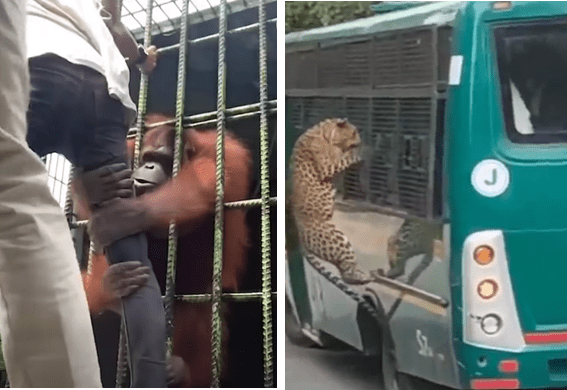
Recently, in the Bannerghatta forest area in Karnataka, a leopard climbed onto a safari jeep that was completely secured with a grill. The leopard attacked a boy inside the jeep by reaching its foreleg through the viewing hole. The incident was captured on video and went viral, as the boy was hospitalized for minor bruises. It’s important to remember that animals often act spontaneously and defensively. As for the safety measures in this case, there does not seem to have been any lapse on the part of the forest department. Even the boy was not at fault. An investigation is probing the cause. Perhaps the animal may have sensed a threat from the tourists and reacted accordingly. As the viewing hole was small, the animal could not enter the jeep.

Ecotourism everywhere has become a menace, disturbing the privacy of the wild animals. The tourists must indeed keep a safe distance from wild animals. More so in the case of stray animals. In one of the safaris, I found myself very close to a tigress. The jeep did not have grills to secure the tourists. In their excitement to capture close-up photographs, tourists often tend to put their heads and hands outside the jeep. Additionally, safari drivers quickly share information with other jeeps via wireless communication. In no minute, all the jeeps parade in the spot to get better scores from their passengers. Tourists comfortably forget that they are disturbing the privacy of the animals. Many instances of attacks by wild animals have been reported from various parts of the country. While wild animals are making headlines, we must also acknowledge the issue of stray dogs.

The behavior of stray animals is often unpredictable. Animals behave instinctively, while humans are rational beings. Neither the animals nor the affected people should be neglected. The grim stories about stray dogs continue. Even as the man-animal conflicts continue, both need a better deal. The revised court order gave some respite for stray dog enthusiasts. But the victims of stray dog attacks are at large. We should not forget that although humans are at the top of the food chain, they cannot live without other living organisms, right from carnivores to street dogs. The Government should take balanced action to protect both human beings and animals, as it is bound by the constitutional obligation to provide a better livelihood to all living beings. 

Lord Ganesha is not for polluting our environment!

‘Ganesh Bappa Maurya!’

The sounds resonate through the sky, capturing the deep faith of the devotees dedicated to the Elephant God. It is a significant moment for them as they bid farewell to their deity. However, we must remember that God does not want us to pollute the soil and water bodies with non-biodegradable substances. From Ahmedabad, an environmental activist says, ‘There is no law enforcement and so no political will to stop POP. While clay is increasingly being used, the progress is slow. Large idols present a significant challenge since they cannot be made from clay. Although immersion ponds are created along riverbanks for this purpose, some people still drop the idols wherever they find it convenient. This situation highlights a troubling reality

In Hyderabad, free clay Ganesha-making camps were organized, and free clay idols were distributed at the Press Club. In Bangalore, people tend to prefer POP idols because they are more affordable than pure clay ones. This allows them to purchase larger POP idols at a reasonable price. Additionally, many believe that POP idols are more visually appealing. Another contributing factor is tradition; older generations often choose to bring home the “fancy” idols they have used in the past. Chennai, which previously had little idol business due to Dravidian culture, is now gradually adopting the idol practices seen in Mumbai. In Chennai, idols were traditionally immersed in the ocean. But no one ic concerned about keeping the ocean clean. They only curse the environmentalists and social workers who want their water bodies to remain cleaner.

POP contains chemicals such as gypsum, sulphur, phosphorus, and magnesium. The dyes used to colour these idols may also contain mercury, cadmium, arsenic, lead, and carbon. Plastic and thermocol accessories are used to decorate these idols. Such materials are not biodegradable, hence are toxic when immersed in water bodies. The revised rules for idol immersion by the Central Pollution Control Board (CPCB) in 2020 stipulate detailed norms for manufacturers, local authorities, and guidelines for idol immersion in water bodies and the sea. As far as possible, low height and eco-friendly idols (made with natural clay, idols stuffed with eco-friendly food materials such as corn, spinach, wheat and vegetable powder), idols decorated with biodegradable, organic colours such as turmeric, chandan and gerua etc., There is no dearth of rules and norms in our country. Though the younger generation is slowly understanding the need to preserve our natural assets, society in general is not mature enough to abide by the law. Both the environment and Lord Ganesha deserve better care and treatment.

Dogs have 5 senses; humans have more!

The stray dog is in the news of late! It has become a controversial subject. A heated debate is currently shaking the social media and the media industry. When an animal is in the news, it goes without saying that Menaka Gandhi or PETA will also be in the news. Whether in Delhi, Tamil Nadu, Karnataka, or Maharashtra, incidents of dogs attacking kids or the elderly have become common. Why are such incidents increasing as days pass on? Who is to blame? On August 11, the Supreme Court issued Suo Motu orders regarding incidents involving stray dogs in Delhi. The court directed the Municipal Corporation of Delhi to relocate these dogs to shelters and pounds within eight weeks of the order. Following this, a three-judge bench reserved its decision on the pleas related to the directive on August 14, amid public outrage over the situation. The court is concerned that the precious human life is in jeopardy. Parents of innocent children who fell victim to the outrage of dog bites and the civil society want effective action. On the contrary, the animal activists are interested in protecting the voiceless animals. The dilemma is to find an effective solution and deliver justice to all. Is providing shelter a feasible solution for the entire country? It appears that even courts do not consider the questions of feasibility and pass orders on knee-jerk reactions. The stray dog enthusiasts also do not seem to take cognizance of the deaths of the kids all over the country.

In the ecological pyramid, humans occupy the top position. Decisions made by man impact flora, fauna, and natural resources. Certainly, stray dogs cannot decide to do birth control, sterilization, or any preventive measures within their limited scope of the 5 senses. It is the rationale of man that can change the situation.  According to the Animal Husbandry Department’s report of November 2023, there are approximately 1.53 crore (15.3 million) stray dogs roaming the streets in India. As Menaka Gandhi says, it is not feasible to house all stray dogs in pounds. However, nothing prevents policymakers from planning a multipronged approach that encompasses all strategies, such as sterilization, isolating ferocious dogs, awareness creation, encouraging private dog homes, etc. The local municipalities must take prompt action. Feeding the stray dogs is not a sin. It is imperative for dog feeders to assume the added responsibility of identifying dogs exhibiting undesirable behaviour and to notify the appropriate authorities for their rehabilitation. Pet owners often invest significant amounts of money in their pet dogs; therefore, it is worth considering why they do not adopt at least one stray dog. It is hoped that sound judgment will prevail among individuals within society.

STOP PRESS: On Aug 22nd, SC has ruled that its Aug 11th Order is paused and a more balanced & pragmatic verdict is given. Pleased to inform that our editorial suggestions are almost similar to the verdict

Plastic hospitals! Plastic medical fraternity!

‘All that glitters is not gold, but plastic’

I am confident that my new proverb sounds clear and loud. I have the right to mention this, as I was discharged from the ICU. My two-night nightmare was not about the tubes that connected me to the digital screens. At least once in a lifetime, any human being, like me, is subject to the medical ordeals invariably followed by the insurance tortures, and I am not an exception. A sudden hospitalization requires you to first go to the emergency ward, then ICU, and then the general ward before you are dumped into a wheelchair to bid farewell with a due date for post-hospitalization follow-up. By that time, you would be exhausted physically, mentally, and monetarily. The purpose of my writing here is not to share my pains or gains. And my ailment was not a big deal for me, but to my shattered family. Conscious, I looked around to see what was happening in ICU. As someone who is environmentally conscious, I was particularly struck by the use of plastic wraps, gloves, syringes, bandages, swabs, and needles, as well as the overwhelming number of disposable wraps for various medical items handled by the staff. And yes, this was in addition to food packages, spoons, plastic straws etc, which are banned in the outside world under the SUP category. This is not the first time I’ve seen an ICU, I must admit that the outlook of hospitals has undergone a significant change. From a single hospital, a substantial amount of disposable waste is generated; consider the impact of thousands of hospitals in every city! As I thought a plastic audit was needed, a nurse came to assist in my daily routines, put on gloves, and in a few minutes, dumped it in the dustbin. Perhaps she might have dumped about 100 pairs of gloves on that day for patients. As usual, I am reminded of the golden era of the 20th century when hospitals were filled with stainless steel utensils, scissors, and knives, in the clinics and operation theatres. Where have they vanished now? Even 10 years back, the ICUs were not like this. It is not that we do not want technology advancements? But are we progressing sustainably? In the outside world, we are vociferous when someone uses a PET bottle. Here in a hospital, are we following SUP norms? Are the medical fraternity aware of how much plastic they dispose of without any sensitization? It is important to recognize that infectious medical waste requires careful disposal, often necessitating incineration in specific circumstances. In addition to managing these unavoidable waste types, conducting a plastic waste audit in hospitals can be highly advantageous. This approach helps to minimize the use of disposable items while maximizing the use of reusable alternatives, ultimately contributing to more sustainable waste management practices.

The magic of changing 30 to 3!

‘It is so easy, just remove 0, what is a great magic in it?’

Yes, I can hear some whispers. Once you’ve read this editorial, you will agree that this truly is magic. For the Karnataka Tank Conservation and Development Authority (KTCDA),it is, of course, a simple trick, not a big magic. For the common man, it is a shock, when they read in newspapers that the mandatory buffer area, which was originally 30 meters from the waterbodies and canals, may become 3 meters at the stroke of a pen. According to the NGT, the buffer zone for lakes is 75 meters. For lakes or tanks, it was further reduced to 30 meters for lakes by the Hon’ble Supreme Court in 2019. The present proposal to reduce the buffer area further.

Once known as Lake City, Bengaluru has been a witness to many onslaughts by the real estate mafia, who have been instrumental in the disappearance of 1000s of stormwater drains (SWDs) and canals (kaluve in Kannada). Most of the Rajakaluve (bigger canals) have been reduced to sewage drains. Majestic Bus Stand is situated on Dharmambudhi Lake. Many lakes have given way to stadiums, sports complexes, and residential layouts to date. A handful of lakes left out are also under threat. Instead of saving them, the present proposal is going to be a slow poison, if implemented. Most of the canals are there only on maps, not in reality.  Understanding the rationale behind such move is difficult. According to some viewpoints, smaller lakes require a larger buffer since the vulnerability is high. Buffer areas must not be used for roads or construction purposes but left as it is for ecosystem development.   It has also been suggested that the modifications are intended solely for the development of public utilities. However, proponents of this reduction must clearly explain how they will maintain ecological balance and ensure that the ‘reclaimed’ buffer areas do not become targets for the real estate mafia. KTCDA should conduct an Environmental Impact Assessment (EIA) by an expert panel and then enforce the proposal as per their advice.

So, by this time, you might have realized the secret of the magic.

Tiger Zinda Hai!

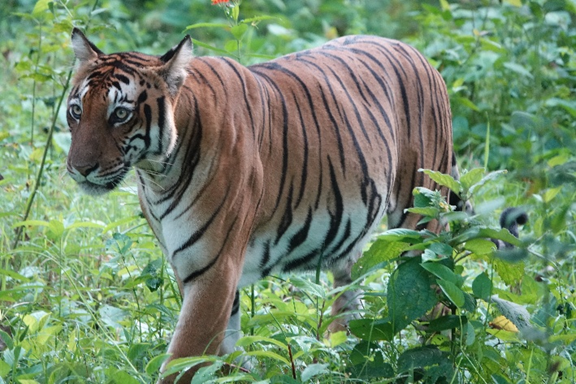
International Tiger Day (also known as Global Tiger Day) is celebrated every year on 29 July to raise awareness about tiger conservation and the urgent need to preserve their natural habitats. The day highlights ongoing threats such as poaching, habitat loss, and human-animal conflict that have led to a sharp decline in the global tiger population. Approximately 5,574 wild tigers remain worldwide, based on the Global Tiger Forum’s 2023 estimate, out of which India proudly houses 3,682 wild tigers. There are tigers in captivity also. India’s tiger population represents 75% of the world’s total, yet they occupy only 18% of the global land available for their survival. In many areas, humans are sharing the land with animals, which increases the likelihood of conflicts between them. While we Indians may take pride in having the largest tiger population, it is concerning that the forest area housing them is diminishing. During a recent workshop for children, I asked the participants if they had ever seen a tiger. Almost all of them nodded in agreement. Most had seen tigers in circuses and zoos, or through pictures and films. While encountering a tiger in its natural habitat is uncommon, it is clear that their population is declining. Ecotourism has brought both excitement and challenges to the world of wildlife. Unfortunately, the surge in crowded safaris and the exuberance of tourists can intrude on the natural privacy that these majestic animals need. During one safari, a tigress was observed moving casually despite the presence of numerous jeeps nearby. The jeep drivers communicated with each other to inform their peers about tiger sightings, leading to a situation where almost 100 jeeps surrounded the animal. Despite the activity around her, the tigress fell asleep, showing no signs of aggression towards the surrounding vehicles and their occupants. As the world celebrates International Tiger Day, it is essential to ensure that these animals are effectively protected. The maximum lifespan of a tiger is 20 years, and if we ignore the conservation efforts for a few year, we are sure to downgrade the animal to the ‘critically endangered’ category. Then tiger “nahi zinda hoga”

Lockdown lessons unlearned!

‘Bhool gaya sub kuch, yaad nahi ab kuch’

I am reminded of the above lines from a song in the popular old Hindi film Julie. Yes, we have forgotten everything we learnt. COVID-19 was a global crisis that demonstrated how nature would beh

ave if we do not take corrective steps. The lockdown call alerted every nation that immediate action was needed to avoid a point of no return. Nature also showed us how the world would appear if we were locked inside homes for a fortnight. The roads were empty, and the pollution index slipped to low levels at places like Delhi. People were inside their homes but breathed fresh air, as there was no human activity outside. The coronavirus was discovered in Wuhan, China, in November 2019, and was named COVID‐19. The disease is a class of epidemics with human‐to‐human transmission caused by severe acute respiratory syndrome coronavirus 2 (SARS‐CoV‐2). Later, the medical fraternity discovered several mutated variants. By 2022, the world reported 551 million cases in 194 countries, out of which about 6 million fatalities resulted.  While the exact animal source remains unconfirmed, evidence suggests bats as the natural reservoir and potentially an intermediary animal host, such as a pangolin, civet cat, or raccoon dog, as the direct source of transmission to humans. Primarily, the man-animal conflict is a major concern in conservation. When nature is disturbed, aberrations in the food habits of wildlife tend to happen. Coupled with this, habitat destruction also leads to changes in the animals’ behaviours. When it was discovered that the pangolins, bats, and Civet cats were the carriers of the COVID-19 virus, it was shocking because these wild animals have been in existence for millions of years in the evolutionary tree. Suddenly, how do these animals become the carriers?

One more interesting thing that happened during the lockdown period was that many wild animals, like leopards and tigers, roamed freely in towns. During COVID, many on social media expressed their concern for protecting wildlife and our forests. Simultaneously, people breathed clean air. Many wondered whether this lockdown period is a cautionary bell to human beings to mend their ways and lead an eco-friendly lifestyle. That’s all. It appears that we do not learn from mistakes.

“Learn, Unlearn, relearn” seems to be the maxim we follow, I guess.

India is at the top of the world population!

Not an achievement to celebrate!

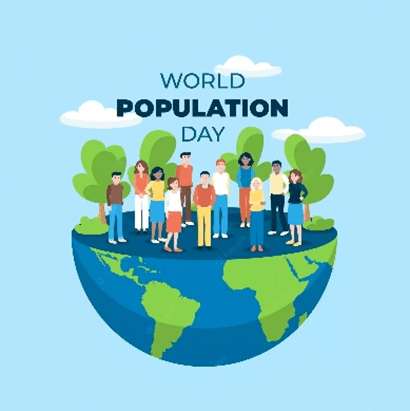
UN observed World Population Day on 11th July as usual. Looking at the UN data, it appears that the population dynamics are changing. India has surpassed China in population. India’s population is estimated to be 146.39 crore (1.4639 billion) as of April 2025, according to a UN report. The report also notes that India’s total fertility rate has fallen below the replacement level, and the population is expected to reach 170 crores before starting to decline in about 40 years. It is good that the population growth rate will slow down in the next 40 years. It is very much needed. But what is the guarantee for the same? It took hundreds of thousands of years for the world population to grow to 1 billion, then in just another 200 years or so, it grew sevenfold. In 2011, the global population reached the 7 billion mark, it stands at almost 7.9 billion in 2021, and it’s expected to grow to around 8.5 billion in 2030, 9.7 billion in 2050, and 10.9 billion in 2100. This dramatic growth has been driven largely by increasing numbers of people surviving to reproductive age, and has been accompanied by major changes in fertility rates, increasing urbanization, and accelerating migration. These trends will have far-reaching implications for generations to come. Moreover, the resources needed to sustain the population growth are inadequate. A comparable nation, China, with 2.5 times the land mass, has been able to manage its population control. In India, we do not seem to have taken any adequate steps to control the growth rate. We find that every city is becoming congested, day by day. The supply of resources is not commensurate with the population. Our resources are depleting on one hand, and on the other hand, more consumption is taking place due to population growth. Apart from this, every city is overcrowded, leading to traffic congestion. Further, cheating and corruption are offshoots of such a demand and supply gap. We are also forced to take substandard quality materials, both in terms of food and consumer goods.  In my opinion, the spurt in population numbers has resulted in environmental degradation directly and indirectly. India’s population is a serious cause for concern. Small family norms must be publicized again, and sincere efforts to educate the people to adopt small family norms as were vigorously practiced in 70s and 80s.

Single-use plastics Ban completes 3 years

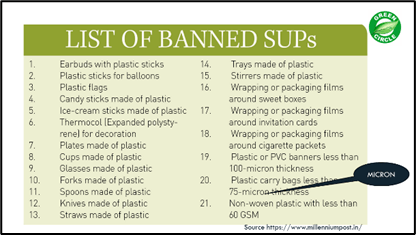
Is the SUP ban effective? On July 1, 2022, the Government of India proudly announced the ban on single-use plastic (SUP). 3 years have passed since then. Where are we now? Are we finding our water bodies free from SUPs? Do we see our households rejecting plastic bags? Have we reached at least half of what we contemplated when the ban was announced? The questions remain unanswered. Single-use plastics are still in use. The Central Pollution Control Board issued a list of 19 single-use plastic items that are banned. The ban on single-use plastic items includes straws, cutlery, earbuds, packaging films, plastic sticks for balloons, candies and ice creams, and cigarette packets, among other products. SUPs are just about 10% of the total plastics, according to some studies. However, single-use plastics are the real culprits in clogging our waterbodies. These items are thrown everywhere by consumers and remain as an eyesore for days since civic authorities never remove them immediately. Even if removed, they reach landfills and get stuck there forever. Besides, the micro and nano-particles of plastics from such SUPs are responsible for cancers and pollution related diseases

State Pollution Control Boards and Pollution Control Committees are expected to impose a fine on the defaulting producer of Single Use Plastic, and Local Bodies should impose a fine on Retailers, Sellers & Users of Single Use Plastic. However, it appears that these penalties do not work as deterrents. For one, the enforcement is not strict for reasons well known. According to some, the ban was not a complete one as long as PET bottles are included in the SUPs. PET (Polyethylene terephthalate) bottles are not classified as SUPs in India as they are excluded as per the Plastic Waste Management Rules, 2016 (as amended in 2021), as long as they are collected, recycled, and reused effectively. The argument in favour of PET bottles is that they have high recyclability and there is an established infrastructure for collecting and recycling. It is also felt that PET bottles are reusable.  The Indian government excluded PET bottles from the ban, subject to the producers’ compliance with Extended Producer Responsibility (EPR) norms under the Plastic Waste Management Rules. But misuse or poor waste management could still make them environmentally problematic. By the way, the SUP items like earbud sticks, straws, and stirrers, which were included in the Banned items, may not contribute significantly to environmental pollution. Under the circumstances, a review of the impact of the ban on SUPs is the need of the hour. On the one hand, the restrictions on the manufacture of SUPs must be strictly enforced, and many items must be added to the existing banned items.

Bike Taxis, E-Rickshaws: – eco-friendly & economical

Bike taxis of Bangalore are banned! E Rickshaws of Delhi are not regulated!

From June 16, 2025, there will be a ban on e-rickshaws. It is a court decision. under Section 93 of the Motor Vehicles Act and the Rules, bike taxi services cannot operate in Bangalore unless the state Government brings out a set of regulations. Aggregators claim that they are covered under the Karnataka On-Demand Transportation Technology Aggregators Rules, 2016. But the court has directed the State Government to frame a set of regulations for bike taxis. Young drivers who relied on this part-time job to meet their daily expenses are now at a loss. There are many reasons for this decision. One argument is that the safety of the passengers is at stake. There is a hue and cry about the behaviour of bike taxi drivers. Recently, a bike taxi driver slapped a lady customer, but we learned that the lady had slapped him first, because his driving was rash. Others say that this was nothing but yielding to the pressure from other transporters like taxis and auto rickshaws.

But we are looking at a different perspective. This bike rickshaw is eco-friendly because it carries one passenger, whereas cabs also transport one, not to full capacity. For one, it adds to carbon footprints due to the wasteful fuel consumption. Secondly, it adds to Bangalore’s traffic jams. It is neither eco-friendly nor economical. One advantage of bikes is that they provide last-mile connectivity. It is safer for riders, especially women, since they commute in open space. Similarly, e-rickshaws are battery-operated and considered eco-friendly. They are economic too. Transportation evolved from horses, camels & elephants, bullock carts, tongas, chariots, and even hand-pulled rickshaws followed by cycles and cycle rickshaws. Diesel engines replaced steam engines. Petrol, aero-fuel, and CNGs are evolved later. Now we are inching towards battery-run automobiles. Solar vehicles are also being tested. As and when technology evolves, the policy makers need to look at the sustainable alternatives. FASTER, CHEAPER and BETTER are the 3 important watchwords that need to be considered in choosing the acceptable mode of commuting. Especially as the cities are expanding dramatically, the word BETTER assumes importance. It means safety, feasibility, last mile connectivity and sustainability. Hope that Government considers all these aspects and put in place a regulated transport mechanism

Stampede massacres, footboard butcheries, road accidents

Are they all due to officials’ negligence, public callousness, political empathy, or a surge in population?

Why did the Bangalore RCB stampede in the Chinnaswamy stadium on June 5, 2025, result in at least 11 deaths and 33 injuries? A stampede at New Delhi Railway Station on the night of February 15, 2025, resulted in at least 18 fatalities and 15 injuries. 30 people died and 60 were injured in a stampede at the Maha Kumbh Mela in Prayagraj on January 29, 2025.  During the Pushpa 2, one woman died when she came to see Allu Arjun on December 4, 2024. The reason for the recent Mumbai train deaths is attributed to overcrowding, which made passengers clinging to the door fall onto the railway line and be run over by a train from the opposite direction. Why did the Kumbh Mela deaths happen?  At least 82 people were killed in four incidents of stampede at Maha Kumbh in Uttar Pradesh’s Prayagraj on January 29, against the State government’s official claim of 37 deaths, a report by BBC News Hindi claimed.

After any mishap, many doubts arise in our minds!  We need to apply our minds to understand and avert future occurrences of similar incidents.  We should develop a similarity to all these incidents. One common reason is the bungling, callousness, and lack of far-sightedness of the people at the helm of affairs. Crowd management is a tricky proposition. In a wedding ceremony, if 300 people are expected, but 1000 turn up, arranging food is a challenge. If we arrange food for 300 while only 100 turn up, it is food waste. It is a catch-22 situation. Overcrowding is not an isolated problem for any city. Such stampede incidents are increasing nowadays. Airports look crowded bus stations, and incidents of verbal fights between staff and passengers are reported. Airlines started advising passengers to report 4 hours in advance to avoid congestion. As the workload increases multifold, the administrative staff find it stressful to work. So, who is to blame, the Government, people, bureaucrats, workers, or infrastructure? This blame game will serve no purpose. India should plan a holistic approach to all crowd-related issues. We have seen two such occasions in general. Firstly, such unpredictable stampedes occur during religious or sports gatherings due to a sudden influx. The second one is routine and happens in bus stands and railway stations, where people violate the rules to reach their destination on time. While the permission in the first instance, which is unpredictable, should be on a selective basis, the second one must be managed professionally by deploying a better workforce and risk management tools, as it is somewhat predictable. The main reason behind the recent stampedes, due to overcrowding, is India’s unabated population growth. India’s major problem is our rapid population growth. We have surpassed China’s population figure. Our population is 143.81 crores (as of 2023). Now this must be still more. In the last century, we had fewer instances, while challenges are more prevalent at present. On July 11, every year, the whole world pledges to control population growth, but unfortunately, life goes on as usual. The ensuing period will be more challenging!

10000 strong human chain to arrest waste burning!

A human chain that vows to handcuff the proponents of a lethal biogas plant in the North Chennai residential area!

In the South Express issue of April 26, 2025, we reported the unhappiness of the residents against the Greater Chennai Corporation’s (GCC) waste-to-energy (WTE) project at Kodungaiyur in crowded North Chennai in our editorial. We also highlighted that the residents came together under the Federation of North Chennai Resident Welfare Associations on April 13, 2025, to protest against the GCC’s WTE component of the integrated waste management facility (IWMF), planned for Kodungaiyur in North Chennai, on a 75-acre Metro water land near the existing dump yard. The trigger for the people’s unrest was the recent signing of an agreement to burn 1400 tons of non-biodegradable waste generated in a day. The project involving Rs 1026 Cr was to be implemented in 25 years under a Public-Private partnership. The Federation passed a resolution to stage a massive human chain on 25th May, 2025. There was no positive response from the Corporation.

As planned, the 4 km long human chain started from Kodungaiyur and ended at Vyasarbadi Ambedkar College. One who knows the intricacies of event management for such non-political, non-governmental movements will agree that it is not an easy task to bring together 10,000 people in a single line to form a mammoth human chain. The fact that 10,000 gathered to form the chain speaks to people’s commitment to stopping the massive waste burning. People who joined the signature campaign and human chain demonstration are mostly from a marginalised community in the thickly populated North Chennai Corporation area, who always felt that they were the most neglected lot. Understandably, landfills and pollution had already taken a heavy toll on their health and lives in the last 3 decades. The proposed waste burning project will only add to the misery of their lives. The President of the Federation, T.K. Shanmugam, asserts in a press release that they do not advocate any alternative model for the incinerator but reject the very burning of waste. One can feel the pain in his voice, and it is not just his voice but that of millions of residents around. Why don’t they relocate the project near the Secretariat, if it is not going to be harmful, asks Shanmugam. Federation demands the scrapping of the project. They want the Government to expedite the retrieval of the 352 acres of landfill area by biomining and establish a mega library, an international auditorium, a medical college cum hospital, an indoor stadium and a biodiversity park. Demanding an exclusive environment policy for North Chennai, the Federation pins its hopes on a positive response from the Tamil Nadu State Government and North Chennai Corporation. Pure water and clean air are often a distant dream, especially for the marginalised community. Only time will tell whether their hopes will come true!