Students of Hyderabad create history!

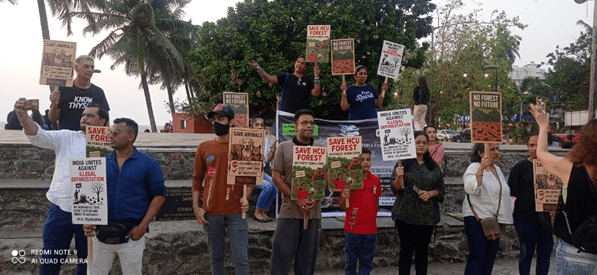
The freedom for this country came at midnight, and perhaps that night marked the sacrifice of millions of freedom fighters. Paradoxically, the ‘freedom to destroy’ the 400-acre land at Kancha Gauchibowli of the University of Hyderabad at midnight was a conspiracy. Why JCBs chose midnight for their nefarious action is perhaps suspicious. Of course, the contractors were successful in almost shaving away 50 acres of green cover. The painful cry of peafowls woke up the social media. Hundreds of students were on their toes without realizing that they were going to be treated as criminals and fall prey to the lati charge of police for what ‘crime’? They were protesting to stop the state-sponsored crime of felling the trees. The purpose of the deforestation was to build an infotech park. The move to destroy the forests drew the attention of activists everywhere. Many activists raised concerns and held rallies in solidarity with the students. When pressure mounted from all quarters, the Supreme Court ordered the scrapping of the proposed infotech project. It was a blow to the Telangana Government, which is now contemplating turning 2000 acres of land into one of the world’s largest eco-parks, which will include the University of Hyderabad lands and Kancha Gauchibowli land. This means that the University near Kancha Gauchibowli will be shifted to a new location. What a clever move! What development or economic growth is proposed by such a move?
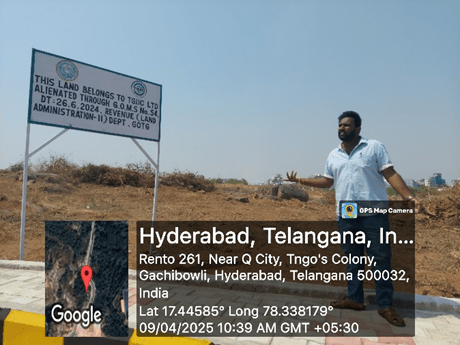
A natural forest does not mean an evergreen forest of tall trees with tigers and leopards roaming freely. In general, urban green areas are mini forests with smaller animals such as monitor lizards, monkeys, snakes, hares, and peafowls. They are scrub jungles with a unique ecosystem. There are shelters for several microorganisms, flora, and fauna.  The ridge in Delhi is a classic example. Fortunately, the central ridge forest has survived the Airport metro tunneling to date. But Delhi’s metro tunneling has interrupted underground aquifers. If not today, the environmental impact will be felt very soon. Perhaps Delhiites might wake up from their long slumber to realize that it is too late.  Here, in Hyderabad, the proposed eco park will not take into account the rocky natural habitat at Kancha Gauchibowli. However, the valiant war by the students deserves applause. One request at the end! The misleading AI generated videos may tend to derail a beautiful movement. We need to be cautious!

Using AI to solve environmental problems 

Nature is a natural phenomenon! Sounds odd? Perhaps, yes! The other day, one student requested me to give ideas on using the AI tool for environmental experiments. He was doing his summer project work. He wanted me to help him with some environmental concepts for applying AI tools. I do not know why he was asking for ideas from a person who does not have any technical background. There is no dearth of ideas on the internet. All he had to do was to use ChatGPT, Meta AI on WhatsApp, or even Google browser (which now uses an AI tool for searching). I learnt that there are 100s of such AI tools today in the global market. He probably wanted to identify some problem areas from a grassroot level worker like me.  I didn’t want to disappoint him, though it meant some extra effort for me. Of course, such small works do come often. The following were some of the ideas that flashed in my mind. They were all my felt needs at one time or another as an environmental activist. He chose the third idea

  1. Develop a model to geotag all trees, the species location, etc. This may help stop illegal tree felling. There were some apps already. But we may explore using AI tools for better counting
  2. Unauthorized garbage dumping is a big menace. We may develop an AI tool to track dumpers and clear the garbage. If the entire city is covered by an AI tool, something can be done promptly to clear the trash.
  3. Bangalore’s traffic is a perennial problem. AI tool to track congested roads and make synchronized traffic management, pollution level, and roads with less traffic, coordinated traffic signaling, etc. This could save fossil fuel waste, reduce pollution levels, and save time on roads
  4. Wild animals like leopards enter human colonies. The forest department is unable to track them for days. AI tool may help capture the animals and release them in jungles to avoid loss of life on both sides
  5. Migratory bird tracking was traditionally done using the ringing method. Could an AI tool capture migratory birds electronically and track them to trace their route? Can it be used for a particular bird to find the number of days of flight, height, speed, non-stop or otherwise, climatic conditions in both places, eco systems, food similarity, etc.?

The above list is just indicative and not exhaustive. AI could be used widely in environmental research. However, the usefulness of this tool depends on how we use it. Artificially, one may even create a jungle or even a river or desert, and it may appear as if it is natural. But Nature is God’s creation. Oxygen can never be created in labs. Only trees can produce it to date. Even the human body and its various systems are still a mystery. Man has not yet decoded the basis of life and its beginning or end. But will life be the same after AI takes extensive strides? In the last few decades, the world has witnessed a lot of technological inventions. The lifestyle in the recent past has undergone drastic change. Survival is not that easy as we experienced in the 20th century. This is the era of Artificial Intelligence. AI has already assumed wide dimensions in all spheres. Given the background of all these happenings in planet Earth, it appears that nature is not an exemption. If used properly, AI could prove very useful. If the same is used to get more likes and followers in social media, it may spread misinformation and fabrication. The choice is in our hands.

Farmers’ Market, a Tamil Nadu Model

A farmer was driving a tractor on his farm. Interestingly he was not tilling or ploughing his land. A close look at the scene was shocking. The visual flashed on a TV channel was disturbing. Yes, he was destroying the cauliflower plants together with vegetables. Yes, he had no other way because he had been offered Rs 10 per kg which was pathetic. There is no point in adding his expenses of carrying the produce to the market as the price does not even compensate even 10th of his investments in the production. There is always a felt need to strengthen the farmers’ hand. India has witnessed farmers’ suicides in Vidarbha, Maharashtra many a time. The agricultural produce in our country gets exchanged between many hands before it reaches the consumer. End of the day, what we pay farmers is just peanuts. This is why TN has ventured into the farmers market which is handled by the farmers directly. Indirectly, the farmers take the produce and reach the ultimate consumer without a middleman menace. Uzhavar Sandhai meaning farmers’ market in Tamil aims to empower farmers by allowing them to sell their produce directly to consumers, potentially earning them higher profits and reducing the influence of middlemen. Consumers can buy fresh produce at lower prices compared to traditional retail outlets.  Late Chief Minister of Tamil Nadu M Karunanidhi deserves all praise for introducing the concept in 1999, which is still in vogue. The scheme is managed by the Agricultural Marketing Department and manned by staff from the Department of Agricultural Marketing, Agriculture, and Horticulture. These markets are located in various urban areas across Tamil Nadu. Of course, a similar market is there in Chandigarh, Punjab known as Apna Mundi, though it is smaller. In Andhra Pradesh, a direct market is in place. These are good examples of boosting the morale and economy of the farming community. We understand that these markets operate between 5.30 AM and 6.00 PM and transport facilities are provided to the farmers’ market from some nearby areas at specific times. At the farmers’ market, each farmer is allocated a separate space and is given free weighing equipment. Farmers have been issued an identity card to sell at the farmers’ market. The identity card also includes pictures of family members, so that they can bring their produce to the market. A Government officer handles each market. Price is decided by a committee and posted in the farmers’ market for public view. In Tamil Nadu, Uzhavar Sandhai is available in 104 locations, according to the TNA Agritech website. In cities, people prefer such markets and avail the benefit of better prices and quality. Such concepts must gain national-level importance. More research must take place to strengthen the farmers’ market. Unless farmers get better treatment, the exodus from the agriculture sector will deteriorate, and people will switch to other activities leading to more environmental issues such as urbanization, and dependence on food imports.

Is India’s tree cover deficient? Part 2

My discussion on this topic last week (South Express dated 8.3.25) has kindled some good reactions from the readers. I thought of working on their feedback. According to one reader, going by the per capita data of tree cover, if we take India’s tree cover of 28 trees per head, and multiply it by total population of 145 crore, it works out to roughly 4000 Cr trees in India, and if we increase the trees to China’s level of 130 per head, then Idia’s tree cover will be even better than China; which means India will have roughly 18000 Crore trees. The reader further made an interesting observation. He assumed that India’s land area would not be sufficient if we provided an average of 20 sq meters per tree. Thanks for the data interpretation he made. Thousands of green activists like him are there who want India to have better natural resources. He also agreed that we should compare ourselves with the tropical countries. The green cover in a country depends on its climatic zone. Tropical climate is different from temperate and polar climates. Even within tropical countries, wet, dry, monsoon, and desert climates exist. We cannot expect dense growth in dry areas. In deserts, there is no chance of tree cover except in oases.  Even in temperate regions, where we experience four distinct seasons, the climatic conditions differ between Mediterranean, subtropical, marine and continental areas. All these substantiate the weakness in using the per capita statistical tool. It is like saying that India’s per capita income is Rs 2 lac, which includes the richest individual’s income that may run to billions of dollars. If we exclude the top 100 richest individuals’ income, the average per person earning would be too small.  Poverty is a parameter that should not be estimated from statistical tools but by making proper sustainable development goals to bring a smile to the faces of the poorest. In my last editorial, (8.3.25) I said that population cannot be a yardstick for calculating tree cover and substantiated my logic with an example. One reader accepted that and requested me to compile the data on trees per sq km to compare between countries. In my view, as explained above, that also may not be a correct method as different climatic zones make the exercise a futile one.  But with the help of the worldometers website data, as per the link  https://www.worldometers.info/world-population/population-by-country/, an attempt is made here to compare the status of the same countries appearing in the viral ecard. In other words, the countries taken in the ecard published in last week’s editorial. The results are given in the table below

A quick interpretation of the result is made below.

  • The climatic conditions, such as temperature, sunlight, rainfall, and human action, do have a bearing on the tree density
  • A warm and humid climate with ample sunlight and consistent rainfall are most suitable for tree growth
  • Canada, a temperate country having a vast land mass and less population density, tops the tree cover
  • USA and China have a more or less similar sized land area, but USA has better tree cover, but the population density in China is five times that of USA.
  • When we compare India with the US and China, we have just a third of the land area, and half of the trees per sq km. So, the tree cover is not that gloomy as depicted
  • If the scientific methods of defining the global standards for analytical purposes, the researchers must consider various parameters like climate conditions, population density, and availability of land area

Trees per person versus Trees per Sq KM

Data Source: – Worldameter Website

Based on the data on population density, land area, and climatic condition, it is felt that India is reasonably keeping its green cover. Simply blaming India for having the least tree cover per person, is a futile exercise and will serve no purpose. However, efforts must be geared up to ensure that at least one third of its present density per sq km must be increased. In other words, 13533 trees per sq km must be increased to 18000 trees per sq km. In India, if the policymakers make a target-based approach to improve the green cover, there should not be any problem in reaching the global standards.

Is India’s tree cover deficient?

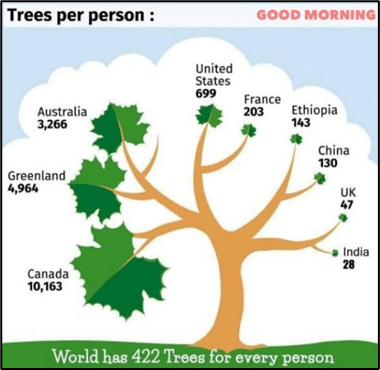
Are Indians not environment conscious? Are we the worst in terms of tree cover per person? These questions disturbed me a lot, seeing this social media viral flyer. India has the least tree cover; just 28 trees per person as depicted in this picture. Is the situation alarming? With 10163 trees per head, Canada has the highest tree density, followed by Greenland at 4964 per person. Let’s try to analyze this dismal outcome of India’s green efforts. Is this method relevant to compare the global data? Statistical methods are strange and difficult to comprehend. I learnt a few statistical methods during my studies. It was a difficult subject for me, at least. Mostly the data analysis is done on random samples or opinion polls. Sometimes even our exit polls go wrong due to the wrong choice of samples or inadequate data. But to understand the people’s preference for a product or to rate a film, we take such random methods only. Why? Even a sentence in court may take away a life by majority voting by a bench of sitting judges. A YouTube channel becomes viral if a large number of views are made. These are some examples. I wish to add the disclaimer ‘without prejudice’ for differing with statistical methods.  After all, even scientific facts differ with time. The reason why I differed with this tree data is as follows. Firstly, quality cannot be compromised with quantity. Forest departments and Tree Acts always advocate, ‘plant 10 trees when you cut one tree’. Is it correct? Could 10 tree saplings compensate for the oxygen yield of a 50-year-old tree, felled? But we all see the infrastructure industries ruthlessly felling or cutting trees and making compensatory plantation for name’s sake. There is no post plantation care or audit and accountability. For instance, let us quote an example. Say there are 100 breads, to be distributed to 10 persons. We can say that each would get on an average of 10 breads. If the same is divided among 100 people, then each will get only one bread. Similarly, if there are 1000 trees in a country with a 100-person population, then the per head tree cover will be 10 per capita. If the same country with the same number of trees has 10000 people, the per capita tree cover will be reduced to 0.1. How can this comparison prove the country’s greening effort? Further, China has a Tree Cover of 130 while India has 28. But we cannot forget the population is more or less equal. So, should we say that China is making a greening effort which is 4 times that of India? It is also a wrong comparison because China has a land mass two and a half times that of India. Greenland and Canada are not thickly populated countries. These countries, naturally, will have more green cover. About a few centuries back, until Columbus discovered the USA, it was not at all inhabited. Today, the entire world is invading the States, which is probably the reason why restrictions on immigration are getting stricter. Therefore, such comparisons will prove futile to achieve global standards. India has better resources than most other countries. India has only about 25% forest cover now, we must try to make it 33%. In other words, making it one third of our land mass must be our target.

Weddings without Waste

Contemporary marriages are lavish, ending in huge wastage. Wastage in terms of money, materials, and much more. A simple middle-class marriage may cost Rs 20 lacs for the one-day fun. Eco-friendly marriages are a remote reality. In the first instance, wedding cards are mostly plastic with non-biodegradable contents. Some judicious families go for e-cards to reduce expenses. The next biggest waste is food waste. It is an issue of prestige to display a variety of food items, thereby making a wide choice for guests. There is a huge rush in all marriage houses. In the olden days, the organizing families of wedding events stood at the entrance or respectfully received the guests. Today, slowly such traditions are vanishing. People stand in long queues, present the gifts, take photos, then go to dining halls and leave. Lavish lighting, jarring music, and excessive food mark the occasion. There are chat counters, cocktails, beverage counters, and various cuisines to suit everyone’s palate. In many cases, visitors at buffets fill the plates as if they should not miss any item. Half an hour later, one can find half of the foodstuff in the bins. In a country with a population of 1.4 billion, more than a third go without 2 square meals daily. Does it not amount to a sin to waste food?

A week back, I attended a meeting where they arranged a dinner. The organizers called all to join a buffet dinner which offered rice, sambar, one side dish, pickles, and fruit. Ever silver plates were stacked. One has to take a plate, eat, and wash the plate. Unfortunately, most events rely on PET bottles to serve water. In a marriage with a footfall of a thousand, about 5000 PET bottles are used for drinking water. Many have a sip and throw the bottles with more than half of the water in them. Double sin is committed. One is to waste the water and the other is to add non-biodegradable items.  In a mass marriage program, I learned that about 50 thousand PET bottles were used. One bottle cost about 5 rupees at the wholesale rate, it worked out to Rs.2.50 lac approximately. The collective community marriage is being done as a social service to avoid huge expenses. So the idea was good. However, the organizers could consider avoiding plastic and using ever silver plates and tumblers which could be reused. Since they do this annual ritual, they can also plan to acquire plates and tumblers for long-term use. During the lean period, they could rent them out or even do it free of cost with a refundable security deposit. Any new idea is not accepted easily. The environmentally conscious citizens should rise to the occasion. There is no benefit in cursing the changing lifestyle and lamenting over the impossible. Wherever we can do something, we can. About 50 years back, we never had PET bottles, but then also life was going on. We agree that today the scale of measures to take is huge, but eliminating plastic from planet Earth is an immediate task. Time is running out

Is noise disturbing?

“Reckless people, they play music at loud noise!” a WhatsApp message jolted many!

We learned that the visibly fuming man was seen shouting at the top of his voice (is he not creating noise pollution?). The cause for his concern was a loudspeaker noise from a nearby venue. Most environment-conscious persons tend to overreact to the happenings around them. It was true that the organizers of a religious event kept the maximum volume to attract more crowds to their program. However, the organizers of the event were defensive. They claimed that the noise level was within permissible levels.

But the man was not convinced. He angrily left the place with his dog to let it open for pooping in public areas. In residential areas, the permitted decibels during the day must not exceed 55 dB but in commercial areas, the limit is 65 dB.  India would have been a silent country if we followed these benchmarks. But in reality, we hear noise everywhere. In foreign countries, drivers seldom blow their horns. But in our country, it is not uncommon to see the four-wheelers honking their horns, without reason. There are many spots where honking is prohibited. Seldom do we follow the rules. Humans can hear decibel levels starting from 0 dB and 120-140 dB, beyond which sound is a pain. 70 dB is equivalent to the sound level of a regular washing machine. It is also similar to the noise level in an office environment or inside a car driving at 60 mph. The. service providers of sound systems in functions know the permitted legal limits. There are devices to measure the magnitude of sound at a nominal cost of Rs 5000~10000. If anyone feels that the magnitude of sound exceeds permitted limits, one way is to approach the organizer of the events and advise them to keep within the limits. But in many cases, the advice falls on deaf ears as they are accustomed to noise and criticism. In such cases, the aggrieved person may file a complaint to the Police or the Pollution control board. In today’s lifestyle, everything crosses the limit. Noise is not an exemption.  We have seen that Delhi has turned into a gas chamber with no accountability for polluters. Encroachments are on the increase. Natural resources are depleted right in front of our eyes.  Fighting everything is disastrous. In Bangalore, we had an awesome airshow. The roaring 5th generation fighter planes like F16 and F35 spilled a huge level of smoke while creating immense noise. However, we enjoyed them because they are India’s pride. The protest of environmentally conscious citizens must be logical to the extent that all acts of civil society should lead to a prosperous life and ensure minimum damage to peaceful living. The fight with an ulterior motive of seeking attention is futile and will end in vain. Precisely, environmentalists must work on sustainable development and should not make a hue and cry for nothing.

Lake is not an amusement park!

“Let’s go boating… let us have a food court… Let us have an open gym!”

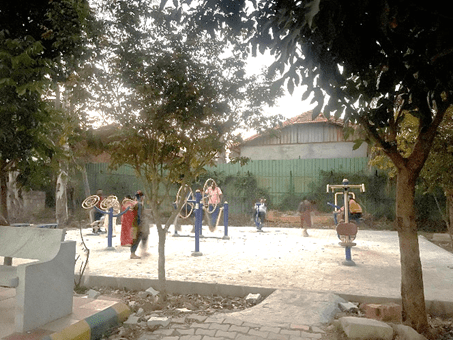
There is no dearth of ideas! The general perception of a layman or user is that the urban water body is an entertainment center. For the local politician, the common man’s demand is the Magna Carta, as he perceives the public as his vote bank. For him, visibility is more important. According to him, all those visible cosmetic creations get converted into votes. In Bangalore, visionaries like Kempe Gowda, while building the city five centuries ago, were very particular about digging tanks and storing water for dry seasons. It is because of their far-sightedness that the city came into existence. The Mysore kings, including Krishnaraja Wodeyar and Tipu Sultan, and German botanist Gustav Hermann Krumbiegel, are responsible for making Bengaluru the “Garden City of India.”  Bangalore is also known as lake city. Once more than 1000 lakes were in Bangalore. Now, the number of lakes has shrunk to less than 200.  Majestic bus stand, hockey, and football stadia were once scenic lakes. If the situation continues, Bangalore will have only a few lakes, left out. However, the common man is interested in providing a walking track, Gym, and children’s play areas in the left-out lakes. Some demand a gym, some insist on street lights, and thus facilities and conveniences are added to entertain users. Some lakes provide boating facilities. In some lakes, there comes a musical fountain and a toy train. Thus, the lakes turn into an entertainment hub. In a nutshell, such activities are cosmetic and are made to satisfy the vote bank of the politicians. Most of the lakes are encircled by walking tracks. Though tiling or cementing of the walking tracks may help walkers to make a smooth walk, the cementing prevents water percolation and destroys the natural bunding that existed for centuries. Instead of encouraging native trees, exotic trees are planted in the bunds. Artificial sheds and shades are constructed on the bunds in some lakes. But this main focus of the lakes has taken a backseat. The water quality and biodiversity of a lake define its health. These two are indeed interdependent. Parameters like pH, Dissolved oxygen, and turbidity determine the aquatic flora and fauna.  The lake ecosystem ensures support for hundreds of microorganisms and aquatic life. Unfortunately, biodiversity conservation is not at all a priority for authorities. Even if some attention is given, it is done just for the namesake.  The important function of the lakes is water storage apart from groundwater recharge. Water quality is the first and foremost concern. However untreated sewage is being let into the lakes in many places. De-weeding is not conducted scientifically, which weeds away the valuable water plants and grasslands. Desilting and dredging are not periodically undertaken to clean up sedimentation. If we want to save the existing lakes, awareness must increase among the people, politicians, and bureaucrats about the importance of lake ecosystem conservation.

The lacklustre attitude to lakes will wipe out groundwater and natural rainwater storage in cities.

Deepfake AI birds mimic natural birds!

‘Such a beautiful bird I have never seen!’

With this exclamatory mark over his head, one WhatsApp warrior forwarded a clip of a few most colourful birds with beads of pearls, impressive eyes, and gorgeous feathers. The interesting part was when he asked me to identify the same. When I received a similar clip for the first time, I was curious to find out where exactly this bird lived. I even cursed myself for not coming across such unique birds, though I have been birding for over 4 decades. In real life, I always lament over my inability to spot the Himalayan Monal. Even the most shining and colourful Monal cannot beat these birds. Slowly, I started realizing that these are AI-generated images. Of late, the moment I received a video from a friend of mine asking for bird identification, I learned how to differentiate and promptly text the sender, it is an AI-generated image. In the last two decades, moviemakers have used AI techniques to create mind-boggling films. The turn of the 21st century has opened up the potential of electronics and opened Pandora’s box of opportunities in the IT industry. In that sense, it is not out of place to mention that those born between the 1950s and 1980s were the luckiest people to have the last chance to glimpse a world full of natural abundance. The turn of the present century witnessed natural disasters, man-made destructions, and unimaginable industrial developments. Nature is being molested and natural resources are vanishing. The day is not far off for fixing the last nail in the coffin of fossil fuel. On one side, this is happening, while on the other hand, we are inching towards an artificial lifestyle. AI appears to be destructive rather than constructive.  One of the identified AI images is physical malformation. For instance, if a snake is depicted with an unproportionate head or a horn in the head, one can easily distinguish between a natural and an artificial one. A logical understanding may help differentiate between an AI image and a natural one.  Recently, a video clip with a buffalo was shown to house a bird nest between its two horns with a juvenile living inside. Is it possible? Won’t the animal lie down, move its head, dash against another animal, or sleep? Nesting is an avian instinct to safeguard juveniles. So, this is a clear case of logical inconsistency. Sometimes, AI algorithms meticulously work frame by frame, to make the clips appear genuine. There is one dangerous development, known as Deepfakes. Such AI clips may become the most harmful tools for concocting stories that will appear original and real. One day, a Prime Minister may appear on the TV screen and say that an emergency has been clamped. Or a tiger may enter your residential area and might even kill a child. Or there may be a devastating fire in the school where your child is studying. Or a tsunami has set in the Bay of Bengal and would engulf Bangalore in another 3 hours, creating panic. Sad indeed! AI tools may be used to predict rains, track unknown species, or a potential forest fire, but not to flood social media with absurd images just to gain viewership.  Necessary legal validation protocols must be in place to prevent the onslaught of AI in social media.

Trump changes the climate in the US!

It is all in the expected lines! US opts out of climate accord. The maxim ‘think globally and act locally’ is perhaps misinterpreted by Trump. He may be proud to be a ‘global’ leader, but, for climate purposes, he prefers to be ‘local’. For him, it appears that the sustainability of the planet Earth is immaterial. The US is a culprit in two ways. For one, they are the second largest fossil fuel producer and emitter. On the other, despite being an affluent nation, they are depriving their financial support to underdeveloped countries by stepping out of the Paris Accord. The accord works on the polluter-pay principle, but the US won’t pay henceforth. Another unfortunate Trump decision is to exit WHO.  Understandably, Trump is under compulsion to build America. His poll promise of nation-building seems to be Trump’s focus, and one has to appreciate his patriotic spirit. Nevertheless, Trump should not forget his responsibility as a world leader but has to balance between nation and world. We do not understand how a nation like the USA could afford to think environment to have jurisdiction. The pollutants emitted in America do not have a territory and will never stop within the four walls. Air is common to mankind, and the emission will travel beyond the boundaries. How could America forget COVID-19, which originated in China and traveled the entire globe? How can he imagine America being a ‘stand-alone island’ that could survive without mobilizing resources from other countries? In essence, global nations are interdependent in sharing natural resources. When the entire world realized this interdependency and started thinking from a broad perspective, it was a retrograde step to pull out of the Paris Accord. Climate change has already taken its toll throughout the world. Even the US has been affected recently due to the massive Los Angeles fire. El Nino effect is experienced everywhere. When the climate emergency has already set in, it cannot spare America just because it does not participate in global climate action. On the one hand, other signatories to the Paris Accord may follow suit and developed countries may pull out their commitment. On the other hand, the UN may experience a funding crisis in supporting third-world countries.

Perhaps the financial goals planned when the US was a partner to the accord need to be revisited. The need of the hour is for the member nations to come together and reset the climate mitigation goals. The member nations need to ignore the US while planning the future course of action as if the US is not in existence. Being the major contributor to emissions, the quantum of emission load from the US cannot be ignored. However, the revised climate goals must envisage a feasible and achievable target, sans America, at least for the next four years. Simultaneously, efforts must be on to convince the Trump administration to come into the ambit of the climate accord.  To sum up, climate change cannot wait for Trump and the ball must be set rolling. This is a ticklish issue but has to be tackled judiciously by other world leaders.

Early birds are late this season!

Bird lovers are highly disappointed!

Fewer migratory birds are spotted in Bangalore and other parts of the state. Climate change and global warming are cited as reasons for the drop in bird count. Most of the water bodies that house resident birds are seeing a decline in migratory birds. In Bangalore, winter months like November and December experienced a slight drop in temperature and January is expected to have a significant dip in temperature. In the first week of January, the forecast was that the minimum temperature may hover around 10°C during the next 10 days. Bird enthusiasts feel that Bangalore is slowly losing its bird population.

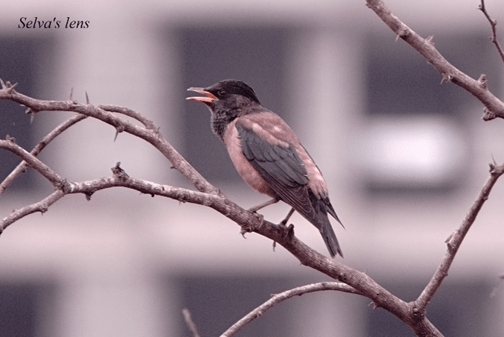
Migratory birds like Northern Shovellers, Northern Pintails, Common Pochards, Rosy starlings, and warblers were not spotted like in previous years. Migratory ducks like Garganey and sandpipers are recorded in fewer numbers. Someone had spotted the migratory Bar-headed geese near Mysore. Birders were anxiously searching for such migratory birds but to no avail. A decade ago, the migratory birds used to land in Bangalore says some avid birders. El Nino effect has undoubtedly cooled down the weather which should be suitable for birds to land here. Due to reasonably good rains, sufficient water is seen in lakes and waterbodies. Despite that, why birds have not landed here is a research topic. Incidentally, certain points need to be given attention. The garden city seems to be slowly giving up its green cover on the one hand due to rapid urbanization. This has led to massive encroachment of the buffer zones of the waterbodies. On the other, untreated sewage water enters the lakes in many cases. The water quality in these rain-fed lakes has deteriorated with no potential for aquatic life. This may be one of the reasons for birds to avoid the city’s lakes. Most lakes are under BBMP’s jurisdiction, so violations like letting sewage water in or encroachment in buffer zones are seen as a blatant misuse of power. Birds like painted storks prefer shallow water, while some migratory ducks are comfortable with more water. Researchers feel that deteriorating water quality is the major reason for the decline in bird populations. Populistic cosmetic changes like tiling the lake walking track, lighting the bunds, and providing park benches, or open gyms cannot revive the lakes. Unscientific de-weeding and desilting will end in biodiversity loss in lake ecosystems. Indeed, the authorities are also taking certain initiatives like Kere Mitra and online grievance redressal portals such as Janaspandana app and Sahaya app for quick solutions. However, most officials either remain insensitive or lack knowledge about ecosystem preservation and the importance of birds in the food chain. Against this backdrop, the naturalists and birders still hope that some migratory birds may land in the next few days. Global warming and climate change are attributed as reasons for the fast decline in birds, but the reality is that most changes are man-made (Rosy starling in the picture)

The ‘take, make, & dispose’ model must go!

‘Why this newspaper heap is lying here? ‘, an annoyed homemaker calls the kabaadiwalah (rag picker) to dispose of the same. The kabaadiwalah comes, weighs, and also pays a paltry sum. Of course, the homemaker, enriched by a few bucks for the old newspaper is doubly happy as the trash is cleared on one side and fetches some monetary gains too. The homemaker is not interested in what happens to the old newspapers after disposal.

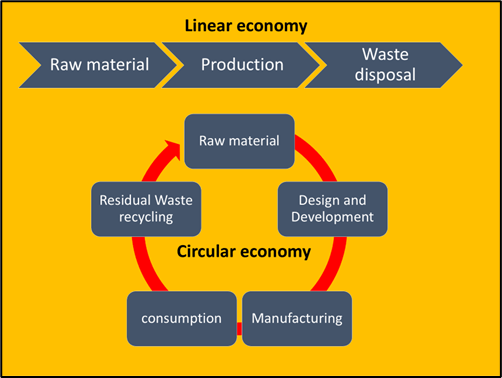
This is exactly the mindset of a producer or manufacturer on a larger scale. ‘We sell the scrap for a throwaway price and there are many takers’, said a manufacturer as if his production cycle is over as soon as he disposes of the waste, generated during production. He is clueless about what happens to the waste disposed of. ‘Take, make and dispose’ is the popular model of production in India which has done more harm than good. Such a model is popularly known as a linear economy which has been in practice ever since mechanization started in our country. Of course, the same conventional model is practiced in many countries. This is not only a concern in the manufacturing industry. It applies to all production activities. For example, consider what the farmers do in Punjab after harvest. They burn the stubble to clear the trash and prepare for their next season. Most of them know that stubble burning would lead to air pollution, but find it difficult to change the pattern that is being practiced till now, due to various reasons. The famous saying that ‘old is gold’ should not be forgotten. Not only this, the cycle of production will end only if the residue or waste is put to better use. Waste for one person will be a wealth for another. The linear economy believes that the production is complete once, the producer disposes of the waste. The Circular economy is more scientific and envisages full utilization of the wasted wealth in a productive manner. The producer becomes responsible for the waste generated. He has to ensure that the waste will be recycled and put to productive use. In Western countries waste picking, repairing, and recycling provides significant job opportunities. Therefore, the circular economy must replace the existing linear economy, which promotes better resource utilization, waste reduction, and recycling.  The circular economy takes care of the environment and saves nations from climate emergency. It should not be forgotten that millions of people die due to poor handling of waste and pollutants. Scrapped iron and steel, automobile junk, electronic waste, and rusted engineering goods have been piled up over the years. If we take stock of the waste being dumped in India, we will realize abundant potential within the country is available for better resource utilization. In India, the necessary shift to the circular economy is in the rudimentary stage as we do not have the required R&D allocations for this purpose. Policymakers are yet to realize the vast potential of optimal resource utilization. Continuous experiments on how resources can be better utilized should be the new paradigm shift in the research objectives of the scientific fraternity.