
Construction waste, growing fast!

‘I don’t like this floor, we must change the tiles’, said Ramesh. ‘Let’s go for a makeover of the entire house’ suggested his better half. For this MNC couple, there is no dearth of funds. One eating out costs them 5K and all Sundays are for exploring a new food joint. There is no wonder they think of spending for a new ambience. Interior designers are brilliant business people, who could lure them to improve their budget to Rs 25 lacs easily. Just 3 years back they shifted to this new flat, spending a huge sum towards interior. The interior guy added few bucks for shifting broken tiles and construction waste to somewhere. When asked curiously, ‘where he would dump the construction waste?’, he said, ‘there are agencies for this purpose. Perhaps it goes to some landfills or outskirts of the city.

On a recent visit to a rural segregation centre in Bangalore it was found that the dry and wet waste management was satisfactory. They dispose sorted waste of plastic for a price to the recyclers while wet waste was composted. The waste management appeared manageable because the segregation centre catered to the need of a Panchayat division comprising of eight villages only. After visiting the waste management facilities at that rural segregation centre, we came out to see a vast dump yard outside with heaps of construction waste. We were told that the construction waste was lying for along time and the segregation workers were clueless as to what to do with the same.

While the construction industry per se is raising the carbon footprints as the levels of air, water and noise pollution increase on the one hand while the loss of biodiversity due to conversion of land use on the other. Besides the unavoidable byproducts are growing waste and raising particulate matters due to cutting, sizing and removing excess material which may or may not be of any economic value for the developers. In fact the Construction and Demolition (C&D) waste accounts for 40% of the waste generated worldwide, according to a www.worldmetrics.org data. It is feared that the construction waste is growing in an alarming rate globally, painting a gloomy picture of the environmental impact of the building industry worldwide. Debris of demolition and construction are extremely high in China, UK and US while other developing countries also follow suit. Perhaps the need of the hour for the construction industry is to revisit its approach, to encompass sustainable practices and innovative solutions to reduce, reuse, and recycle to ensure a more responsible and efficient future in building our world.

Besides we should not forget one important issue related to the labour intensive construction industry. But the working conditions of the workers are pathetic as they survive amidst dust and particulate matter. Most of these workers who come from states like Bihar, UP, Jharkhand, Odisha and North east live in a precarious condition. The level of pollutants which are breathed by them result in chronic diseases. Most of their families live near the construction sites in unhygienic conditions and shift to next construction site once the project is over. Not long ago, we all lived in same old house for generations as joint families with limited comforts. We lived happily in a cleaner environment under zero waste conditions. Today, zero waste is only in papers!

Wayanad… ‘Landslide’ victory for whom?

Published in Dwarka Express on 10.8.24

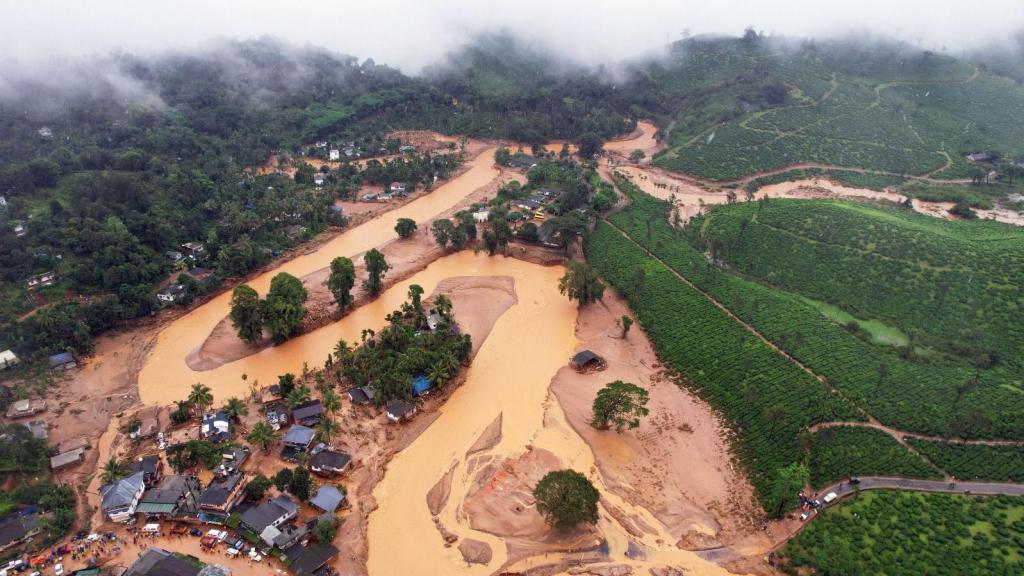
‘Landslide’ is over, but mutual mudslinging has begun though the pandora’s box is not yet open fully! Sooner than later, many hidden truths will surface, though the buried bodies may not perhaps be unearthed or traced.  By and large, the blame is on the destruction of environment at Wayanad. It appears that everybody realized the human blunder in allowing construction in the eco sensitive zone. As usual, media, social media, social activists and all have started blaming ‘deforestation’, ‘unmindful construction’, ‘encroachment’, ‘violations of land conversion rules’, ‘ignoring scientific advice’ and so on are quoted as responsible for the recent landslides in Wayanad in south and Himachal Predesh in north. News headlines like ‘Family missing’, ‘village washed away’, ‘bodies are found 50 KMs away’, are the headlines in media. Suddenly scientists like Madhav Gargil are remembered as their predictions have come true.

Wayanad was to happen in any case. The course of the river has been changed by crazy constructions and encroachments. Lot many resorts have come deviating the construction norms. Some of the key mistakes include monoculture plantations, indiscriminate quarrying, allowing red category polluting Industries besides violating the eco sensitive zone norms. The warning that there will be disasters of unprecedented magnitudes were ignored. Madhav Gadgil knew pretty well that his warnings would be overlooked. His words were ignored, and we can say with confidence, ‘THE WARNINGS WILL CONTINUE TO BE IGNORED IN FUTURE ALSO’. There is one repetitive thing in history, i.e., ‘history repeats’. It is unfortunate that the recommendations of the Western Ghats Ecology Expert panel (WGEEP) headed by Madhav Gadgil that 75% of Western Ghats be declared as eco sensitive areas (ESA) was rejected by Government which accepted Kasturi Rangan Committee recommendation for declaring only 37% as ESA.

The Western Ghats is one of the top eight biodiversity hotspots of the world and India feels proud to have it. However, the human greed for materialistic lavishness has clearly shown the disasters in the making. This is not the first time. Cloud burst of Kedarnath and many more man-made disasters have not given any lesson for mankind and it is life as usual. If hockey team wins the Olympic gold medal (wish so!), perhaps, it will be hailed as ‘landslide victory’ or lauded it as ‘unprecedented one’. But all such metaphors can never even visualize what an actual landslide and the pathos the human race faces be. Anyone who really wants to imagine the meaning ‘landslide’ should close their eyes and visualize a WHAT IF situation, bringing their dear and near ones being washed away in the floods or buried live. Perhaps this may be the only sensitization of the magnitude of the loss. But we all have amnesia to the reality.

After some time, everything will be forgotten as nightmares and it will be life as usual. Affected families will remain helpless and for them also, after sometime, they need to come back to routine for their livelihood. Again, the decision makers will ignore the scientific cautions and go for dam, tunnel roads, mines and resorts in identified eco sensitive zones. The Environment Impact Assessment (EIA) rules will be relaxed to give Environmental Clearance (EC) for infra projects to enable the contractors to fill their coffers for three generations. It is generally said that the poor is the worst affected due to environmental tragedies, though Wayanad floods engulfed resorts and homes that are posh too. The game is over here but in reality, no one is the winner!! Environmental losses are irreparable. Time is running out! We should mend our ways by collective wisdom. Will it happen?            (Image Courtesy: Representative pic from Net)

Small deeds but big impact!

Published in Dwareka Express on 3.8.24

‘Think globally, act locally’ is a loud thinking. Many feel that environment is a complex subject and needs more time and effort to do some visible work. And some are of the firm belief that the environmental protection and nature conservation are the responsibility of the Government and authorities. Some are of the opinion that carrying a cloth bag to a shop will not make a difference in environment. Recently we came across one ‘Mr. Green’, who vociferously challenged our advisory (see picture), saying that he would use cloth flag but would not give up balloons, as they are just 0.001% of plastic dumped. He comfortably had forgotten that the balloon is a part of Single use Plastic (SUP) category which was banned in India on 1.7.2022. Even the manufacturing of SUPs was banned on that day. When we pointed out to the inclusion of balloons in SUP, Mr. Green shamelessly vanished from WhatsApp Chat (posting a ‘folded hand’ Smiley). Unfortunately, social media has become a garbage dump and everyone use it liberally. So.., we are still using polythene bags and balloons. Street vendors say that they are left with no option. At least id there any economic value for a balloon? Can’t we think of other eco-friendly way of celebrating the occasions.

Economic conservatism and environmental conservatism go hand in hand. Let us try small deed such as ‘switch off the lights not in use’, ‘fix aerators in our water tabs so that water consumption can be reduced’, ‘do not fill up full water in glass and take only as per your need’ or ‘walk small distances’, ‘travel by buses’ and ‘avoid private automobiles wherever possible’. The list is not exhaustive but just indicative. Lot more ways are there. Many of my friends who visit USA or any other developed nations come back to say that the roads are spic and span. Is it not possible for the fifth largest economy to remain cleaner? It is all in our commitment and determination to keep the nation clean. India has brought Swachh Bharat Abhyan a decade ago. Single Use Plastic ban was enforced from July 1, 2022. So, where do we fail? Any reader will obviously rest the blame squarely on enforcement authorities. But are we adopting simplest eco-friendly ways which could easily be enforced?

Nation building is every one’s responsibility, not just that of the Government alone. In history, there were occasions when certain things were thrown out of circulation. Unfortunately, paper pockets, banana leaf parcels, reuse of one-sided papers, refill pens, cycling for shorter distances, using ever silver plates and glasses have all almost vanished. It is not possible for an ordinary citizen to recreate a destroyed forest. But one can do small things which will have a direct bearing on environment. A small voluntary organization may at the maximum plant 10000 trees. A school may educate the children not to waste anything. Or a corporate may check water misuse. In fact, there are 100 small ways to contribute to environment.

Simplest way is to give a thumbs up to those who contribute in even a small way!

Budget needs to be greener

Published in Dwarka Express on 27.7.24

Union Budgets may come and go, but the common man always looks at the sky for water and his pocket for money. This goes on for long and will continue as long as the planet exists, it appears. While all budgets in general will be aimed at growth and development, we always look for the sustainability of the development proposals placed by the Government. The greener side of the budget appears to be not so green. Urbanisation is one while resilience in natural agriculture is another priority of the 9 priorities of the Government as pointed out in the budget report

Some of the green proposals

Finance Minister has underlined that one Crore farmers will be drawn into natural farming. To discourage manufacture of plastic goods, custom duty on plastic has been increased by 25%. Certain northern states like Uttarakhand, Assam, Sikkim and Himachal Predesh have received good mitigation schemes Rooftop solar scheme have been proposed for 1 Crore households which is expected to give 300 free units of electricity per month. A policy paper on clean energy transfer pathways is indicated in the budget with a focus on clean technology for carbon mitigation. The focus will be shifted from energy efficiency target to emission target. Govt will promote Sewage treatment, Solid waste mgt projects for 100 large cities.

Grey areas of green initiatives

  1. Organic farming: While dealing with natural agriculture, we look for more impetus in terms of budget allocation to organic farming.
  2. Plastics: To curb their imports of PVC flex banners, Basic Customs Duty (BCD) has been increased from 10% to 25%, but domestic manufacturing of single use plastic does not stop even after 2 years of the ban. Either the ban should be firmly enforced or the plastic industries should be drastically disincentivized. Our recent survey showed that still the street vendors are using the polythene bags.
  3. Flood Mitigation: Regarding flood mitigation sops, some states like Tamil Nadu and West Bengal are ignored. We feel that the flood relief must be extended to all affected states impartially.
  4. Deforestation: As per media reports, In the last five years, 95,724.99 ha of the forest land has been diverted for non-forestry use. Sustainable development must encompass a greening target to reach the global commitment of enhancing the present 24 % of forest to 33% in the next 5 years. This means there is a dire need for massive plantation but no incentive for green mission.
  5. Urbanisation: The smart city initiative of 100 cities have been in cards for quite some time. But there is no perceptible moves barring a few focused redevelopment in a few towns. The exodus of rural population from villages migrating to the cities hoping to get better livelihood is never ending. Former President APJ Abdul Kalam’s dream for providing urban comforts in rural areas (PURA) seems to be completely forgotten. The mad rush to cities could have been stopped. One more glaring miss is allocation to Swacch Bharat Abhyaan, an initiative of PM Modi. The key issue in urban areas is mounting plastic trash. We are of the firm opinion that the focus should be on smart villages rather than smart cities (Picture courtesy: representative picture from internet)

Floods or drought, choice is ours!

Published in Dwarka Express on 20.7.24

Bangalore faced unprecedented drought from November 2023 to April 2024 and now it is raining cats and dogs. Bengalurians cursed the climate change as responsible for the drought and were impatiently waiting for the ‘welcome showers.’ The wait never deceived them. Now the monsoon is here again. The story is similar to many other cities. But unfortunately, when the rain was evasive during the first quarter of the year, the social media had so many forwards about the need for rain water harvesting, need for massive tree planting and digging of more borewells. The city saw the worst drought condition in the last 30-40 years, said the Deputy Chief Minister D K Shivakumar. Out of the 13900 borewells in Bangalore, 6900 borewells have dried out, creating water shortage in the city, though it was also confirmed that the areas serviced by Cauvery water had no cause for concern. While the Dy CM promised redrilling of existing borewells, and drilling new borewells, we comfortably forget one important factor.

Water table is depleting and underground aquifers are going dry. Indiscriminate digging of more and more borewells is unscientific and will exert high pressure on ground water table, say the experts. One should not forget that the water table gets recharged only if there is rain. It is neither a magic to produce water underground. On the one hand, the lakes in Bangalore which have all along been rain water reservoirs, are slowly vanishing due to encroachment and mismanagement. With Supreme court imposing a cap of 24 TMC Cauvery water for Bangalore city, the river water is just possible to cater to the need of 60% of Bangalore as of now. The rest are depending on borewells and tanker water.

While days were passing dry, in April 2024, suddenly the city reported heavy rains and flooding. The lakes were overflowing, streets were flooded and roads witnessed traffic jams and construction works came to a grinding halt. Someone gets drowned, some roads cave in and some buildings collapse. At many places, trees get uprooted. Not just this. The hills report landslides and traffic blockade. Such headlines have become our routine. Floods or drought, the common man is put to hardship on both counts. Many a time it is reported that there is huge pilferage in the pipelines while bringing the Cauvery water from 100 KMs away. The pilferage is both natural and sometimes manmade also. Kempe Gowda (16th Century), the architect of the city was a visionary who provided for a lot of keres (tanks, the man-made lakes) and connecting feeder canals. But the modern society, known for its shortsightedness, is losing the values and vision. What we witness today are nothing but a clear explication of such imprudence. We need professionalism in water management. Let people realize that lakes are not recreation centres but a main resource to recharge the ground water. Striking a balance between demand and supply of water alone can address the imbalances due to extremities. Bangalore is not an isolated case. Almost all major cities are under threat to the manmade nature’s fury.

Compensatory planting is a plain excuse!

Published in Dwarka Express on 13.7.24

‘Could anyone compensate the death of your dear and near ones?’ asked an emotionally charged social activist, on hearing that a large-scale felling of trees would be compensated by the compensatory plantation. When a 50-year-old tree is felled, how long it would take for the compensating sapling to give the benefit similar to that of the old tree? Could any architect make a 50-year-old tree in his workshop? In Bangalore, for example, Bruhat Bengaluru Mahanagara (BBMP) has permitted Metro Rail Corporation (DMRCL) in 2020-21 to go for compensatory plantation of 10 tall and healthy saplings for felling one well grown tree to facilitate the Metro Rail construction. Undoubtedly, DMRCL carried out the compensatory plantation. The saplings so planted have grown to say 6/9 feet in 3 years. Eventually, one needs to wait for a decade or so to have full compensation for a 50-year-old tree. Bangalore was once lauded as garden city, but obviously the oldies witness the destruction with heavy heart and wet eyes now. Perhaps the GenNext may not even feel that pinch. The speed with which the trees are felled for road and metro rail expansion is formidable and appears that the compensation will nowhere match the destruction. Bangalore is not an isolated case. It is the order of the day. We curse the arid summer and the moment rain starts, we forget the past as a nightmare. Amnesia is our common disease!

Are we going to do justice? India has promised to increase its forest cover so as to absorb an ambitious volume of 2.5. to 3 billion tons of CO2 by 2030. But as per Climate Action Tracker, India’s climate action is rated overall as ‘highly insufficient’ and as for as forestry is considered, it is rated as ‘not significant’. Do you know why? India has a total forest land of 714 lac Sq KMs of forest cover (2021) as per Forest Survey of India website which is about one fourth of India’s land area. Going by the international standards, an estimated 6 lac Sq KMs of forest cover must be added to the existing forest cover of 714 lac Sq KMs. In simple terms, the existing forest cover of 24% (of total area of the country) must be raised to 32% by 2030. Our records show a different scene. In the last 10 years, an area similar to the total area of Delhi (roughly 1500 Sq KMs) has been given up to deforestation in India. When our forest cover is getting reduced year after year, to this extent where is the question of increasing 600000 Sq KMs? Shall we be able to achieve this target? Does our politicians and bureaucrats take cognizance of the bitter reality? As responsible citizens, to combat global warming and prevent climate change, what is our role? We had enough of seminars on climate change. It is time for action. Let us not miss the bus!

Eco Tourism in India, just in papers!

Published in Dwarka Express on 6.7.24

It is off season, say the locals, though it didn’t appear so! Recently some of us visited Sattal in Nainital for birding. While nature is still manifested in its original form, it is not all that good in this tourist spot. Tourism has taken its toll in one form or other. Heavy traffic near the lake exposed the lack of amenities. Parking space is limited while four wheelers entering the area are beyond tolerance level. Plastic bottles are thrown into the lake freely or left on the bunds which in due course reach the lake easily. Bird lovers gather here to capture the birds through their lens in the studio area.  Sometime back, there was an effort to convert this area into amusement park with food courts, and play areas. Local NGOs launched protests to save the lake. Tourists and photographers to this area leave the PET bottles back unlike local guides and shopkeepers who never do that. The least concern is shown by callous tourists who play loud music in the studio area which is known for bird photography and nature watch. Though locals try to keep the area clean, it was found that garbage dumps on roadsides were overflowing and stinking. When we pointed out to overflowing garbage dumps, the local shopkeepers literally became sad. In Sattal studio area, we spotted barking deer, yellow bellied martin and Himalayan langur but whether this valuable wildlife will be available for posterity?

Treks or death traps?

Published in Dwarka Express on 15.6.24

It is unfortunate that nine Bengaluru based trekkers lost their lives in Uttarakhand due to extreme weather conditions. It has raised the eyebrows of many. Trekking is refreshing. Trekkers explore new terrains. It is adventurous. Trekking helps identifying new species of flora and fauna. Many a time, one comes across tribals and learn about flora and fauna, undiscovered so far. If we ask the trekkers, they would even speak of team spirit and newer acquaintances. Above all, it helps one maintain good health and mental happiness. It is all true. When clubbed with mountaineering, it becomes more adventurous. Those who reach base camp of Everest, feel having accomplished a mission, though they still aspire conquering Everest. Trekking in lowing ranges and jungles are not that risky though trekking alone is not advisable from the safety point of view.

In Kodaikanal range of Tamil Nadu, a trekking spot was named madhi kettan shola which in Tamil means brain teasing jungle. Anyone who gets into that dense forest without proper guide will easily lose track of their route. With compass, and GPS devises nowadays trekking has become easier. One can easily be tracked from far off locations. Easily help can reach the trekkers if lost in the middle. Science and technology have proved that anything is possible. But one should not forget that nature is unbeatable and unconquerable. Neither it could be tamed. Modern technology had on several occasions failed to track even flights and ships that vanished in oceans, jungles and mountains. There are many unexplored spots in planet earth. Homo sapiens are not successful in cent percent discovery of planet earth, leave alone other planets in the universe.

Coming to Bengaluru case, the trekkers who lost their lives were experienced trekkers. In fact, 2 trekkers who left the team and trekked alone returned safe to base camp while 9 succumbed due to unfavourable weather conditions which is unexpected in the period of their visit to Himalayas. The trekkers were on their way to Sahastra Tal (lake) in Uttarakhand’s Uttarkashi on June 4. The trek operating agency has been booked for negligence. It was found that the mandatory medical checkup was not done for the trekkers and no guide had accompanied them which is also a must. These are undoubtedly major discrepancies in their operation.  Trekking or mountaineering may never be banned, since it is an adventure sport. It has set advantages too. But it is essential that the mandatory safety measures are strictly enforced. There are many cases in history where trekkers got stranded deep in the jungle or mountains. ‘The woods are lovely dark and deep’, says the famous poet Robert Frost. He however reminds everyone, ‘but I have promises to keep’. In literal sense also, these meaningful words should never be forgotten. Although the cloud bursts, inclement weather and landslides are unpredictable, it is essential to take precautions. Climate change has made our life harsher and more challenging. Climate adversities as well as callousness will land anyone in trouble. It is necessary that safety measures are beefed up by the Government (Picture Courtey: Representative picture taken from Internet)

World has lost 40 percent of its land!

Published in Dwarka Express on 8.6.24

The world environment day comes and goes on 5th June, every year, reminding us that we have to protect the environment on all 365 days. But how many of us take note? We will come back to the question later. First let us see the theme. This year the theme of World Environment Day is “Land restoration, desertification and drought resilience”. As per UN Convention to Combat Desertification, up to 40 per cent of the planet’s land is degraded, directly affecting half of the world’s population. Man depends on land. But the fact is that he pollutes, create climate chaos, and biodiversity decimation thus turning the fertile land into deserts, which ultimately destroys the ecosystems, agriculture, and communities. This results in starvation for resources like water, clean air and green cover. In turn, this means crop failures, depleting water table and resource scarcity. In fact, the poorest are hardest hit. Sustainable development is only on paper. Thus, we have landed in a vicious cycle.

Time has come to revisit the lifestyle that we are accustomed to. All countries of the world must work on restoring degraded ecosystems and land. All countries need to draft their national climate action plans to set out how they will halt and reverse deforestation by 2030. And United nations must drastically scale-up finance to support developing countries to adapt to violent weather, protect nature, and support sustainable development. At this crucial junction, keeping silent will prove to be costly. Quick action is the need of the hour. Every 100-rupee invested in ecosystem restoration will yield 30 times in economic benefits. Our generation in fact could be considered as restoration generation. If we miss the bus now, it will prove costlier.

South Express was talking to one of the environmental activists from Gujrat. He was highly critical of the celebration. Talking further to him, he said that he does not believe such one-day celebrations which are cosmetic and showbiz events. He is correct in a way. Non-Government Organisations and institutions just plant a few trees and leave it forever. Neither they water the saplings nor they are interested in remembering the species and whether the sapling is placed at the right place. Today the tree planting has become a mockery of the sorts. But we believe that such important days at global parlance are definitely a reminder for genuine activists to rededicate themselves as well as to identify new team to work for environment and the like. If out of 100 trees planted even if 10 trees withstand the weather conditions and survive, this will definitely help the environment. There is positive as well as negative side of every single activity undertaken by man. But what is to be seen is the positivity in everything

Is Public transportation a better option?

Published in Dwarka Expresss on 25.5.24

Bangalore is a classic example of traffic jams! What is the reason? Narrow roads? Too many vehicles? Traffic mismanagement? Mushrooming MNCs? Migratory population? One may attribute any reason. People ventilate their anger on corrupt politicians and callous bureaucrats as the situation gets exacerbated. True that it has become a nightmare for day commuters, but are left with no option. Nowadays there is no peak or non-peak hours. Be prepared to get into traffic snarls, once you venture out. On an average, a commuter in Bangalore travels 10 to 20 KMs. The time taken for this distance may be at least one to two hours. We view the issue from environment angle. How much fuel wastage happens in idling engine! How much carbon is emitted by vehicles! How much productive time is wasted in jams! Besides, there is the air pollution, the slow poison. As a single car carries one passenger, automobile dealers have the last laugh. Meanwhile, e-vehicle is yet to take off.

Delhi’s odd-even formula could not work effectively but till last year, the same was insisted during Nov-Dec as the stubble burning in the neighbouring states created havoc. This was one of the Graded Response Action Plan (GRAP) norms, enforced by Central Pollution Control Board, when AQI (air quality index) breaches the tolerance levels. Such a condition is not there in Bangalore and occasionally the AQI touches 100. It does not mean that Bangalore’s vehicles are not polluting. The terrain is completely different from Delhi and the pollutants get washed away by rain or carried away by wind as the city is situated in the elevated deccan plateau.

This speaks for promoting public transportation. Undoubtedly, we have enough public transports such as Namma Metro, Govt Buses, taxis and share autos. Besides, car-pooling choice is also there. Having said this, we should not forget that there is overcrowding in public transports. Delay in keeping the time schedules makes commuters wait for long. Obviously this becomes a deterrent in switching over to public mode. Mumbai mofussil train is a classic example where people take high risk in clinging to doors. We have also seen hi-speed trains in many places carrying passengers on the top.  One of the major issues in public transportation is last minute connectivity. We also heard someone taking it as a status symbol or convenience to travel in an air-conditioned car. This also does not hold water as car is no more a luxury but a necessity and is easily affordable. Using a bicycle for shorter distance and a bus for longer distance is the best choice to manage the traffic blues as well as environmental concerns. Some incentivization for eco-friendly transportation and disincentives for operating private cars may be an alternative. Many things in our country are possible only by strict laws and enforcement.

A day may come when rationing of fossil fuel will become a reality!

Why do trees get uprooted during heavy rains?

Published in Dwarka Express on 19.5.24

During the last week, 1000s of grown-up trees have fallen in Bangalore. No surprise! After 6 months of dry spell, the sky tore off to devastate Bangalore with heavy downpour. Bangalore is not just an isolated case. Climate activists from Delhi were active in social media, lamenting over the uprooting of large number of trees during recent rains. Mumbai’s hailstorm is devastating. When we open dailies, we invariably come across on or other grumbling and showing deep concern over the uprooting of trees.  Trees falling during heavy downpour is not a big deal. It is happening all over India. If one examines the reason, he will realize that it is mostly due to concretization or digging. People dig the ground for cabling purposes and roots get damaged extensively. Most of the trees which were planted long back lose their roots due to road expansion and construction activities in their proximity. It is essential to know how much efforts we have taken to save existing trees. At the same time, we also need to accept that there is no need to nurture the grown-up trees.

One glaring reality is that the urbanization has taken its toll. The saplings planted on road sides are hard hit. Either they are felled to give way for road expansion or the roots are cut due to cabling works done. India sees a hell lot of cabling work, sometimes for telephone lines, or electrification or otherwise roads are dug for laying huge sewerage pipelines. For instance, the Airport metro of Delhi is an engineering marvel, but if one travels from airport to New Delhi Railway station in this rapid metro, he will be passing through the central ridge which is at the verge of Aravalli range. One can see the pristine for forests which remained untouched for centuries have been split into two halves to give way for the tunnel as well as pillars. Underground aquifers and roots of old trees were the causalities in the making of the state-of-the-art metro rail. A deep-dive into the background that leads to the fall of trees in Bangalore gave us an idea that the uprooting of the trees is either due to heavy downpour or gusty winds. The municipal or forest authorities are not showing much interest in re-erecting the uprooted trees, for the obvious reason that they must take extra load to bring a JCB or horticulture workers and engage them for the whole day. Secondly, they are also apprehensive that such storms and heavy rains would repeat again and the volume of work might become multifold. It is apparent that the uprooting of trees is mostly due to man-made changes to the soil around the tree. Only a negligible percentage of trees fall due to aging. Given the scene, it is essential for responsible citizens to identify the trees in danger zone and make timely intervention by giving them clinical support such as investigating the vulnerability of trees to natural disasters and taking up with authorities to prevent uprooting of trees due to such disasters.

Prevention is better than cure! (photo courtesy: Social media post)