Torturing animals is suicidal!

Published in South Express on 13.12.25

Disturbing visual! Why don’t admins remove video clips of animals being tortured?

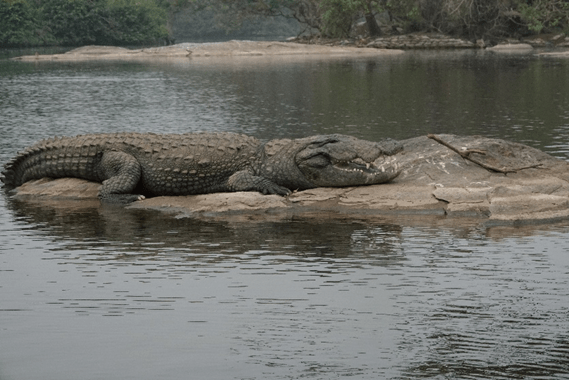
A social media post caught the attention of the admins in a WhatsApp group. Indeed, the clip was quite disturbing! It showed a live crocodile being skinned. A Chinese woman used a knife to remove the top layer of a crocodile’s skin to create a stylish ladies’ handbag. If a weak-hearted person sees the clip, he would even faint. Now the question is whether the post is scary or the action. In another clip, it was explained how shuttlecocks are manufactured using feathers plucked from live pigeons. Shockingly, millions of feathers are taken from these birds while they are still alive. We do not want to debate whether such practices should be banned, but it is a fact that animals are being tortured. Cruelty toward animals for meat, milk, eggs, leather, wool, or silk is a major ethical concern worldwide. We cannot stop killing animals for meat. Any debate for this will end in controversy. But unconfirmed sources quote the world’s non-vegetarians as between 75% and 90%. However, in India, A 2021 survey found that about 39% of Indian adults describe themselves as “vegetarian.”  Slaughterhouses, in general, claim to kill animals at one go and without torture. This is what we understand, and we may be wrong. The animals are part of the food chain, which we acknowledge. Our concern lies with the cruelty inflicted on animals.

What is more painful to hear is that many wild animals and birds are tortured and killed for purposes other than food. Tigers are poached for their nails, teeth and bones. Metal traps used for killing them cause slow and painful death. Monkeys are forced to perform in street shows, kept in chains, and beaten until they obey commands. In traditional practices like “dancing bears” (now banned), bears had their teeth broken and noses pierced with hot rods. Crocodiles are killed brutally or skinned while alive for leather. Snakes are nailed to trees and skinned alive in illegal markets. Snake charmers remove fangs, causing infection and starvation. In Tamil Nadu, for kili josiyam (parrot astrology), flight feathers of rose-ringed parakeets are cut painfully so they cannot fly away and are used to pick fortune cards, even though they are protected under Schedule 4 of the Wildlife Act. It is an offence as per the law. The above are only indicative examples, not exhaustive. Instead of condemning social media posts that show cruelty towards animals, just because they induce palpitations, group members must come forward to become the voice for the voiceless. People who forward such posts must add a sentence cautioning the weak-hearted people to avoid seeing them. In our opinion, bringing such horrible episodes to the limelight will help create awareness and stop cruelty to animals.

Stop torturing trees!

Published in South Express on 11.10.25

“Save trees! Plant more trees!” These are the most common slogans heard in any town. I wonder whether we truly care about the trees. Day in and day out, we encounter attacks on trees, especially in urban areas. Anurag ventilates his anger in social media when a poster or banner is nailed to a tree. Aswinikumar becomes vociferous about the concretization of the trees, which slowly destabilizes a tree. Kumar says that commercial organisations like hotels or malls seek publicity by using serial lights around trees without realizing that the electrification of a tree heats its bark and destabilizes its growth. But then, if there is no one to question, the bureaucrats and political parties will never bother. Recently, in Tamil Nadu, during a political rally by a film star, the crowd climbed a tree to avoid being crushed in a stampede. In the process, the branch of a tree broke down, wounding all those who climbed up the tree. When such conditions prevail, the tree is the victim. During the monsoon, trees reportedly fall due to heavy rain. But if we look at the fallen tree closely, we will realize that it was due to heavy concretization of the root zone. Nowadays, for every development project, trees are felled or transplanted. The common man has no clue about the number of trees felled or transplanted. We believe the data given by the authorities. Whenever some mass cutting is contemplated, environmentally conscious people raise their voice. If our voice is feeble, then the development project goes further without any checks.

Nails puncture the bark, damaging the inner layers, including the xylem and phloem, which are responsible for transporting water and nutrients throughout the tree. The protective bark of a tree shields the inner living tissue from pathogens and insects. Nailing punctures this defense, creating an entry point for infection. A healthy tree may grow over the wound, but a weak or young tree may not recover. Similarly, artificial lights wrapped around trees as decoration affect the lifecycle of the trees and the animals and birds associated with these trees. light at night can disturb the tree’s natural resting cycle and interfere with its process of photosynthesis. Similarly, covering the roots with concrete suffocates and starves the tree by preventing essential water, air, and nutrients from reaching its root system. Right from nailing to transplanting, trees are subject to untold miseries. India is the country that demonstrated to the world that trees are our brothers and sisters. Chipko movement raised the brows of world leaders who were awestricken at the kind of love shown by Indians. Trees occupy a very important role in our literature. Trees do not speak, yet they breathe life into everything around us. Let us become their voice, their guardians, and their companions in survival. For when a tree falls, a part of humanity falls with it.

Why do people throw garbage in unauthorised areas?

Published in South Express on 4.10.25

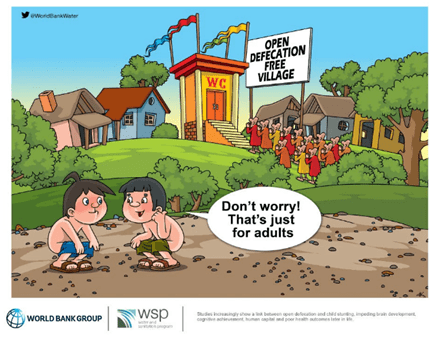
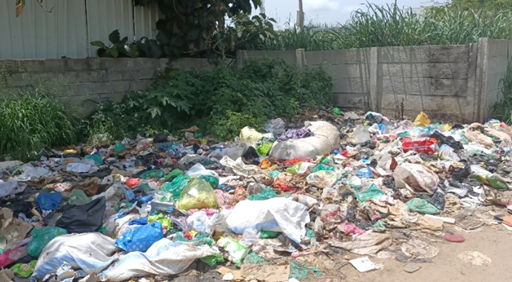
Swachh Bharat Abhiyan or Clean India Mission is a country-wide campaign initiated by the Government of India on 2 October 2014 to eliminate open defecation and improve solid waste management, and to create Open Defecation Free villages. As we enter the 12th year of Swachh Bharat Abhiyan, it is unfortunate that the mission has not evoked much interest. In other words, there is not much visible change in the garbage handling. Almost every municipality is struggling to manage the ever-increasing amount of garbage. I asked a question in a WhatsApp group to understand why individuals tend to throw garbage. From your WhatsApp survey, it seems people are aware of the problem but frustrated. Optimism exists, but anger dominates—showing that citizens want change but don’t feel empowered to make it happen. A few of the views that came up are as under “People lack civic consciousness.” “No dedicated garbage bins, periodically cleared.”“Independent houses have no lifting facility like apartments. “People don’t want to pay for garbage.” “No strict rules or enforcement of penalties.”

One member added, “7 years back, I was staying in Amrutahalli, Bengaluru. It was not so developed during those days. But garbage vans used to come, whistle near every house, and used to pick up garbage. The garbage pickers were responsible during those days.” In fact, this system is in vogue in some municipalities where even publicity songs are played by the collection van. Users put the garbage in the van daily. But all said and done, we still see the eyesore dumps in all cities. Talking about penalties, another member added, “Garbage cess is already imposed. Not sure whether the collection started? Community composting, as done in the HSR layout, is one option that can be thought of. Every street or group of streets can have a dedicated place for community composting for all the wet waste generated in the area.”  

It is a fact that civic sense and responsibility are missing or perhaps not much developed in India. Bengaluru was ranked the fifth dirtiest city in India in the Swachh Survekshan 2025 survey. Of course, this survey was made among the cities with a population above one million. Along with Bengaluru, Ranchi, Chennai, Ludhiana, and Madurai were ranked the top dirtiest cities. Unfortunately, some of the southern states that claim the highest percentage of education level have more unauthorized garbage dumping. Cleanliness is everyone’s responsibility. It is not fair if somebody keeps his home very clean but does not care about the surroundings. Every year, we remember Mahatma Gandhi on Oct 2nd, because not only is it his birthday, but also that the Swachh Bharat Abhiyan was rightly started by the PM on this day.