Torturing animals is suicidal!

Published in South Express on 13.12.25

Disturbing visual! Why don’t admins remove video clips of animals being tortured?

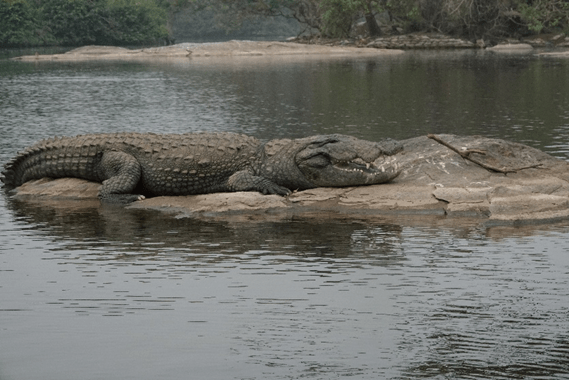
A social media post caught the attention of the admins in a WhatsApp group. Indeed, the clip was quite disturbing! It showed a live crocodile being skinned. A Chinese woman used a knife to remove the top layer of a crocodile’s skin to create a stylish ladies’ handbag. If a weak-hearted person sees the clip, he would even faint. Now the question is whether the post is scary or the action. In another clip, it was explained how shuttlecocks are manufactured using feathers plucked from live pigeons. Shockingly, millions of feathers are taken from these birds while they are still alive. We do not want to debate whether such practices should be banned, but it is a fact that animals are being tortured. Cruelty toward animals for meat, milk, eggs, leather, wool, or silk is a major ethical concern worldwide. We cannot stop killing animals for meat. Any debate for this will end in controversy. But unconfirmed sources quote the world’s non-vegetarians as between 75% and 90%. However, in India, A 2021 survey found that about 39% of Indian adults describe themselves as “vegetarian.”  Slaughterhouses, in general, claim to kill animals at one go and without torture. This is what we understand, and we may be wrong. The animals are part of the food chain, which we acknowledge. Our concern lies with the cruelty inflicted on animals.

What is more painful to hear is that many wild animals and birds are tortured and killed for purposes other than food. Tigers are poached for their nails, teeth and bones. Metal traps used for killing them cause slow and painful death. Monkeys are forced to perform in street shows, kept in chains, and beaten until they obey commands. In traditional practices like “dancing bears” (now banned), bears had their teeth broken and noses pierced with hot rods. Crocodiles are killed brutally or skinned while alive for leather. Snakes are nailed to trees and skinned alive in illegal markets. Snake charmers remove fangs, causing infection and starvation. In Tamil Nadu, for kili josiyam (parrot astrology), flight feathers of rose-ringed parakeets are cut painfully so they cannot fly away and are used to pick fortune cards, even though they are protected under Schedule 4 of the Wildlife Act. It is an offence as per the law. The above are only indicative examples, not exhaustive. Instead of condemning social media posts that show cruelty towards animals, just because they induce palpitations, group members must come forward to become the voice for the voiceless. People who forward such posts must add a sentence cautioning the weak-hearted people to avoid seeing them. In our opinion, bringing such horrible episodes to the limelight will help create awareness and stop cruelty to animals.

Cyclone – brings strangers, raises brows!

Published in South Express on 6.12.25

Yes, I am referring to the Amur falcons that were carried to Point Caimere by the strong winds during the recent cyclone. This attracted media attention and raised the eyebrows of environmentalists. It is but natural that a cyclone creates havoc. Obviously, Cyclone Ditwah also brought heavy rain and strong winds to the Tamil Nadu and Puducherry coast. After creating havoc in Sri Lanka, it has slowly lost its intensity as it crossed the Indian shore. But there were some unusual developments during this cyclone. Various marine species and birds were washed ashore. Two Amur falcons were blown off course during their migration and landed on the Point Calimere (Kodiakarai) coast. These birds are passage migrants and typically migrate through Gujarat and Maharashtra, but the cyclone forced them to divert from their usual route. Are these isolated cases, and could they be neglected? We need to wait and see whether these falcons will stay in the eastern coast or will return to their regular migration route in the western shore. In general, the Amur Falcon stays in India for a brief time. We do not know how the stranded birds will respond to this change. (Picture courtesy: birds of the Indian Subcontinent by Richard Garmmett & others)

This is just one side of the game. I recently came across a viral video showing an elephant saving a spotted deer stranded in floodwaters caused by the cyclone. In another instance, a leopard climbs onto an elephant to escape the floods. These animal behaviours are abnormal and misleading. Comments have already indicated that these video clips are AI-generated. Why these social media champions pass false and fabricated videos is anyone’s guess. Perhaps, more followers may help them monetise their page. But in the process, they pass on misinformation. Today’s netizens must ensure twice that a viral video is genuine or doctored. Else the misinformation would spread like wildfire. The fallout of such misinformation will be harmful and create disturbance to the behavioural pattern of human beings.

Cyclone is a serious matter. Today, Sri Lanka is under a nationwide state of emergency after Cyclone Ditwah triggered catastrophic flooding across the western provinces, killing at least 366 people and leaving entire neighbourhoods submerged. Residents wade through chest-high waters, stranded without food or shelter as they plead for urgent assistance. It seems to be the worst disaster in the country’s history. According to the Disaster Management Centre, key infrastructure like roads and bridges, power and rail networks are damaged and over a million people are affected. While Cyclone Ditwah has weakened into a deep depression near Tamil Nadu, officials warn that floodwaters may take days to recede. Under such a serious calamity, spreading rumours and misinformation will add more damage than good

Is Bangalore inching towards Delhi?

Published in South Express on 29.11.25

AQI in Bangalore has crossed 100

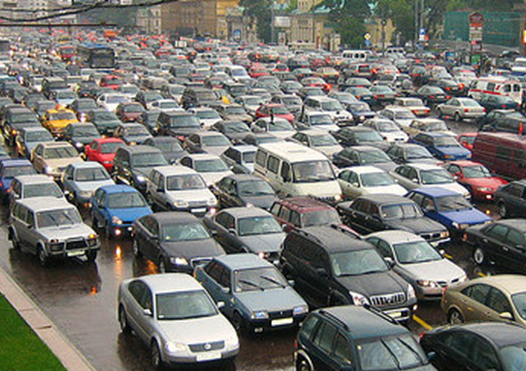
This is the top news nowadays. For residents of Bengaluru, the fact that the Air Quality Index (AQI) has breached the 100 mark has led to widespread cynicism. Many people are vociferous about the increased air pollution levels caused by heavy traffic and ongoing construction works. Indeed, the city is no longer the historical “Garden City” it once was. The innumerable residential construction projects and corporate skyscrapers have caused more harm than good. It is high time that the policymakers put a halt to the licensing of such construction and consider expanding to nearby towns like Tumkur. The increased migratory population has slowly started telling upon the most preferred Bangalore weather. Summers are prolonging, and more air conditioning units are seen near every balcony. Lifestyle changes have led residents to go for a second car. But comparing Delhi, Bangalore is far better. Delhi’s air pollution, which has breached 400 mark, is turning the city into a gas chamber. The situation is grim and worse when compared to top cities of the world. While Bengalurians may console themselves by comparing Delhi, they need to understand that Bengaluru is nowhere better than Delhi. Situated in the Gangetic plains, Delhi’s terrain resembles a bowl, which allows air pollutants to linger over the city for extended periods, particularly when mixed with winter fog. In contrast, Bangalore is located on the Deccan Plateau, giving it a convex shape. This topography causes air pollutants to disperse more easily, creating the impression that pollution is better managed in Bangalore. However, if increasing pollution is not addressed promptly, the city could eventually face the same challenges as Delhi.

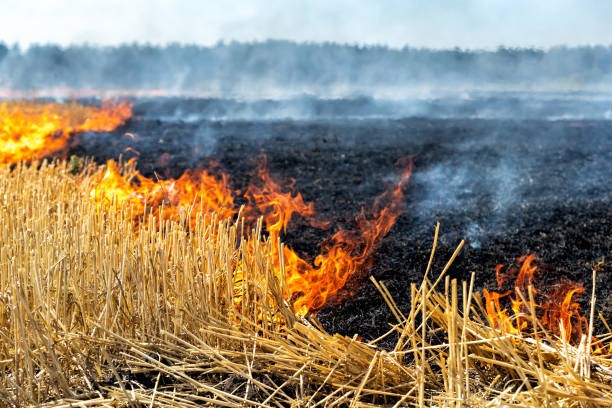
Delhi faces several urgent challenges, including high vehicular pollution levels, ongoing construction, and harmful practices such as garbage and stubble burning from neighbouring states. These issues have been lingering for years, with no tangible solution in the near future. Doctors started advising patients to leave Delhi. While neighbouring states report a notable decrease in stubble burning, it is clear that the measures implemented by authorities in Delhi are insufficient. Additionally, residents of Delhi are often reluctant to step out of their comfort zones and opt for public transportation, despite the excellent Metro connectivity available in the city. In Bangalore, the situation is getting worse and inching towards a stage of no return. The fact that the AQI has crossed 100 is also a dangerous indication. If there is no tab on the new constructions, the PM2.5 level will definitely go up. Metro and flyover construction is severely delayed. Damocles’ sword hangs over the city as the 16.7 km, ill-conceived, unscientific Tunnel project prepares for its ground-breaking ceremony in February 2026. While Bangalore is gearing up to face the increased traffic snarls due to the tunnel project, it is worrisome to imagine where PM 2.5 levels will reach. God alone can save Bangalore!

Where are the migratory ducks?

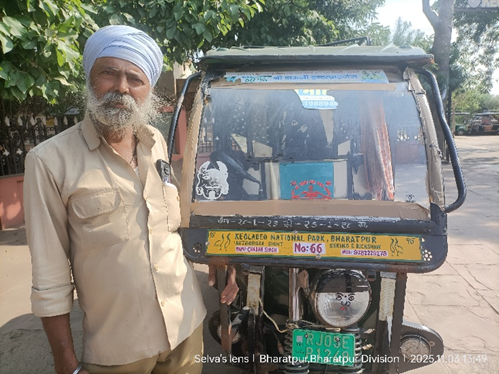
Sardar Charan Singh appeared downcast when we boarded his e Rickshaw from the hotel where we stayed. E-Rickshaw No. 66 had not seen many tourists this season. As a senior birding guide with four decades of experience, Charan Singh, the authorised rickshaw driver, is more than just a driver. He shares insights about the woolly-necked stork, shovellers, Garganey, comb ducks, and the collared scops owl. While these uncommon bird species may not be so important to normal tourists, seasoned birders often seek out such unique names while chatting with the rickshaw drivers. To successfully capture images of birds like the Garganey, Gadwall, Red-crested Pochard, Comb Duck, Black Bittern, or Nightjar, birdwatchers often rely on the expertise of guides. Sardar knows exactly where the Nightjars are likely to be perched, ensuring that his customers leave delighted. However, Charan Singh was feeling dissatisfied this time. Due to the El Niño effect, the weather was unusually hot, even for November. Typically, this time of year would attract many migratory birds to Bharatpur. But Charan Singh is determined to show some special birds to the bird lovers. So, even before the birders get disappointed, he seeks permission to go to a nearby area, about a KM away from the national park.  Though initially it appeared a typical guide mindset to market something, a drive with him was not disappointing. The birds seemed to have taken a new abode, it looked like. We had a glimpse of all three species of Cormorants, Spoonbills, Openbills and night herons besides the usual egrets, jacanas, coots and moorhens. Thousands of water birds congregated here for hatching and breeding. It appears that the Rajasthan Govt had decided to convert this place into a heronry. At least this is what a rusted board indicated. When we returned to the Sanctuary and started moving inside, we were a little bit disappointed as there were not many water birds except Painted Storks in thousands. Charan Singh said that the breeding of Painted storks was delayed this year. Some common birds were also missing. Saurus crane was not seen anywhere. We were looking for migrants but were disappointed. Initially, we thought of making two rounds, one in the morning and another in the evening. But, realising that migrants were missing, we packed up and wanted to return. But Charan Singh took us around on unknown routes, trying to help us spot a few uncommon birds. Of course, it helped us to spot a Jackal and a spotted deer. But that is not what we looked for. Though the local guides still pin hope on the arrival of migratory ducks by November end, the fact of delay in migration clearly indicates that the El Niño situation may be intensified into climate change. In old books, there is evidence for counting 500- 600 species; the present-day guides estimate 300 to 400 species during the migratory season. The global hotspot, Keoladeo National Park, which looks deserted and dry, does not appear to have any hope for tomorrow. However, we could record 82 species of birds in 4 hours

Birds are vanishing fast!

Published in South Express on 18.10.25

Where No Vultures Fly, a 1951 British film directed by Harry Watt and starring Antony Steel and Dinah Sheridan, was an adventure movie based on the real-life story of the conservator Mervyn Cowie in the jungles of Kenya. Now vultures are rarely seen. I still remember the Gole market in Karol Bagh, which had meat shops in the 90s. I used to wonder at the huge flock of giant-sized vultures waiting for the leftovers. When I used to travel by a scooter from Gole Market towards East Patel Nagar, enjoying the winter weather, I never missed the migratory Swallows gregariously flying low and near me, while waiting at signals. Gone are those days, as flyovers and metro pillars dominate most signals. The Great Indian Bustard (GIB) is the state bird of Rajasthan. Recently, I saw a video clip in social media that tends to promote a whiskey brand called Godawan 173, relating it to the near extinction of GIB. The Rs 500000 per bottle of whiskey is Indian-made (Is it self-reliance?) Yes, you read it correctly. It is Rs 5 lac, coming in a beautiful Jaipur Blue bottle. While the researchers dispute the actual number of birds (not 173, they claim), it is a shame that a whiskey brand is promoting conservation of GIB without even caring to contribute to the conservation

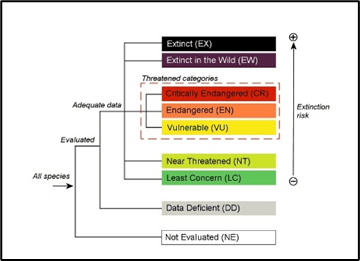
Rapid urbanization has taken its toll. Even the most common sparrow has become uncommon in cities and towns. But still, they are part of rural India. Recently, it was reported that the India Roller, Karnataka’s state bird (neelkanta in Kannada) has been downgraded to the ‘Near Threatened (NT)’ category by the International Union for Conservation of Nature (IUCN) from the earlier category of ‘Least Concern (LC)’. Whenever we go birdwatching in natural areas like lakes and rural scrub jungles, we seek out the Indian Roller, which is often regarded as one of the most beautiful birds. I still remember seeing this bird perched on power lines in large numbers back in the 90s. While travelling by train, it was fascinating to observe this bird, with its distinctive big head and bright blue colour, as it flew by. Unfortunately, it has now become a rarity. In Bangalore, the winter season has nearly begun, but migratory bird species are notably absent. Man-made climate change is believed to be the primary cause of the rapid decline of these rare species. This trend is evident in other regions as well. For instance, in Rajasthan’s Bharatpur National Park, migration has yet to start. Similar situations are occurring in many other places. Activities such as the beautification of water bodies, unregulated ecotourism, and careless development projects are causing us to lose our valuable natural assets. The vanishing of the bird species is a stark reality of how fragile migratory birds have become. Stronger global action is needed to protect rare species before they too vanish.  (Photo courtesy: Karthik, Bangalore, and IUCN website)

Are cloudbursts due to climate change?

Published in South Express on 20.9.25

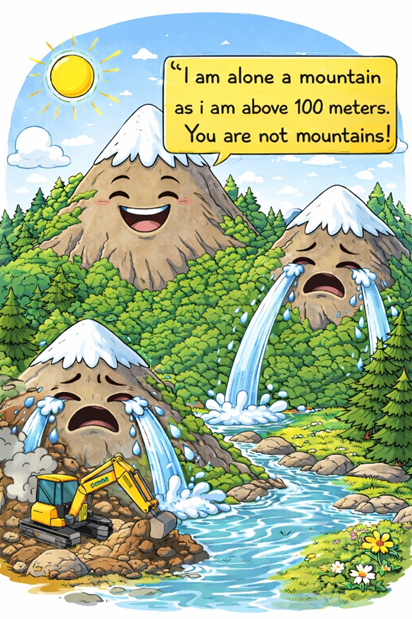
Cloudbursts are unpredictable events that occur within just a few seconds. A cloudburst refers to a sudden and heavy rainfall in a localized area. This phenomenon typically happens when warm, moisture-laden air rapidly rises, often due to local topography such as mountains or convection. This rapid ascent leads to intense condensation, resulting in a significant amount of rainfall over a short period. The recent cloudbursts in Uttarkashi, Uttarakhand and Kishtwar, Jammu and Kashmir have created havoc and taken a heavy toll. The question is whether the cloudbursts are natural or manmade. It is not a new phenomenon. The 2013 cloudburst in Kedarnath is still fresh in memory. In fact, cloudbursts occur especially in mountainous regions like the Himalayas or Western Ghats, not in plains.

Now, the common question is whether the frequent cloudbursts are unnatural. While cloudbursts are natural, the frequency is high due to anthropogenic activities. The atmospheric heat is amplified more than the average warmth. This, in turn, increases the rainfall intensity.  Climate change is affecting the monsoon patterns, resulting in flooding and devastation. Losses due to cloudbursts are huge when constructions are in flood-prone zones. In the name of promoting eco-tourism, ruthless construction and infrastructure development activities take place in the hills. So, climate change is increasing the frequency and intensity of cloudbursts by raising atmospheric moisture levels and destabilizing local weather systems.

In the Himalayas, the mountains are steep and tall. The valleys are narrow and bowl-shaped. Clouds become trapped in this area and cannot move out, leading to a literal explosion. Valleys are often crowded due to mushrooming ecotourism spots. This is the main reason for significant human losses. The visuals on TV channels paint a gloomy picture. We saw many multi-storeyed buildings that collapsed like a house of cards. There were alarming scenes of structures buried under mud and slush. We are all aware that man’s greed is endless. Acting without regard for the ground realities or conveniently ignoring nature’s course will only lead to disaster, if not today, then tomorrow. Immediate Government intervention is necessary to stop congestion in hill areas. Allowing such construction must be minimal, and after a proper study of environmental impacts.

Why stubble burning is not there in South India?

Published in Dwarka Express on 26.11.23

‘Delhi has become a gas chamber. It is not possible to breath’ grumbles a Delhiite. ‘Delhi is far better, Patna is worse’ says another, while there was another voice, ‘Haryana is worst’. Whatever may be the comparison parameters, the fact remains that the entire North is reeling under air pollution pressures as is evident from Central Pollution Control Board (CPCB) data. CPCB’s Graded Response Action Plan (GRAP) measures are put in place. Many medical advices are on air. But such stubble burning cases are not reported from South India. In south, the stubble is used as cattle fodder.

Why don’t the South India’s model be practiced by Punjab farmers to give up stubble burning. For one reason, the climatic condition in South is different from North. For any human action, there is some linkage to environment. Secondly, the crop seasons and patterns also make the difference. There are two main crop seasons in India, namely rabi and Kharif. Rabi crops like Wheat, Barley and Pulses are harvested during April to June and Kharif crops like paddy, Maize, Jower etc are harvested during Sep to Oct. In South, the farmers do not depend on wheat cultivation during Rabi and instead they sow pulses and millets. They are not in a hurry to plough the land and sow the seeds hurriedly. In Punjab and Haryana, farmers need to make frantic efforts to use the seasons and, in this process, they are in a hurry to prepare their lands for the next season. Especially the short gap during Sep to Oct make them go desperate to keep the land ready for the next sowing the rabi crop. Climatic changes worsen the situation. Especially the month of October is crucial and, in their anxiety, the farmers go for burning instead of trying alternate methods.  In 80’s and 90’s, North Indian cities like Delhi had minimal impact due to stubble burning. In olden days, the stems left out after harvesting grains, called fodder or tudi in Punjabi and used for cows, bulls and buffaloes as animal feeds. Nowadays, the usage of animals for ploughing is replaced by tractors. In South, the usage of animals is retained still. Traditionally also, festivals like jallikattu in Tamilnadu, Maramadi in Kerala or Kambala in Karnataka have been useful to retain the usage of bulls and buffaloes. In fact, farmers in Punjab also admit that the burning of stubble in the land spoils the quality of top soil and makes it unhealthy, besides polluting the air. Fodder serves as animal feed as well as natural fertilizer. Even as we consider alternate uses and ways to utilize or dispose stubble, the process is time consuming and the technology is not up to the mark as of now. The earlier machine used for converting the stubble into fertilizer proved slow and not economical. Thus, an estimated 10 million tons of stubble out of 22 million tons produced are still burned each year, causing severe environmental damage. Considering larger interest, Governments need to play an important role cutting across party politics, by subsidizing super seeder machines, incentivizing sale of fodders and encouraging short term paddy crops. This will enable the civil society to guard against the ill effects of air pollution