Cyclone – brings strangers, raises brows!

Published in South Express on 6.12.25

Yes, I am referring to the Amur falcons that were carried to Point Caimere by the strong winds during the recent cyclone. This attracted media attention and raised the eyebrows of environmentalists. It is but natural that a cyclone creates havoc. Obviously, Cyclone Ditwah also brought heavy rain and strong winds to the Tamil Nadu and Puducherry coast. After creating havoc in Sri Lanka, it has slowly lost its intensity as it crossed the Indian shore. But there were some unusual developments during this cyclone. Various marine species and birds were washed ashore. Two Amur falcons were blown off course during their migration and landed on the Point Calimere (Kodiakarai) coast. These birds are passage migrants and typically migrate through Gujarat and Maharashtra, but the cyclone forced them to divert from their usual route. Are these isolated cases, and could they be neglected? We need to wait and see whether these falcons will stay in the eastern coast or will return to their regular migration route in the western shore. In general, the Amur Falcon stays in India for a brief time. We do not know how the stranded birds will respond to this change. (Picture courtesy: birds of the Indian Subcontinent by Richard Garmmett & others)

This is just one side of the game. I recently came across a viral video showing an elephant saving a spotted deer stranded in floodwaters caused by the cyclone. In another instance, a leopard climbs onto an elephant to escape the floods. These animal behaviours are abnormal and misleading. Comments have already indicated that these video clips are AI-generated. Why these social media champions pass false and fabricated videos is anyone’s guess. Perhaps, more followers may help them monetise their page. But in the process, they pass on misinformation. Today’s netizens must ensure twice that a viral video is genuine or doctored. Else the misinformation would spread like wildfire. The fallout of such misinformation will be harmful and create disturbance to the behavioural pattern of human beings.

Cyclone is a serious matter. Today, Sri Lanka is under a nationwide state of emergency after Cyclone Ditwah triggered catastrophic flooding across the western provinces, killing at least 366 people and leaving entire neighbourhoods submerged. Residents wade through chest-high waters, stranded without food or shelter as they plead for urgent assistance. It seems to be the worst disaster in the country’s history. According to the Disaster Management Centre, key infrastructure like roads and bridges, power and rail networks are damaged and over a million people are affected. While Cyclone Ditwah has weakened into a deep depression near Tamil Nadu, officials warn that floodwaters may take days to recede. Under such a serious calamity, spreading rumours and misinformation will add more damage than good

Is Bangalore inching towards Delhi?

Published in South Express on 29.11.25

AQI in Bangalore has crossed 100

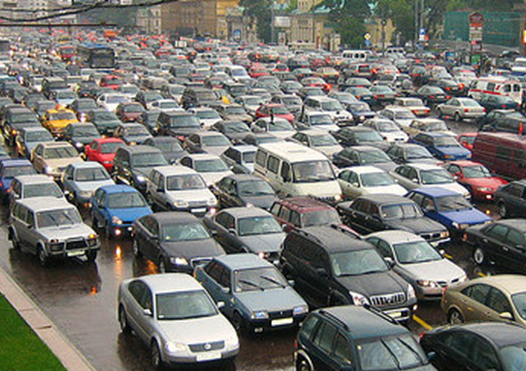
This is the top news nowadays. For residents of Bengaluru, the fact that the Air Quality Index (AQI) has breached the 100 mark has led to widespread cynicism. Many people are vociferous about the increased air pollution levels caused by heavy traffic and ongoing construction works. Indeed, the city is no longer the historical “Garden City” it once was. The innumerable residential construction projects and corporate skyscrapers have caused more harm than good. It is high time that the policymakers put a halt to the licensing of such construction and consider expanding to nearby towns like Tumkur. The increased migratory population has slowly started telling upon the most preferred Bangalore weather. Summers are prolonging, and more air conditioning units are seen near every balcony. Lifestyle changes have led residents to go for a second car. But comparing Delhi, Bangalore is far better. Delhi’s air pollution, which has breached 400 mark, is turning the city into a gas chamber. The situation is grim and worse when compared to top cities of the world. While Bengalurians may console themselves by comparing Delhi, they need to understand that Bengaluru is nowhere better than Delhi. Situated in the Gangetic plains, Delhi’s terrain resembles a bowl, which allows air pollutants to linger over the city for extended periods, particularly when mixed with winter fog. In contrast, Bangalore is located on the Deccan Plateau, giving it a convex shape. This topography causes air pollutants to disperse more easily, creating the impression that pollution is better managed in Bangalore. However, if increasing pollution is not addressed promptly, the city could eventually face the same challenges as Delhi.

Delhi faces several urgent challenges, including high vehicular pollution levels, ongoing construction, and harmful practices such as garbage and stubble burning from neighbouring states. These issues have been lingering for years, with no tangible solution in the near future. Doctors started advising patients to leave Delhi. While neighbouring states report a notable decrease in stubble burning, it is clear that the measures implemented by authorities in Delhi are insufficient. Additionally, residents of Delhi are often reluctant to step out of their comfort zones and opt for public transportation, despite the excellent Metro connectivity available in the city. In Bangalore, the situation is getting worse and inching towards a stage of no return. The fact that the AQI has crossed 100 is also a dangerous indication. If there is no tab on the new constructions, the PM2.5 level will definitely go up. Metro and flyover construction is severely delayed. Damocles’ sword hangs over the city as the 16.7 km, ill-conceived, unscientific Tunnel project prepares for its ground-breaking ceremony in February 2026. While Bangalore is gearing up to face the increased traffic snarls due to the tunnel project, it is worrisome to imagine where PM 2.5 levels will reach. God alone can save Bangalore!

Rare bird alert: Bangalore birdwatchers are in a frenzy!

Published in South Express on 22.11.25

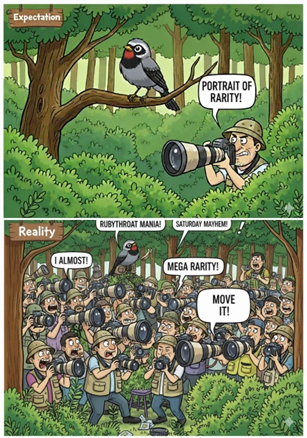
Himalayan Rubythroat spotted in Bangalore! This newspaper headline drove bird watchers mad, including me. Recently, when I was at Bharatpur Bird Sanctuary, as I came out of the ticket counter, an authorised guide tempted me to show the Himalayan Rubythroat. I hired him crazily, but instead of Rubythroat, he showed me cormorants and herons, the most common birds. When I returned to Bangalore, I heard that the bird had been spotted in Bangalore. This tiny bird with its bright red throat and distinctive calls is indeed a birdwatcher’s delight. It generally inhabits the Himalayas in the alpine meadows and dense bushes at elevations of about 3,000 meters above sea level. But how is it found in Bangalore? This is no surprise, as there are records in Kerala and Tamil Nadu of seeing this cute little bird. But the moment it is reported in the media, hundreds of birders start invading this place. Why do birders go crazy to photograph these birds? It is interesting to learn about human behaviour than bird  . Do they want to see more of the rare birds? Why are so many of them focused on spotting rare species? Why does sighting a rare bird catch the attention of the media? Is their main intention to record these rare birds and help save them from extinction? Many of the birds are slowly disappearing, including the state bird of Karnataka, the Indian roller.  Are we realising that these birds become rare due to habitat loss? What may be the thought process when they go in search of such rare species? Fun, adventure, hobby or commercial interest, what is it?

For a common man, when sparrows disappeared, it evoked little concern because he had more important things to worry about. For a media person, a bird’s disappearance or reappearance is just a headline to gain brownie points. For a politician, including an environment minister, there are many other priorities. For a bird photographer, what is his main objective in searching for a rare bird? There are a few kinds of nature photographers, one who has a commercial interest in rare sightings and the other who finds pleasure in posting rare birds on social media to attract more followers. For a naturalist, it is a conservation issue.  So what, if a few birds disappear? Coming back to the common man who has seen the extinction of a Dinosaur, it is the way the planet Earth will either eliminate the most unfit living beings (does it not remind us of Darwin’s theory of the survival of the fittest?) Ultimately, the small group of dedicated bird lovers passionate about birdwatching should focus on raising awareness about birds and taking practical steps to conserve them. They need to keep in mind the broader context of conservation as it evolves. Bird watching is not only a pleasurable activity but also plays a significant role in habitat conservation. We appeal to birders to emphasise the importance of rare birds, and all information about them, like their food sources and habitats. They must raise awareness on all platforms and contribute to the conservation of the ecosystem. “Birds can thrive without us, but humanity cannot thrive without birds”, said the renowned Indian ornithologist Dr Salim Ali. Let us not forget the golden words! (Photo courtesy: Social media post)

Why are Tiger Safaris closed in Bandipur & Nagarahole?

“Ecotourism has brought both excitement and challenges to the world of wildlife. Unfortunately, the surge in crowded safaris and the exuberance of tourists can intrude on the natural privacy that these majestic animals need”

Published in South Express on 15.11.25

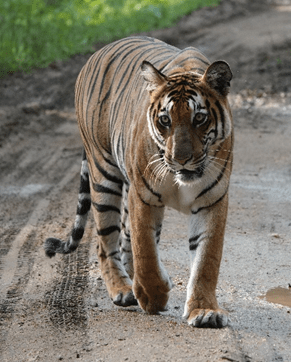
We made this observation in the South Express editorial on 2nd Aug 2025. Exactly after 2 months, we hear that the Karnataka Forest Department has suspended safaris in Bandipur and Nagarahole Tiger Reserves. The action is due to the tragic death of a 35-year-old farmer, Chowdaiah Naik, who was killed by a tiger near Hale Heggodilu in the Mysuru district. This is the third such attack in this area on a man by wild animals in the recent past. Karnataka’s Forest Minister Eshwar Khandre swiftly ordered the ban in response to local community concerns and instructed forest officials to capture the responsible tiger. While we appreciate the Minister’s prompt action, it raises concerns among eco-tourism advocates regarding the future of safaris in large reserves like Bandipur and Nagarahole. The main objectives of ecotourism are to conserve the natural environment, provide economic benefits to local communities, and educate visitors about conservation and local cultures. It aims to achieve this by promoting responsible travel that minimises negative impacts, respects local people, and provides financial support for conservation efforts. In the context of ecotourism, general tourists participating in safaris to experience the thrill of spotting a tiger in a natural forest often show little concern for conservation and habitat protection. Some even dare to go closer to the tigers and take selfies. Already, many incidents of such pseudo-adventure have been highlighted by the media. A signature campaign is currently underway to lift the suspension to protect the livelihoods of locals who rely heavily on ecotourism. Ecotourism can be a viable option if it is grounded in nature conservation and habitat protection. However, stricter rules and firm enforcement are necessary.

All safari jeeps should be equipped with recorded messages outlining the dos and don’ts when tourists are permitted inside the reserve forests. The practice of jeep drivers notifying each other and parading all vehicles around an animal must be banned. Hundreds of jeeps often rush to the location where a tiger is spotted, disrupting the animal’s privacy and peacefulness. Strict measures must be implemented to establish clear ethics for safari vehicles. India is home to two-thirds of the global tiger population. If compliance with regulations is ensured, revenue from ecotourism could enhance opportunities for wildlife protection.

Where are the migratory ducks?

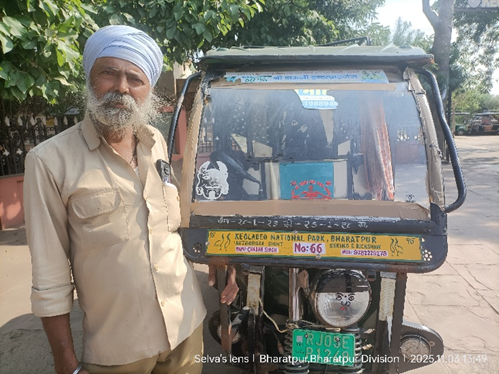
Sardar Charan Singh appeared downcast when we boarded his e Rickshaw from the hotel where we stayed. E-Rickshaw No. 66 had not seen many tourists this season. As a senior birding guide with four decades of experience, Charan Singh, the authorised rickshaw driver, is more than just a driver. He shares insights about the woolly-necked stork, shovellers, Garganey, comb ducks, and the collared scops owl. While these uncommon bird species may not be so important to normal tourists, seasoned birders often seek out such unique names while chatting with the rickshaw drivers. To successfully capture images of birds like the Garganey, Gadwall, Red-crested Pochard, Comb Duck, Black Bittern, or Nightjar, birdwatchers often rely on the expertise of guides. Sardar knows exactly where the Nightjars are likely to be perched, ensuring that his customers leave delighted. However, Charan Singh was feeling dissatisfied this time. Due to the El Niño effect, the weather was unusually hot, even for November. Typically, this time of year would attract many migratory birds to Bharatpur. But Charan Singh is determined to show some special birds to the bird lovers. So, even before the birders get disappointed, he seeks permission to go to a nearby area, about a KM away from the national park.  Though initially it appeared a typical guide mindset to market something, a drive with him was not disappointing. The birds seemed to have taken a new abode, it looked like. We had a glimpse of all three species of Cormorants, Spoonbills, Openbills and night herons besides the usual egrets, jacanas, coots and moorhens. Thousands of water birds congregated here for hatching and breeding. It appears that the Rajasthan Govt had decided to convert this place into a heronry. At least this is what a rusted board indicated. When we returned to the Sanctuary and started moving inside, we were a little bit disappointed as there were not many water birds except Painted Storks in thousands. Charan Singh said that the breeding of Painted storks was delayed this year. Some common birds were also missing. Saurus crane was not seen anywhere. We were looking for migrants but were disappointed. Initially, we thought of making two rounds, one in the morning and another in the evening. But, realising that migrants were missing, we packed up and wanted to return. But Charan Singh took us around on unknown routes, trying to help us spot a few uncommon birds. Of course, it helped us to spot a Jackal and a spotted deer. But that is not what we looked for. Though the local guides still pin hope on the arrival of migratory ducks by November end, the fact of delay in migration clearly indicates that the El Niño situation may be intensified into climate change. In old books, there is evidence for counting 500- 600 species; the present-day guides estimate 300 to 400 species during the migratory season. The global hotspot, Keoladeo National Park, which looks deserted and dry, does not appear to have any hope for tomorrow. However, we could record 82 species of birds in 4 hours

Environment can’t be saved in air-conditioned halls!

Published in South Express on 25.10.25

‘Banker by profession, Birder by choice!’ Yes! This is how I want to reflect on my personal journey. I wish to deviate from my usual editorial to share my thoughts on environmental activism and whether I am fit for the passion chosen! During my college education in zoology, I became fascinated by bird migration, a topic that my professor handled amazingly. This inspired me to take up birdwatching as a hobby. Through watching birds, I became motivated to engage in conservation, which ultimately led me to environmental activism. Pursuing a career in banking while doing some justice to conservation was not that easy. I took to environmental activities four decades back to start my first conservation work in Tamil Nadu. After spending nearly four decades as an environmental activist, I am not confident whether I do justice to this title. To truly make a difference for our environment, we need to roll up our sleeves and get to work at the grassroots level! The Rio De Janeiro Earth Summit in the 90s awakened many of us to think globally and act locally.  I put a question, ‘Why should I wait for my retirement?’ Let me start doing something! So, I contemplated forming a social organisation with the support of enlightened friends, and took efforts to get a lake declared as a Bird Sanctuary in Tamil Nadu, where a huge number of birds were present. Then came the jolt that I was transferred to Delhi by my Bank. I took 7 years to find a like-minded team in Delhi to continue my mission. At last, I founded Green Circle in Dwarka, New Delhi, in 2001. I could have chosen to be an independent environmentalist or could have written books on birds and wildlife. However, my inner voice guided me to focus on making small collective efforts, believing that a team can create a more powerful impact than an individual. Green Circle has now traversed 25 years of environmental action, during which I have gained more valuable lessons than I would have through solo efforts. Looking back, I feel proud of what I’ve accomplished. From designing flyers to maintaining accounts and organizing dharnas, rallies, and grassroots climate action programs, namely, plogging and tree planting, I’ve engaged deeply with environmental efforts. I’ve also presented at seminars alongside esteemed scholars, all under the Green Circle banner with a dedicated team. However, I believe our actions must lead to real conservation. Merely holding poster-making competitions or presenting papers in air-conditioned halls won’t combat climate change. Many global conventions face the same fate. As we approach our Silver Jubilee celebration on November 1, 2025, in Dwarka, New Delhi, I urge my fellow Green Circle members to reflect on these thoughts seriously.

Green Circle celebrates Silver Jubilee in Dwarka, New Delhi

Green Circle, a voluntary environmental organization that began its journey in Dwarka 25 years ago, proudly celebrates its Silver Jubilee Year. Founded with the vision of creating a cleaner, greener, and more sustainable community, Green Circle has grown into one of the most active and respected environmental groups in the region. Over the years, Green Circle has undertaken a wide range of impactful initiatives to promote environmental awareness, community participation, and ecological preservation. Its consistent efforts have inspired citizens, schools, and institutions to join the green movement. To commemorate its Silver Jubilee, Green Circle is organizing a grand community event, “Green Mela 2025” on 1st November 2025 at Bal Bhawan International School, Sector-12, Dwarka. The Chief Guest of the day is Shri Ankit Singh IPS, Deputy Commissioner of Police, Dwarka. The Guests of Honour are: Dr Dhananjay Joshi, Professor GGSIP, Kunal Gupta, Director Bal Bhavan International School, Dr Sumit Dookia- Professor GGSIPU, Poonam K Gaur, Asst. News Editor NBT, Dr Jaspreet Kaur, Principal Bal Bhavan International School, and Robin Sharma, Founder Dwarka Express. Eminent persons like Adv. Vikrant Tongad, Dr.Deepmala, Jyoti Raghavan Dr Arindam Ray, Shristi Srivasthava, Prof. Shankar Sahay, Poonam Gupta and Monika Singh will be the special guests. The event will bring together 50+ schools and over 1000 participants, featuring eco-stalls, painting and poster competitions, street plays, cultural performances, and interactive environmental sessions under the theme “Environment First, Efforts Must.” An estimated 2,500 footfalls are expected.

Birds are vanishing fast!

Published in South Express on 18.10.25

Where No Vultures Fly, a 1951 British film directed by Harry Watt and starring Antony Steel and Dinah Sheridan, was an adventure movie based on the real-life story of the conservator Mervyn Cowie in the jungles of Kenya. Now vultures are rarely seen. I still remember the Gole market in Karol Bagh, which had meat shops in the 90s. I used to wonder at the huge flock of giant-sized vultures waiting for the leftovers. When I used to travel by a scooter from Gole Market towards East Patel Nagar, enjoying the winter weather, I never missed the migratory Swallows gregariously flying low and near me, while waiting at signals. Gone are those days, as flyovers and metro pillars dominate most signals. The Great Indian Bustard (GIB) is the state bird of Rajasthan. Recently, I saw a video clip in social media that tends to promote a whiskey brand called Godawan 173, relating it to the near extinction of GIB. The Rs 500000 per bottle of whiskey is Indian-made (Is it self-reliance?) Yes, you read it correctly. It is Rs 5 lac, coming in a beautiful Jaipur Blue bottle. While the researchers dispute the actual number of birds (not 173, they claim), it is a shame that a whiskey brand is promoting conservation of GIB without even caring to contribute to the conservation

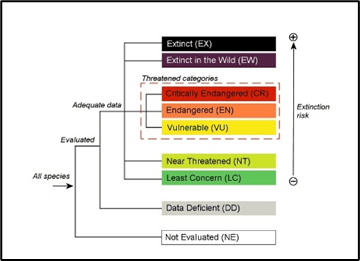
Rapid urbanization has taken its toll. Even the most common sparrow has become uncommon in cities and towns. But still, they are part of rural India. Recently, it was reported that the India Roller, Karnataka’s state bird (neelkanta in Kannada) has been downgraded to the ‘Near Threatened (NT)’ category by the International Union for Conservation of Nature (IUCN) from the earlier category of ‘Least Concern (LC)’. Whenever we go birdwatching in natural areas like lakes and rural scrub jungles, we seek out the Indian Roller, which is often regarded as one of the most beautiful birds. I still remember seeing this bird perched on power lines in large numbers back in the 90s. While travelling by train, it was fascinating to observe this bird, with its distinctive big head and bright blue colour, as it flew by. Unfortunately, it has now become a rarity. In Bangalore, the winter season has nearly begun, but migratory bird species are notably absent. Man-made climate change is believed to be the primary cause of the rapid decline of these rare species. This trend is evident in other regions as well. For instance, in Rajasthan’s Bharatpur National Park, migration has yet to start. Similar situations are occurring in many other places. Activities such as the beautification of water bodies, unregulated ecotourism, and careless development projects are causing us to lose our valuable natural assets. The vanishing of the bird species is a stark reality of how fragile migratory birds have become. Stronger global action is needed to protect rare species before they too vanish.  (Photo courtesy: Karthik, Bangalore, and IUCN website)

Stop torturing trees!

Published in South Express on 11.10.25

“Save trees! Plant more trees!” These are the most common slogans heard in any town. I wonder whether we truly care about the trees. Day in and day out, we encounter attacks on trees, especially in urban areas. Anurag ventilates his anger in social media when a poster or banner is nailed to a tree. Aswinikumar becomes vociferous about the concretization of the trees, which slowly destabilizes a tree. Kumar says that commercial organisations like hotels or malls seek publicity by using serial lights around trees without realizing that the electrification of a tree heats its bark and destabilizes its growth. But then, if there is no one to question, the bureaucrats and political parties will never bother. Recently, in Tamil Nadu, during a political rally by a film star, the crowd climbed a tree to avoid being crushed in a stampede. In the process, the branch of a tree broke down, wounding all those who climbed up the tree. When such conditions prevail, the tree is the victim. During the monsoon, trees reportedly fall due to heavy rain. But if we look at the fallen tree closely, we will realize that it was due to heavy concretization of the root zone. Nowadays, for every development project, trees are felled or transplanted. The common man has no clue about the number of trees felled or transplanted. We believe the data given by the authorities. Whenever some mass cutting is contemplated, environmentally conscious people raise their voice. If our voice is feeble, then the development project goes further without any checks.

Nails puncture the bark, damaging the inner layers, including the xylem and phloem, which are responsible for transporting water and nutrients throughout the tree. The protective bark of a tree shields the inner living tissue from pathogens and insects. Nailing punctures this defense, creating an entry point for infection. A healthy tree may grow over the wound, but a weak or young tree may not recover. Similarly, artificial lights wrapped around trees as decoration affect the lifecycle of the trees and the animals and birds associated with these trees. light at night can disturb the tree’s natural resting cycle and interfere with its process of photosynthesis. Similarly, covering the roots with concrete suffocates and starves the tree by preventing essential water, air, and nutrients from reaching its root system. Right from nailing to transplanting, trees are subject to untold miseries. India is the country that demonstrated to the world that trees are our brothers and sisters. Chipko movement raised the brows of world leaders who were awestricken at the kind of love shown by Indians. Trees occupy a very important role in our literature. Trees do not speak, yet they breathe life into everything around us. Let us become their voice, their guardians, and their companions in survival. For when a tree falls, a part of humanity falls with it.

Why do people throw garbage in unauthorised areas?

Published in South Express on 4.10.25

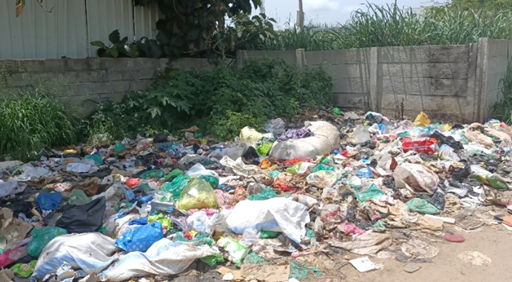
Swachh Bharat Abhiyan or Clean India Mission is a country-wide campaign initiated by the Government of India on 2 October 2014 to eliminate open defecation and improve solid waste management, and to create Open Defecation Free villages. As we enter the 12th year of Swachh Bharat Abhiyan, it is unfortunate that the mission has not evoked much interest. In other words, there is not much visible change in the garbage handling. Almost every municipality is struggling to manage the ever-increasing amount of garbage. I asked a question in a WhatsApp group to understand why individuals tend to throw garbage. From your WhatsApp survey, it seems people are aware of the problem but frustrated. Optimism exists, but anger dominates—showing that citizens want change but don’t feel empowered to make it happen. A few of the views that came up are as under “People lack civic consciousness.” “No dedicated garbage bins, periodically cleared.”“Independent houses have no lifting facility like apartments. “People don’t want to pay for garbage.” “No strict rules or enforcement of penalties.”

One member added, “7 years back, I was staying in Amrutahalli, Bengaluru. It was not so developed during those days. But garbage vans used to come, whistle near every house, and used to pick up garbage. The garbage pickers were responsible during those days.” In fact, this system is in vogue in some municipalities where even publicity songs are played by the collection van. Users put the garbage in the van daily. But all said and done, we still see the eyesore dumps in all cities. Talking about penalties, another member added, “Garbage cess is already imposed. Not sure whether the collection started? Community composting, as done in the HSR layout, is one option that can be thought of. Every street or group of streets can have a dedicated place for community composting for all the wet waste generated in the area.”  

It is a fact that civic sense and responsibility are missing or perhaps not much developed in India. Bengaluru was ranked the fifth dirtiest city in India in the Swachh Survekshan 2025 survey. Of course, this survey was made among the cities with a population above one million. Along with Bengaluru, Ranchi, Chennai, Ludhiana, and Madurai were ranked the top dirtiest cities. Unfortunately, some of the southern states that claim the highest percentage of education level have more unauthorized garbage dumping. Cleanliness is everyone’s responsibility. It is not fair if somebody keeps his home very clean but does not care about the surroundings. Every year, we remember Mahatma Gandhi on Oct 2nd, because not only is it his birthday, but also that the Swachh Bharat Abhiyan was rightly started by the PM on this day.

Are cloudbursts due to climate change?

Published in South Express on 20.9.25

Cloudbursts are unpredictable events that occur within just a few seconds. A cloudburst refers to a sudden and heavy rainfall in a localized area. This phenomenon typically happens when warm, moisture-laden air rapidly rises, often due to local topography such as mountains or convection. This rapid ascent leads to intense condensation, resulting in a significant amount of rainfall over a short period. The recent cloudbursts in Uttarkashi, Uttarakhand and Kishtwar, Jammu and Kashmir have created havoc and taken a heavy toll. The question is whether the cloudbursts are natural or manmade. It is not a new phenomenon. The 2013 cloudburst in Kedarnath is still fresh in memory. In fact, cloudbursts occur especially in mountainous regions like the Himalayas or Western Ghats, not in plains.

Now, the common question is whether the frequent cloudbursts are unnatural. While cloudbursts are natural, the frequency is high due to anthropogenic activities. The atmospheric heat is amplified more than the average warmth. This, in turn, increases the rainfall intensity.  Climate change is affecting the monsoon patterns, resulting in flooding and devastation. Losses due to cloudbursts are huge when constructions are in flood-prone zones. In the name of promoting eco-tourism, ruthless construction and infrastructure development activities take place in the hills. So, climate change is increasing the frequency and intensity of cloudbursts by raising atmospheric moisture levels and destabilizing local weather systems.

In the Himalayas, the mountains are steep and tall. The valleys are narrow and bowl-shaped. Clouds become trapped in this area and cannot move out, leading to a literal explosion. Valleys are often crowded due to mushrooming ecotourism spots. This is the main reason for significant human losses. The visuals on TV channels paint a gloomy picture. We saw many multi-storeyed buildings that collapsed like a house of cards. There were alarming scenes of structures buried under mud and slush. We are all aware that man’s greed is endless. Acting without regard for the ground realities or conveniently ignoring nature’s course will only lead to disaster, if not today, then tomorrow. Immediate Government intervention is necessary to stop congestion in hill areas. Allowing such construction must be minimal, and after a proper study of environmental impacts.

Lord Ganesha is not for polluting our environment!

‘Ganesh Bappa Maurya!’

The sounds resonate through the sky, capturing the deep faith of the devotees dedicated to the Elephant God. It is a significant moment for them as they bid farewell to their deity. However, we must remember that God does not want us to pollute the soil and water bodies with non-biodegradable substances. From Ahmedabad, an environmental activist says, ‘There is no law enforcement and so no political will to stop POP. While clay is increasingly being used, the progress is slow. Large idols present a significant challenge since they cannot be made from clay. Although immersion ponds are created along riverbanks for this purpose, some people still drop the idols wherever they find it convenient. This situation highlights a troubling reality

In Hyderabad, free clay Ganesha-making camps were organized, and free clay idols were distributed at the Press Club. In Bangalore, people tend to prefer POP idols because they are more affordable than pure clay ones. This allows them to purchase larger POP idols at a reasonable price. Additionally, many believe that POP idols are more visually appealing. Another contributing factor is tradition; older generations often choose to bring home the “fancy” idols they have used in the past. Chennai, which previously had little idol business due to Dravidian culture, is now gradually adopting the idol practices seen in Mumbai. In Chennai, idols were traditionally immersed in the ocean. But no one ic concerned about keeping the ocean clean. They only curse the environmentalists and social workers who want their water bodies to remain cleaner.

POP contains chemicals such as gypsum, sulphur, phosphorus, and magnesium. The dyes used to colour these idols may also contain mercury, cadmium, arsenic, lead, and carbon. Plastic and thermocol accessories are used to decorate these idols. Such materials are not biodegradable, hence are toxic when immersed in water bodies. The revised rules for idol immersion by the Central Pollution Control Board (CPCB) in 2020 stipulate detailed norms for manufacturers, local authorities, and guidelines for idol immersion in water bodies and the sea. As far as possible, low height and eco-friendly idols (made with natural clay, idols stuffed with eco-friendly food materials such as corn, spinach, wheat and vegetable powder), idols decorated with biodegradable, organic colours such as turmeric, chandan and gerua etc., There is no dearth of rules and norms in our country. Though the younger generation is slowly understanding the need to preserve our natural assets, society in general is not mature enough to abide by the law. Both the environment and Lord Ganesha deserve better care and treatment.

Dogs have 5 senses; humans have more!

The stray dog is in the news of late! It has become a controversial subject. A heated debate is currently shaking the social media and the media industry. When an animal is in the news, it goes without saying that Menaka Gandhi or PETA will also be in the news. Whether in Delhi, Tamil Nadu, Karnataka, or Maharashtra, incidents of dogs attacking kids or the elderly have become common. Why are such incidents increasing as days pass on? Who is to blame? On August 11, the Supreme Court issued Suo Motu orders regarding incidents involving stray dogs in Delhi. The court directed the Municipal Corporation of Delhi to relocate these dogs to shelters and pounds within eight weeks of the order. Following this, a three-judge bench reserved its decision on the pleas related to the directive on August 14, amid public outrage over the situation. The court is concerned that the precious human life is in jeopardy. Parents of innocent children who fell victim to the outrage of dog bites and the civil society want effective action. On the contrary, the animal activists are interested in protecting the voiceless animals. The dilemma is to find an effective solution and deliver justice to all. Is providing shelter a feasible solution for the entire country? It appears that even courts do not consider the questions of feasibility and pass orders on knee-jerk reactions. The stray dog enthusiasts also do not seem to take cognizance of the deaths of the kids all over the country.

In the ecological pyramid, humans occupy the top position. Decisions made by man impact flora, fauna, and natural resources. Certainly, stray dogs cannot decide to do birth control, sterilization, or any preventive measures within their limited scope of the 5 senses. It is the rationale of man that can change the situation.  According to the Animal Husbandry Department’s report of November 2023, there are approximately 1.53 crore (15.3 million) stray dogs roaming the streets in India. As Menaka Gandhi says, it is not feasible to house all stray dogs in pounds. However, nothing prevents policymakers from planning a multipronged approach that encompasses all strategies, such as sterilization, isolating ferocious dogs, awareness creation, encouraging private dog homes, etc. The local municipalities must take prompt action. Feeding the stray dogs is not a sin. It is imperative for dog feeders to assume the added responsibility of identifying dogs exhibiting undesirable behaviour and to notify the appropriate authorities for their rehabilitation. Pet owners often invest significant amounts of money in their pet dogs; therefore, it is worth considering why they do not adopt at least one stray dog. It is hoped that sound judgment will prevail among individuals within society.

STOP PRESS: On Aug 22nd, SC has ruled that its Aug 11th Order is paused and a more balanced & pragmatic verdict is given. Pleased to inform that our editorial suggestions are almost similar to the verdict