
Why do people throw garbage in unauthorised areas?

Published in South Express on 4.10.25
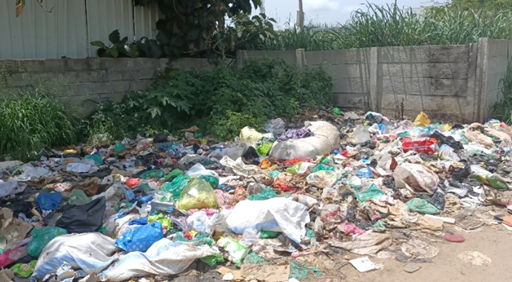
Swachh Bharat Abhiyan or Clean India Mission is a country-wide campaign initiated by the Government of India on 2 October 2014 to eliminate open defecation and improve solid waste management, and to create Open Defecation Free villages. As we enter the 12th year of Swachh Bharat Abhiyan, it is unfortunate that the mission has not evoked much interest. In other words, there is not much visible change in the garbage handling. Almost every municipality is struggling to manage the ever-increasing amount of garbage. I asked a question in a WhatsApp group to understand why individuals tend to throw garbage. From your WhatsApp survey, it seems people are aware of the problem but frustrated. Optimism exists, but anger dominates—showing that citizens want change but don’t feel empowered to make it happen. A few of the views that came up are as under “People lack civic consciousness.” “No dedicated garbage bins, periodically cleared.”“Independent houses have no lifting facility like apartments. “People don’t want to pay for garbage.” “No strict rules or enforcement of penalties.”

One member added, “7 years back, I was staying in Amrutahalli, Bengaluru. It was not so developed during those days. But garbage vans used to come, whistle near every house, and used to pick up garbage. The garbage pickers were responsible during those days.” In fact, this system is in vogue in some municipalities where even publicity songs are played by the collection van. Users put the garbage in the van daily. But all said and done, we still see the eyesore dumps in all cities. Talking about penalties, another member added, “Garbage cess is already imposed. Not sure whether the collection started? Community composting, as done in the HSR layout, is one option that can be thought of. Every street or group of streets can have a dedicated place for community composting for all the wet waste generated in the area.”  

It is a fact that civic sense and responsibility are missing or perhaps not much developed in India. Bengaluru was ranked the fifth dirtiest city in India in the Swachh Survekshan 2025 survey. Of course, this survey was made among the cities with a population above one million. Along with Bengaluru, Ranchi, Chennai, Ludhiana, and Madurai were ranked the top dirtiest cities. Unfortunately, some of the southern states that claim the highest percentage of education level have more unauthorized garbage dumping. Cleanliness is everyone’s responsibility. It is not fair if somebody keeps his home very clean but does not care about the surroundings. Every year, we remember Mahatma Gandhi on Oct 2nd, because not only is it his birthday, but also that the Swachh Bharat Abhiyan was rightly started by the PM on this day.
Why stubble burning is not there in South India?

Published in Dwarka Express on 26.11.23

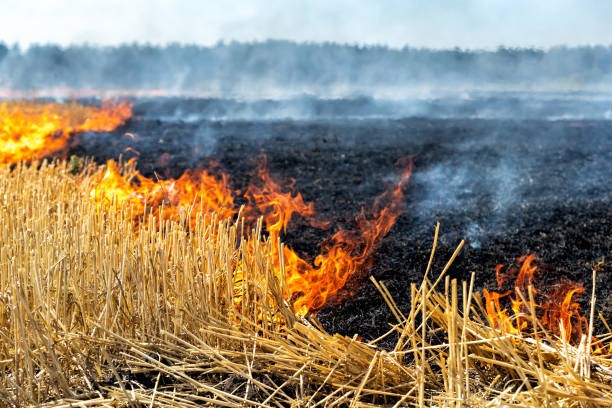
‘Delhi has become a gas chamber. It is not possible to breath’ grumbles a Delhiite. ‘Delhi is far better, Patna is worse’ says another, while there was another voice, ‘Haryana is worst’. Whatever may be the comparison parameters, the fact remains that the entire North is reeling under air pollution pressures as is evident from Central Pollution Control Board (CPCB) data. CPCB’s Graded Response Action Plan (GRAP) measures are put in place. Many medical advices are on air. But such stubble burning cases are not reported from South India. In south, the stubble is used as cattle fodder.

Why don’t the South India’s model be practiced by Punjab farmers to give up stubble burning. For one reason, the climatic condition in South is different from North. For any human action, there is some linkage to environment. Secondly, the crop seasons and patterns also make the difference. There are two main crop seasons in India, namely rabi and Kharif. Rabi crops like Wheat, Barley and Pulses are harvested during April to June and Kharif crops like paddy, Maize, Jower etc are harvested during Sep to Oct. In South, the farmers do not depend on wheat cultivation during Rabi and instead they sow pulses and millets. They are not in a hurry to plough the land and sow the seeds hurriedly. In Punjab and Haryana, farmers need to make frantic efforts to use the seasons and, in this process, they are in a hurry to prepare their lands for the next season. Especially the short gap during Sep to Oct make them go desperate to keep the land ready for the next sowing the rabi crop. Climatic changes worsen the situation. Especially the month of October is crucial and, in their anxiety, the farmers go for burning instead of trying alternate methods.  In 80’s and 90’s, North Indian cities like Delhi had minimal impact due to stubble burning. In olden days, the stems left out after harvesting grains, called fodder or tudi in Punjabi and used for cows, bulls and buffaloes as animal feeds. Nowadays, the usage of animals for ploughing is replaced by tractors. In South, the usage of animals is retained still. Traditionally also, festivals like jallikattu in Tamilnadu, Maramadi in Kerala or Kambala in Karnataka have been useful to retain the usage of bulls and buffaloes. In fact, farmers in Punjab also admit that the burning of stubble in the land spoils the quality of top soil and makes it unhealthy, besides polluting the air. Fodder serves as animal feed as well as natural fertilizer. Even as we consider alternate uses and ways to utilize or dispose stubble, the process is time consuming and the technology is not up to the mark as of now. The earlier machine used for converting the stubble into fertilizer proved slow and not economical. Thus, an estimated 10 million tons of stubble out of 22 million tons produced are still burned each year, causing severe environmental damage. Considering larger interest, Governments need to play an important role cutting across party politics, by subsidizing super seeder machines, incentivizing sale of fodders and encouraging short term paddy crops. This will enable the civil society to guard against the ill effects of air pollution