
Published in South Express on 13.12.25
Disturbing visual! Why don’t admins remove video clips of animals being tortured?
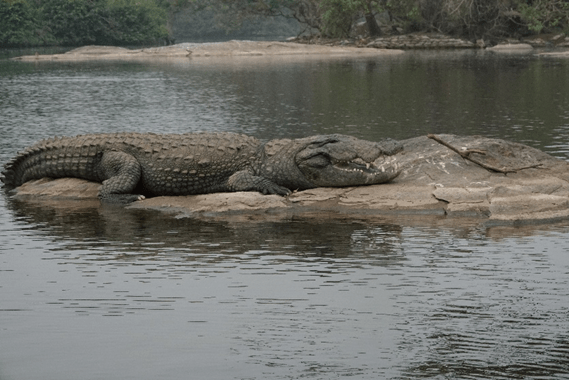
A social media post caught the attention of the admins in a WhatsApp group. Indeed, the clip was quite disturbing! It showed a live crocodile being skinned. A Chinese woman used a knife to remove the top layer of a crocodile’s skin to create a stylish ladies’ handbag. If a weak-hearted person sees the clip, he would even faint. Now the question is whether the post is scary or the action. In another clip, it was explained how shuttlecocks are manufactured using feathers plucked from live pigeons. Shockingly, millions of feathers are taken from these birds while they are still alive. We do not want to debate whether such practices should be banned, but it is a fact that animals are being tortured. Cruelty toward animals for meat, milk, eggs, leather, wool, or silk is a major ethical concern worldwide. We cannot stop killing animals for meat. Any debate for this will end in controversy. But unconfirmed sources quote the world’s non-vegetarians as between 75% and 90%. However, in India, A 2021 survey found that about 39% of Indian adults describe themselves as “vegetarian.” Slaughterhouses, in general, claim to kill animals at one go and without torture. This is what we understand, and we may be wrong. The animals are part of the food chain, which we acknowledge. Our concern lies with the cruelty inflicted on animals.
What is more painful to hear is that many wild animals and birds are tortured and killed for purposes other than food. Tigers are poached for their nails, teeth and bones. Metal traps used for killing them cause slow and painful death. Monkeys are forced to perform in street shows, kept in chains, and beaten until they obey commands. In traditional practices like “dancing bears” (now banned), bears had their teeth broken and noses pierced with hot rods. Crocodiles are killed brutally or skinned while alive for leather. Snakes are nailed to trees and skinned alive in illegal markets. Snake charmers remove fangs, causing infection and starvation. In Tamil Nadu, for kili josiyam (parrot astrology), flight feathers of rose-ringed parakeets are cut painfully so they cannot fly away and are used to pick fortune cards, even though they are protected under Schedule 4 of the Wildlife Act. It is an offence as per the law. The above are only indicative examples, not exhaustive. Instead of condemning social media posts that show cruelty towards animals, just because they induce palpitations, group members must come forward to become the voice for the voiceless. People who forward such posts must add a sentence cautioning the weak-hearted people to avoid seeing them. In our opinion, bringing such horrible episodes to the limelight will help create awareness and stop cruelty to animals.
 Dr V Selvarajan