Is Bangalore inching towards Delhi?

Published in South Express on 29.11.25

AQI in Bangalore has crossed 100

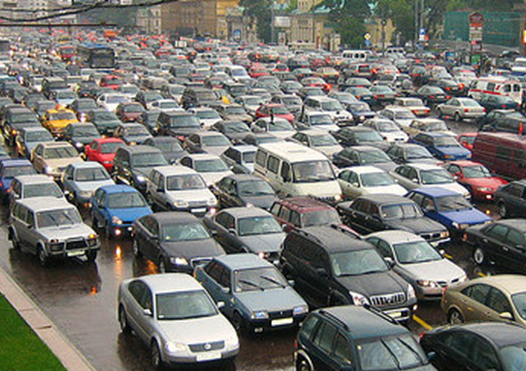
This is the top news nowadays. For residents of Bengaluru, the fact that the Air Quality Index (AQI) has breached the 100 mark has led to widespread cynicism. Many people are vociferous about the increased air pollution levels caused by heavy traffic and ongoing construction works. Indeed, the city is no longer the historical “Garden City” it once was. The innumerable residential construction projects and corporate skyscrapers have caused more harm than good. It is high time that the policymakers put a halt to the licensing of such construction and consider expanding to nearby towns like Tumkur. The increased migratory population has slowly started telling upon the most preferred Bangalore weather. Summers are prolonging, and more air conditioning units are seen near every balcony. Lifestyle changes have led residents to go for a second car. But comparing Delhi, Bangalore is far better. Delhi’s air pollution, which has breached 400 mark, is turning the city into a gas chamber. The situation is grim and worse when compared to top cities of the world. While Bengalurians may console themselves by comparing Delhi, they need to understand that Bengaluru is nowhere better than Delhi. Situated in the Gangetic plains, Delhi’s terrain resembles a bowl, which allows air pollutants to linger over the city for extended periods, particularly when mixed with winter fog. In contrast, Bangalore is located on the Deccan Plateau, giving it a convex shape. This topography causes air pollutants to disperse more easily, creating the impression that pollution is better managed in Bangalore. However, if increasing pollution is not addressed promptly, the city could eventually face the same challenges as Delhi.

Delhi faces several urgent challenges, including high vehicular pollution levels, ongoing construction, and harmful practices such as garbage and stubble burning from neighbouring states. These issues have been lingering for years, with no tangible solution in the near future. Doctors started advising patients to leave Delhi. While neighbouring states report a notable decrease in stubble burning, it is clear that the measures implemented by authorities in Delhi are insufficient. Additionally, residents of Delhi are often reluctant to step out of their comfort zones and opt for public transportation, despite the excellent Metro connectivity available in the city. In Bangalore, the situation is getting worse and inching towards a stage of no return. The fact that the AQI has crossed 100 is also a dangerous indication. If there is no tab on the new constructions, the PM2.5 level will definitely go up. Metro and flyover construction is severely delayed. Damocles’ sword hangs over the city as the 16.7 km, ill-conceived, unscientific Tunnel project prepares for its ground-breaking ceremony in February 2026. While Bangalore is gearing up to face the increased traffic snarls due to the tunnel project, it is worrisome to imagine where PM 2.5 levels will reach. God alone can save Bangalore!

BBMP to GBA, is it ‘old wine in a new bottle’?

Published in South Express on 27.9.25

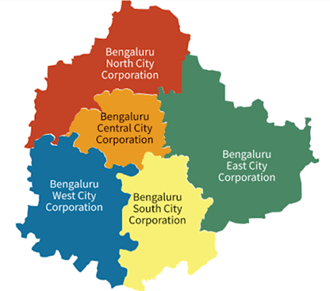
Will the Bruhat Bengaluru Mahanagara Palike (BBMP) perform better after being renamed as the Greater Bengaluru Authority (GBA)? Will the split of BBMP, now renamed as GBA work better? Will the five zones, that have now been formed serve the purpose for which they have been formed? GBA formed in May 2025, became fully operational in September 2025. The Authority has a three-tier governance structure, comprising the Authority at the apex, multiple City Corporations, and Ward Committees. It is hoped that the ward elections kept pending for more than 5 years will soon be held. As of now 350 wards are there in GBA’s jurisdiction. Even in 2015, it was decided to split the erstwhile BBMP into small corporations. The reason tabled by the Govt was that it was difficult to manage the city by a single corporation, given the ever-increasing population of Bangalore. The decision to split the former BBMP into smaller corporations was made in 2015. The government cited the growing population of Bengaluru as the reason, stating that managing the city with a single corporation had become increasingly challenging. In recent years, residents of Bengaluru have noticed a decline in the city’s overall condition, which is evident in areas such as garbage clearance, green cover, infrastructure maintenance, and other related services. Smaller municipalities achieve greater decentralisation, a key hallmark of good governance. There may also be a larger voice for the citizens and greater accountability towards them. In this regard, it may not be out of place to compare Delhi with Bangalore

In Delhi, there was a single corporation called ‘Municipal Corporation of Delhi (MCD)’ up to 2011. In 2012, the MCD was divided into three separate corporations: North, South, and East. The goal was to enhance regional efficiency since the area was twice the size of Bangalore. Delhi is not just another city. As the country’s capital, its governance has some special requirements. The trifurcation has led to economic imbalances, in addition to causing political controversies. In 2022,  Delhi reversed its decision and returned to a single corporation. Though there was a political hue and cry, it was finally decided to merge all three corporations. MCD thus had a rebirth. The citizens supported the remerger of the corporations since they hoped to get good governance, characterized by efficient and transparent service delivery.

In Bangalore, some experts believe that the division was unnecessary and implemented in a manner that will lead to uneven development in the city. Leaving aside politics, an effective decentralization will be in place if the authority is delegated to a dedicated committee. The city has to hold its Municipal elections immediately to ensure effective micro-management. Imbalances between corporations should be eliminated by apex-level policy management by the Greater Bengaluru Authority. The city is facing major problems, namely garbage clearance, potholed roads, overflowing drains, irregular water supply, and ever-rising traffic congestion. If decentralization can’t address these issues, then it will be nothing but old wine in a new bottle

(representative picture from the net)

‘Rain! Rain! When will you come again’

Published in Dwarka Express on 9.3.24

Bangalore has gone dry! All WhatsApp groups are busy with myriad number of forwards on water woes, and the worst part is, the same video clip is forwarded 3 or 4 times in the same group same day. An otherwise oblivious Bengalurian has suddenly become water cognizant. In his routine busy schedule, he may not even recollect when it was last raining. Yes, there is a long dry spell. Precisely, it was on 6th November, 2023, when there was a heavy downpour in Bengaluru. After that, sadly, not even a remote sign of rain! It is the impact of climate change, grumbles someone. Whether climate change or otherwise, it is true that something is happening, maybe perhaps a fall out of El nino situation. Chennai is also under dry spell after the worst monsoon spell. South Bangalore is in worse situation. Some RWAs have issued circulars to the residents to cut the water usage by 20%. Security guards are deployed to check the misuse. It is given to understand that one RWA has instructed using disposable cutleries, without realizing that the disposables will increase the trash especially single use plastic (SUP). There is already a ban on SUPs.

Bangalore has two major sources of potable water. One is from river Cauvery, i.e., 1450 million per day (MLD) and another one is nearly half of it from ground water from borewells. With both north east and southwest monsoon failed, the state is running short of water. The capacity of Cauvery reservoir is reduced by 50%. Out of about 17000 borewells, almost 7000 are dried out already with the result the residents are left with no other option except to buy water from tankers. The tanker mafia has hiked the water charges to 4 times already. The state govt is going from pillar to post to quench the thirst of the Bengalurians. Even milk lorries are diverted for sourcing water from rural areas.

Lack of proper rain water harvesting, raising encroachments in the lakes and unmindful felling of trees only add fuel to the fire. As the population of the city is growing exponentially, the demand for subsistence needs a lot of expert planning. Urban planning expertise encompasses all aspects which include environmental care as well as infra development. Sustainable development is jeopardized by half baked projects, populist schemes and vote bank politics. Bangalore is not an isolated case.  The last decade has witnessed sea change in growth. This in fact has affected the popular tag of retirees’ paradise status. If situation worsens, the city will lose its charm and will no more be preferred destination. Someone is proclaiming that it is all due to mushrooming of IT companies. Superficially, it looks correct but it needs further study as the economic impact of MNCs and IT Companies cannot be ignored. It is true that every Bengalurian gazes at the passing clouds daily with an appeal to Rain God to show mercy. This is just March beginning. Another two months will witness impatient waiting to get a respite from scotching sun. Though the mercury has touched 34 degrees in Bangalore, a Delhiite perhaps may be grinning as he has to brave the annual ritual of 46 degrees in April – June.