
Wolf is in news for quite sometime now. We are reminded of Akela, the wolf which brought up Mowgli in ‘Jungle Book’ by 19th century author Rudyard Kipling. The book is still being the favourite of children all over the world. Kipling’s effort to stop human-animal conflict through a fun filled story is perhaps unacceptable, at least in Utter Predesh, where children are repeatedly carried away by wolves in a Bahraich village. Bahraich district has seen 10 deaths and about 50 attacks. Out of the 10 deaths, nine are children. The traumatised villagers are perhaps hell bent on finishing the wolf species and the UP Government has declared the tragedy as an environmental disaster.
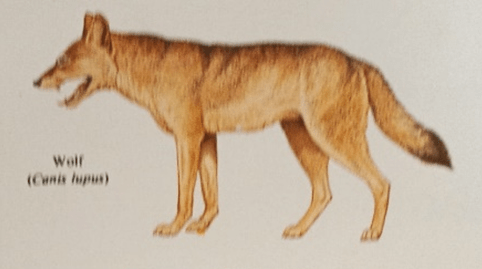
The latest news is that the Forest department has captured 5 out of a pack of 6 wolves and the last
one may also be captured at any moment. The department has used drones to track them. The officials say that the captured wolves will be sent to zoos. The forest team has chased away the beasts first and captured them later. Elephant dung and urine were used to scare away the animals from the villages nearer to jungles. The UP-forest department has named the search as “Operation Bhediya” (Bhediya is Wolf in Hindi) to catch the wolves responsible for attacks in 25-30 villages under Mahsi tehsil. It has also installed cameras in Sikandarpur village around six caves, which appear to be the habitat of wolves.
An environmental tragedy happens due to the lack of preventive measures. It is shocking to note that the affected families that live in proximity to the forests do not even have money to erect doors in their houses. This makes the villagers fall an easy victim to the wolves. Man-animal conflict is not new. The wild animals cannot understand the difference between a forest and a village. Their foremost activity in life is to find its food. A study reveals that the food pattern of the wolves changed of late. Instead of attacking livestock, they have started feeding on available carcasses. Stranded animals enter into nearby villages which is inevitable as the deforestation is growing steadily. Children become easy victim to such animals. All said and done, human life is in danger and the wolves too are endangered.
Wolves generally avoid human beings. According to a report on wolf population, about 3000 wolves are known to exist in India. The normal life span is 12 to 15 years. On one side, intensive conservation exercise is going on to save the endangered species. On the other side, the traumatized people want the animals to be killed immediately. The forest department is taking a cautious step by capturing and rehabilitating them in zoo parks. In fact, the killing of children by wolves is not a new phenomenon. There is a mention about this wolf behaviour in S H Prater’s 1948 publication, ‘The book of Indian animals.’ When driven by hunger, any animal does not have the rationale thinking to differentiate between man and beasts. India is losing its rich biodiversity gradually. Killing of wild animals is justified due to the fear caused by them when they slip into human territory. But we should not forget that such man-animal conflict will continue as long as the deforestation continues. Saving wildlife without conserving their habitat is meaningless.
 Dr V Selvarajan