Cyclone – brings strangers, raises brows!

Published in South Express on 6.12.25

Yes, I am referring to the Amur falcons that were carried to Point Caimere by the strong winds during the recent cyclone. This attracted media attention and raised the eyebrows of environmentalists. It is but natural that a cyclone creates havoc. Obviously, Cyclone Ditwah also brought heavy rain and strong winds to the Tamil Nadu and Puducherry coast. After creating havoc in Sri Lanka, it has slowly lost its intensity as it crossed the Indian shore. But there were some unusual developments during this cyclone. Various marine species and birds were washed ashore. Two Amur falcons were blown off course during their migration and landed on the Point Calimere (Kodiakarai) coast. These birds are passage migrants and typically migrate through Gujarat and Maharashtra, but the cyclone forced them to divert from their usual route. Are these isolated cases, and could they be neglected? We need to wait and see whether these falcons will stay in the eastern coast or will return to their regular migration route in the western shore. In general, the Amur Falcon stays in India for a brief time. We do not know how the stranded birds will respond to this change. (Picture courtesy: birds of the Indian Subcontinent by Richard Garmmett & others)

This is just one side of the game. I recently came across a viral video showing an elephant saving a spotted deer stranded in floodwaters caused by the cyclone. In another instance, a leopard climbs onto an elephant to escape the floods. These animal behaviours are abnormal and misleading. Comments have already indicated that these video clips are AI-generated. Why these social media champions pass false and fabricated videos is anyone’s guess. Perhaps, more followers may help them monetise their page. But in the process, they pass on misinformation. Today’s netizens must ensure twice that a viral video is genuine or doctored. Else the misinformation would spread like wildfire. The fallout of such misinformation will be harmful and create disturbance to the behavioural pattern of human beings.

Cyclone is a serious matter. Today, Sri Lanka is under a nationwide state of emergency after Cyclone Ditwah triggered catastrophic flooding across the western provinces, killing at least 366 people and leaving entire neighbourhoods submerged. Residents wade through chest-high waters, stranded without food or shelter as they plead for urgent assistance. It seems to be the worst disaster in the country’s history. According to the Disaster Management Centre, key infrastructure like roads and bridges, power and rail networks are damaged and over a million people are affected. While Cyclone Ditwah has weakened into a deep depression near Tamil Nadu, officials warn that floodwaters may take days to recede. Under such a serious calamity, spreading rumours and misinformation will add more damage than good

Where are the migratory ducks?

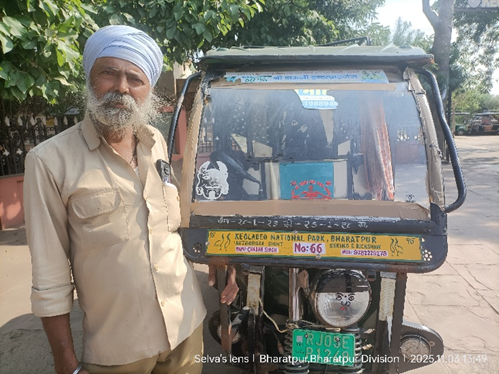
Sardar Charan Singh appeared downcast when we boarded his e Rickshaw from the hotel where we stayed. E-Rickshaw No. 66 had not seen many tourists this season. As a senior birding guide with four decades of experience, Charan Singh, the authorised rickshaw driver, is more than just a driver. He shares insights about the woolly-necked stork, shovellers, Garganey, comb ducks, and the collared scops owl. While these uncommon bird species may not be so important to normal tourists, seasoned birders often seek out such unique names while chatting with the rickshaw drivers. To successfully capture images of birds like the Garganey, Gadwall, Red-crested Pochard, Comb Duck, Black Bittern, or Nightjar, birdwatchers often rely on the expertise of guides. Sardar knows exactly where the Nightjars are likely to be perched, ensuring that his customers leave delighted. However, Charan Singh was feeling dissatisfied this time. Due to the El Niño effect, the weather was unusually hot, even for November. Typically, this time of year would attract many migratory birds to Bharatpur. But Charan Singh is determined to show some special birds to the bird lovers. So, even before the birders get disappointed, he seeks permission to go to a nearby area, about a KM away from the national park.  Though initially it appeared a typical guide mindset to market something, a drive with him was not disappointing. The birds seemed to have taken a new abode, it looked like. We had a glimpse of all three species of Cormorants, Spoonbills, Openbills and night herons besides the usual egrets, jacanas, coots and moorhens. Thousands of water birds congregated here for hatching and breeding. It appears that the Rajasthan Govt had decided to convert this place into a heronry. At least this is what a rusted board indicated. When we returned to the Sanctuary and started moving inside, we were a little bit disappointed as there were not many water birds except Painted Storks in thousands. Charan Singh said that the breeding of Painted storks was delayed this year. Some common birds were also missing. Saurus crane was not seen anywhere. We were looking for migrants but were disappointed. Initially, we thought of making two rounds, one in the morning and another in the evening. But, realising that migrants were missing, we packed up and wanted to return. But Charan Singh took us around on unknown routes, trying to help us spot a few uncommon birds. Of course, it helped us to spot a Jackal and a spotted deer. But that is not what we looked for. Though the local guides still pin hope on the arrival of migratory ducks by November end, the fact of delay in migration clearly indicates that the El Niño situation may be intensified into climate change. In old books, there is evidence for counting 500- 600 species; the present-day guides estimate 300 to 400 species during the migratory season. The global hotspot, Keoladeo National Park, which looks deserted and dry, does not appear to have any hope for tomorrow. However, we could record 82 species of birds in 4 hours

BBMP to GBA, is it ‘old wine in a new bottle’?

Published in South Express on 27.9.25

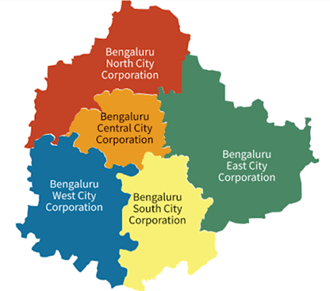
Will the Bruhat Bengaluru Mahanagara Palike (BBMP) perform better after being renamed as the Greater Bengaluru Authority (GBA)? Will the split of BBMP, now renamed as GBA work better? Will the five zones, that have now been formed serve the purpose for which they have been formed? GBA formed in May 2025, became fully operational in September 2025. The Authority has a three-tier governance structure, comprising the Authority at the apex, multiple City Corporations, and Ward Committees. It is hoped that the ward elections kept pending for more than 5 years will soon be held. As of now 350 wards are there in GBA’s jurisdiction. Even in 2015, it was decided to split the erstwhile BBMP into small corporations. The reason tabled by the Govt was that it was difficult to manage the city by a single corporation, given the ever-increasing population of Bangalore. The decision to split the former BBMP into smaller corporations was made in 2015. The government cited the growing population of Bengaluru as the reason, stating that managing the city with a single corporation had become increasingly challenging. In recent years, residents of Bengaluru have noticed a decline in the city’s overall condition, which is evident in areas such as garbage clearance, green cover, infrastructure maintenance, and other related services. Smaller municipalities achieve greater decentralisation, a key hallmark of good governance. There may also be a larger voice for the citizens and greater accountability towards them. In this regard, it may not be out of place to compare Delhi with Bangalore

In Delhi, there was a single corporation called ‘Municipal Corporation of Delhi (MCD)’ up to 2011. In 2012, the MCD was divided into three separate corporations: North, South, and East. The goal was to enhance regional efficiency since the area was twice the size of Bangalore. Delhi is not just another city. As the country’s capital, its governance has some special requirements. The trifurcation has led to economic imbalances, in addition to causing political controversies. In 2022,  Delhi reversed its decision and returned to a single corporation. Though there was a political hue and cry, it was finally decided to merge all three corporations. MCD thus had a rebirth. The citizens supported the remerger of the corporations since they hoped to get good governance, characterized by efficient and transparent service delivery.

In Bangalore, some experts believe that the division was unnecessary and implemented in a manner that will lead to uneven development in the city. Leaving aside politics, an effective decentralization will be in place if the authority is delegated to a dedicated committee. The city has to hold its Municipal elections immediately to ensure effective micro-management. Imbalances between corporations should be eliminated by apex-level policy management by the Greater Bengaluru Authority. The city is facing major problems, namely garbage clearance, potholed roads, overflowing drains, irregular water supply, and ever-rising traffic congestion. If decentralization can’t address these issues, then it will be nothing but old wine in a new bottle

(representative picture from the net)

Festival season is here again!

‘Ganpati Bappa Morya’ yes, the chanting reverberates at every home and apartment throughout the country. The residential complexes resonated the rituals to welcome the God of prosperity and also have geared up to give a fitting farewell. Almost all festivals as per Hindu mythology are very close to nature. The Pancha Bhuta depicts the very basis of cosmic creations and are duly adored in all festivities. It is time for thanksgiving to the Creator. If we deeply look into the very nerve of the religious sentiment, we will realize how the nature is intertwined with the religious rituals that we practice. For instance, Lord Krishna is seen with cows. Ganesha is a known as elephant God. Ma Durga is seen sitting on a lion. Hindus start the day with Surya Namaskar. We celebrate the harvest festivals in different formats all over the country. It is more than obvious that we are always for nature from time immemorial. For us trees are more than just giving oxygen or shade. We have a religious link with many trees. In the Bhagavad Gita (15:1), Lord Krishna says that the banyan tree is representing the entire Cosmos. The purity of peepal tree (pavitratha) is nothing new to all

In fact, every faith is leading to the path of love and compassion to the various living organisms as well as nature. Irrespective of any particular faith, the entire human race firmly believes in protecting Mother Earth. Prophet Muhammad demonstrated the value of resource preservation, sustainable consumption, tree planting, compassion for all creatures, and upholding a clean and safe environment. According to Islamic teachings, all living things, not just humans, have a right to share in nature’s basic elements, namely water, fire, wood, and light. The importance of preserving the environment and its resources has been underlined by Islam. Islam instills environmental preservation in its followers and Muslims hold the view that God will hold mankind accountable for their actions should they not protect the planet. Christianity also has a long historical tradition of reflection on nature and human responsibility towards nature.  Jesus asserted that all creatures have intrinsic value in the eyes of God. Christmas tree symbolizes Xmas. So, what is preventing us to care the nature and fellow living beings?

Having discussed the connectivity of festivals, a logical question arises as to whether we are expected to save nature. Why then, we should use plastics and non-biodegradable items during the celebration. All waterbodies will be full of idols soon. Why should we pollute our water bodies with idols made of chemicals which are not going to biodegrade? Why should we kill the animals on the festival eve? Why should we waste food on these occasions? Why should we burst crackers and pollute the environment? Why should we raise the noise of our loudspeakers beyond the permitted decibels? Let us try to make clay models of idols and dissolve it in rivers and waterbodies.

This is our age-old tradition; the rest are recent arrivals!

Why leopard roams in towns?

Published in Dwarka Express on 21.4.24

Mayiladuthurai is a small town in Tamil Nadu. It has been on news in recent times. It is because a leopard has been spotted in CCTV footages. No one knows how a leopard has entered in that town though Forest department is leaving no stone unturned to capture the animal alive. In the meantime, there was panic in nearby towns including the city of Thanjavur. Animals entering a civic society is not a new thing. Interestingly its sighting in a town which is nowhere close to the jungles is the suspense of the story. It was first spotted on 2nd April in the town. Despite tremendous efforts by Forest officials, the leopard has been elusive and not traceable till 11th April. Suddenly it was reported that the animal was spotted in CCTV in a small village called Ponparappi. Forest officials rushed to the village but no pug mark was seen anywhere. Later another message reached the department that the animal has moved to Sendurai, another village. It is surprising that the animal is not traceable. We cannot blame the Forest departments since they are making the best efforts.

It is not a new thing that an elephant, a tiger or a leopard sneak into a nearby residential settlements or colonies. Normally in such cases, either the forest will be in the vicinity or the affected area is an encroached one. The later one is true in many cases in general. We often forget that jurisdictions and borders are made for our convenience and animals do not have any idea about that. When an elephant crosses over its assigned territory, we blame forest department, Government and politicians without realising that it is we who decided the living areas for animals and we never consulted the animals. Forest department is left with no option except to burst crackers or shoot the animals to ensure safety of the human beings. People may have forgotten the November 2023 episode in Bangalore when a leopard from nearby Bannerghatta forests has sneaked into Bangalore city area, it succumbed to a bullet, after an attempt to dart the big cat failed. The forest department claimed that the leopard was ‘aggressive’ and ‘killing’ was a last resort. Social media was fuming in favour of the big cat. Environmentalists were on their toes and highly critical of the whole episode. But it is also true that the local residents heaved a sigh of relief. The whole episode was set to rest. People have a great disease called ‘amnesia’. Life goes on as usual even after any big crisis. Corana is one such event, which is now a history. It is suspected by forest department of Thanjavur that the big cat in Mayiladuthurai might have travelled from Ariyalur along river banks of Cauvery and reached Mayiladuthurai. And it is also believed that the big cat returned to Ariyalur in the same route. The nearest forest area appears to be Nagoor reserve forest, Puliyancholai reserve forest, a part of the Kolli hills. It is still a mystery how it could have travelled more than 100 KMs from a reserve forest without being noticed by anyone. All said and done, even after two weeks, no one knows, wherefrom it came and where it had gone. Will forest departments investigate the entire episode? (Representative picture from Wikipedia)