Why do people throw garbage in unauthorised areas?

Published in South Express on 4.10.25

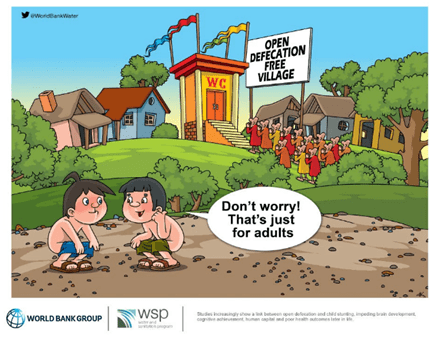
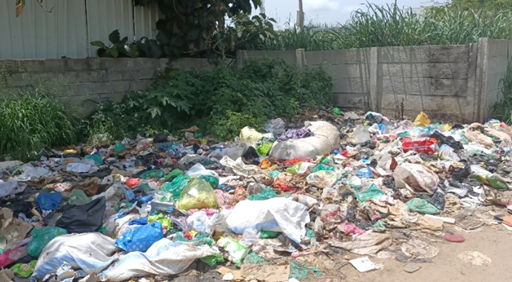
Swachh Bharat Abhiyan or Clean India Mission is a country-wide campaign initiated by the Government of India on 2 October 2014 to eliminate open defecation and improve solid waste management, and to create Open Defecation Free villages. As we enter the 12th year of Swachh Bharat Abhiyan, it is unfortunate that the mission has not evoked much interest. In other words, there is not much visible change in the garbage handling. Almost every municipality is struggling to manage the ever-increasing amount of garbage. I asked a question in a WhatsApp group to understand why individuals tend to throw garbage. From your WhatsApp survey, it seems people are aware of the problem but frustrated. Optimism exists, but anger dominates—showing that citizens want change but don’t feel empowered to make it happen. A few of the views that came up are as under “People lack civic consciousness.” “No dedicated garbage bins, periodically cleared.”“Independent houses have no lifting facility like apartments. “People don’t want to pay for garbage.” “No strict rules or enforcement of penalties.”

One member added, “7 years back, I was staying in Amrutahalli, Bengaluru. It was not so developed during those days. But garbage vans used to come, whistle near every house, and used to pick up garbage. The garbage pickers were responsible during those days.” In fact, this system is in vogue in some municipalities where even publicity songs are played by the collection van. Users put the garbage in the van daily. But all said and done, we still see the eyesore dumps in all cities. Talking about penalties, another member added, “Garbage cess is already imposed. Not sure whether the collection started? Community composting, as done in the HSR layout, is one option that can be thought of. Every street or group of streets can have a dedicated place for community composting for all the wet waste generated in the area.”  

It is a fact that civic sense and responsibility are missing or perhaps not much developed in India. Bengaluru was ranked the fifth dirtiest city in India in the Swachh Survekshan 2025 survey. Of course, this survey was made among the cities with a population above one million. Along with Bengaluru, Ranchi, Chennai, Ludhiana, and Madurai were ranked the top dirtiest cities. Unfortunately, some of the southern states that claim the highest percentage of education level have more unauthorized garbage dumping. Cleanliness is everyone’s responsibility. It is not fair if somebody keeps his home very clean but does not care about the surroundings. Every year, we remember Mahatma Gandhi on Oct 2nd, because not only is it his birthday, but also that the Swachh Bharat Abhiyan was rightly started by the PM on this day.

E Waste threat is looming large!

Published on 24.2.24 in Dwarka Express

Kumar, a student of 10th standard was going around bragging to his friends. His latest model smart phone, costing Rs 40000 was the cause of his flaunting. ‘Mam, Smart phones become out dated in just a year’, was his impromptu response, when Kavitha, his teacher asked him why he discarded his previous phone. Adolescence doesn’t see any rhyme or reason. Logics don’t work in Kumar’s case. And this is not an isolated case. There are many such consumers. Precisely, what is the utility of a smart phone? Calls, chat, Insta uploads and at the maximum an email check. Gone are the days of basic model phones. Perhaps a teacher may use it to ‘escape’ from the WhatsApp messages from his pestering student. Electronic devices become obsolete so faster that most of the gadgets do not have proper repair or replacement. Even, a warranty is also not much useful in many cases. As per World Health Organisation, ‘Every year, millions of tonnes of e-waste are recycled using environmentally unsound techniques and are likely stored in homes and warehouses, dumped, exported or recycled under inferior conditions. When e-waste is treated using inferior activities, it can release as many as 1000 different chemical substances into the environment, including harmful neurotoxicants such as lead. Pregnant women and children are particularly vulnerable due to their unique pathways of exposure and their developmental status’.

Today electronic waste is the fastest growing solid waste among all wastes in the world.  It is said to be growing 3 times faster than the world population. E-waste is considered the most hazardous waste as it contains toxic materials and can emit toxic chemicals when treated inappropriately. It is interesting to note that a laptop contains 12 metals including gold, silver and platinum. This makes the e waste recycling industry, greedy of making quick money. This is perhaps the reason for improper and sub-standard recycling of e waste all over the world, especially in poor and developing countries. Richer nations tend to dump the e waste in those poor countries. In India, Ministry of Environment, Forests and Climate Change has notified the e waste rules from time to time. The latest amended rules are dated 2.11.2022. Whatever may be the rules, we should realise that the volume of e waste being generated is formidable. Going forward, it is going to be quite challenging to manage. While the challenge is a global phenomenon, it is unfortunate that developed nations use India as dumping yard for e waste. India should curtail import of scrap to a larger extent, listening to the warning bell. There are many issues involved in e waste management. Right from health hazards, to the Extended Producer Responsibility (EPR) the e waste management rules ensure that proper waste management is in place. However, there is a dire need to integrate the role of circular economy in addressing the spurt in growth of e waste immediately else the piling e waste will pose a dangerous situation. So, reducing consumption must become an integral part of our lifestyle. Will Gen next inculcate the habit of Responsible Consumption?