Torturing animals is suicidal!

Published in South Express on 13.12.25

Disturbing visual! Why don’t admins remove video clips of animals being tortured?

A social media post caught the attention of the admins in a WhatsApp group. Indeed, the clip was quite disturbing! It showed a live crocodile being skinned. A Chinese woman used a knife to remove the top layer of a crocodile’s skin to create a stylish ladies’ handbag. If a weak-hearted person sees the clip, he would even faint. Now the question is whether the post is scary or the action. In another clip, it was explained how shuttlecocks are manufactured using feathers plucked from live pigeons. Shockingly, millions of feathers are taken from these birds while they are still alive. We do not want to debate whether such practices should be banned, but it is a fact that animals are being tortured. Cruelty toward animals for meat, milk, eggs, leather, wool, or silk is a major ethical concern worldwide. We cannot stop killing animals for meat. Any debate for this will end in controversy. But unconfirmed sources quote the world’s non-vegetarians as between 75% and 90%. However, in India, A 2021 survey found that about 39% of Indian adults describe themselves as “vegetarian.”  Slaughterhouses, in general, claim to kill animals at one go and without torture. This is what we understand, and we may be wrong. The animals are part of the food chain, which we acknowledge. Our concern lies with the cruelty inflicted on animals.

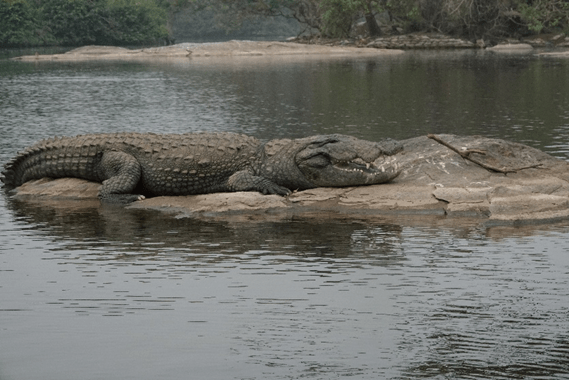
What is more painful to hear is that many wild animals and birds are tortured and killed for purposes other than food. Tigers are poached for their nails, teeth and bones. Metal traps used for killing them cause slow and painful death. Monkeys are forced to perform in street shows, kept in chains, and beaten until they obey commands. In traditional practices like “dancing bears” (now banned), bears had their teeth broken and noses pierced with hot rods. Crocodiles are killed brutally or skinned while alive for leather. Snakes are nailed to trees and skinned alive in illegal markets. Snake charmers remove fangs, causing infection and starvation. In Tamil Nadu, for kili josiyam (parrot astrology), flight feathers of rose-ringed parakeets are cut painfully so they cannot fly away and are used to pick fortune cards, even though they are protected under Schedule 4 of the Wildlife Act. It is an offence as per the law. The above are only indicative examples, not exhaustive. Instead of condemning social media posts that show cruelty towards animals, just because they induce palpitations, group members must come forward to become the voice for the voiceless. People who forward such posts must add a sentence cautioning the weak-hearted people to avoid seeing them. In our opinion, bringing such horrible episodes to the limelight will help create awareness and stop cruelty to animals.

Birds are vanishing fast!

Published in South Express on 18.10.25

Where No Vultures Fly, a 1951 British film directed by Harry Watt and starring Antony Steel and Dinah Sheridan, was an adventure movie based on the real-life story of the conservator Mervyn Cowie in the jungles of Kenya. Now vultures are rarely seen. I still remember the Gole market in Karol Bagh, which had meat shops in the 90s. I used to wonder at the huge flock of giant-sized vultures waiting for the leftovers. When I used to travel by a scooter from Gole Market towards East Patel Nagar, enjoying the winter weather, I never missed the migratory Swallows gregariously flying low and near me, while waiting at signals. Gone are those days, as flyovers and metro pillars dominate most signals. The Great Indian Bustard (GIB) is the state bird of Rajasthan. Recently, I saw a video clip in social media that tends to promote a whiskey brand called Godawan 173, relating it to the near extinction of GIB. The Rs 500000 per bottle of whiskey is Indian-made (Is it self-reliance?) Yes, you read it correctly. It is Rs 5 lac, coming in a beautiful Jaipur Blue bottle. While the researchers dispute the actual number of birds (not 173, they claim), it is a shame that a whiskey brand is promoting conservation of GIB without even caring to contribute to the conservation

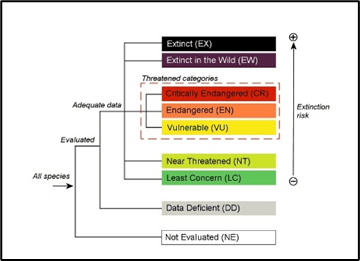
Rapid urbanization has taken its toll. Even the most common sparrow has become uncommon in cities and towns. But still, they are part of rural India. Recently, it was reported that the India Roller, Karnataka’s state bird (neelkanta in Kannada) has been downgraded to the ‘Near Threatened (NT)’ category by the International Union for Conservation of Nature (IUCN) from the earlier category of ‘Least Concern (LC)’. Whenever we go birdwatching in natural areas like lakes and rural scrub jungles, we seek out the Indian Roller, which is often regarded as one of the most beautiful birds. I still remember seeing this bird perched on power lines in large numbers back in the 90s. While travelling by train, it was fascinating to observe this bird, with its distinctive big head and bright blue colour, as it flew by. Unfortunately, it has now become a rarity. In Bangalore, the winter season has nearly begun, but migratory bird species are notably absent. Man-made climate change is believed to be the primary cause of the rapid decline of these rare species. This trend is evident in other regions as well. For instance, in Rajasthan’s Bharatpur National Park, migration has yet to start. Similar situations are occurring in many other places. Activities such as the beautification of water bodies, unregulated ecotourism, and careless development projects are causing us to lose our valuable natural assets. The vanishing of the bird species is a stark reality of how fragile migratory birds have become. Stronger global action is needed to protect rare species before they too vanish.  (Photo courtesy: Karthik, Bangalore, and IUCN website)

Stay away from wild animals!

Published in South Express on 13.9.25

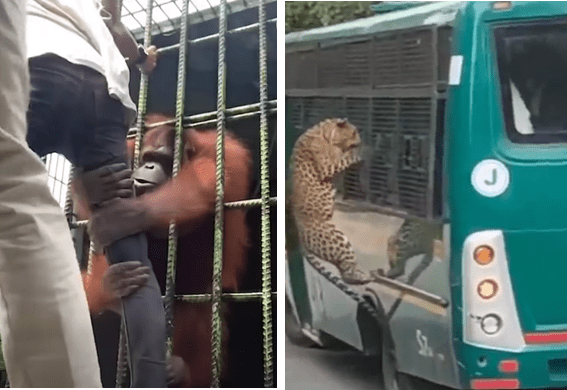
Recently, in the Bannerghatta forest area in Karnataka, a leopard climbed onto a safari jeep that was completely secured with a grill. The leopard attacked a boy inside the jeep by reaching its foreleg through the viewing hole. The incident was captured on video and went viral, as the boy was hospitalized for minor bruises. It’s important to remember that animals often act spontaneously and defensively. As for the safety measures in this case, there does not seem to have been any lapse on the part of the forest department. Even the boy was not at fault. An investigation is probing the cause. Perhaps the animal may have sensed a threat from the tourists and reacted accordingly. As the viewing hole was small, the animal could not enter the jeep.

Ecotourism everywhere has become a menace, disturbing the privacy of the wild animals. The tourists must indeed keep a safe distance from wild animals. More so in the case of stray animals. In one of the safaris, I found myself very close to a tigress. The jeep did not have grills to secure the tourists. In their excitement to capture close-up photographs, tourists often tend to put their heads and hands outside the jeep. Additionally, safari drivers quickly share information with other jeeps via wireless communication. In no minute, all the jeeps parade in the spot to get better scores from their passengers. Tourists comfortably forget that they are disturbing the privacy of the animals. Many instances of attacks by wild animals have been reported from various parts of the country. While wild animals are making headlines, we must also acknowledge the issue of stray dogs.

The behavior of stray animals is often unpredictable. Animals behave instinctively, while humans are rational beings. Neither the animals nor the affected people should be neglected. The grim stories about stray dogs continue. Even as the man-animal conflicts continue, both need a better deal. The revised court order gave some respite for stray dog enthusiasts. But the victims of stray dog attacks are at large. We should not forget that although humans are at the top of the food chain, they cannot live without other living organisms, right from carnivores to street dogs. The Government should take balanced action to protect both human beings and animals, as it is bound by the constitutional obligation to provide a better livelihood to all living beings. 

What is wrong with wolves?

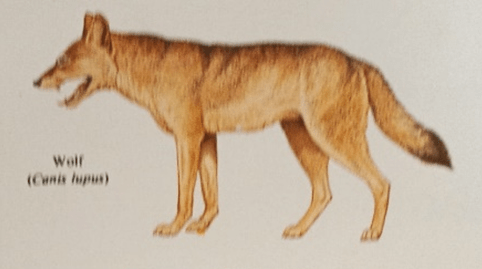
Wolf is in news for quite sometime now. We are reminded of Akela, the wolf which brought up Mowgli in ‘Jungle Book’ by 19th century author Rudyard Kipling. The book is still being the favourite of children all over the world. Kipling’s effort to stop human-animal conflict through a fun filled story is perhaps unacceptable, at least in Utter Predesh, where children are repeatedly carried away by wolves in a Bahraich village. Bahraich district has seen 10 deaths and about 50 attacks. Out of the 10 deaths, nine are children. The traumatised villagers are perhaps hell bent on finishing the wolf species and the UP Government has declared the tragedy as an environmental disaster.

The latest news is that the Forest department has captured 5 out of a pack of 6 wolves and the last

one may also be captured at any moment. The department has used drones to track them. The officials say that the captured wolves will be sent to zoos. The forest team has chased away the beasts first and captured them later. Elephant dung and urine were used to scare away the animals from the villages nearer to jungles. The UP-forest department has named the search as “Operation Bhediya” (Bhediya is Wolf in Hindi) to catch the wolves responsible for attacks in 25-30 villages under Mahsi tehsil. It has also installed cameras in Sikandarpur village around six caves, which appear to be the habitat of wolves.

An environmental tragedy happens due to the lack of preventive measures. It is shocking to note that the affected families that live in proximity to the forests do not even have money to erect doors in their houses. This makes the villagers fall an easy victim to the wolves. Man-animal conflict is not new. The wild animals cannot understand the difference between a forest and a village. Their foremost activity in life is to find its food. A study reveals that the food pattern of the wolves changed of late. Instead of attacking livestock, they have started feeding on available carcasses. Stranded animals enter into nearby villages which is inevitable as the deforestation is growing steadily. Children become easy victim to such animals. All said and done, human life is in danger and the wolves too are endangered.

Wolves generally avoid human beings. According to a report on wolf population, about 3000 wolves are known to exist in India. The normal life span is 12 to 15 years. On one side, intensive conservation exercise is going on to save the endangered species. On the other side, the traumatized people want the animals to be killed immediately. The forest department is taking a cautious step by capturing and rehabilitating them in zoo parks. In fact, the killing of children by wolves is not a new phenomenon. There is a mention about this wolf behaviour in S H Prater’s 1948 publication, ‘The book of Indian animals.’  When driven by hunger, any animal does not have the rationale thinking to differentiate between man and beasts. India is losing its rich biodiversity gradually. Killing of wild animals is justified due to the fear caused by them when they slip into human territory. But we should not forget that such man-animal conflict will continue as long as the deforestation continues. Saving wildlife without conserving their habitat is meaningless.

Why leopard roams in towns?

Published in Dwarka Express on 21.4.24

Mayiladuthurai is a small town in Tamil Nadu. It has been on news in recent times. It is because a leopard has been spotted in CCTV footages. No one knows how a leopard has entered in that town though Forest department is leaving no stone unturned to capture the animal alive. In the meantime, there was panic in nearby towns including the city of Thanjavur. Animals entering a civic society is not a new thing. Interestingly its sighting in a town which is nowhere close to the jungles is the suspense of the story. It was first spotted on 2nd April in the town. Despite tremendous efforts by Forest officials, the leopard has been elusive and not traceable till 11th April. Suddenly it was reported that the animal was spotted in CCTV in a small village called Ponparappi. Forest officials rushed to the village but no pug mark was seen anywhere. Later another message reached the department that the animal has moved to Sendurai, another village. It is surprising that the animal is not traceable. We cannot blame the Forest departments since they are making the best efforts.

It is not a new thing that an elephant, a tiger or a leopard sneak into a nearby residential settlements or colonies. Normally in such cases, either the forest will be in the vicinity or the affected area is an encroached one. The later one is true in many cases in general. We often forget that jurisdictions and borders are made for our convenience and animals do not have any idea about that. When an elephant crosses over its assigned territory, we blame forest department, Government and politicians without realising that it is we who decided the living areas for animals and we never consulted the animals. Forest department is left with no option except to burst crackers or shoot the animals to ensure safety of the human beings. People may have forgotten the November 2023 episode in Bangalore when a leopard from nearby Bannerghatta forests has sneaked into Bangalore city area, it succumbed to a bullet, after an attempt to dart the big cat failed. The forest department claimed that the leopard was ‘aggressive’ and ‘killing’ was a last resort. Social media was fuming in favour of the big cat. Environmentalists were on their toes and highly critical of the whole episode. But it is also true that the local residents heaved a sigh of relief. The whole episode was set to rest. People have a great disease called ‘amnesia’. Life goes on as usual even after any big crisis. Corana is one such event, which is now a history. It is suspected by forest department of Thanjavur that the big cat in Mayiladuthurai might have travelled from Ariyalur along river banks of Cauvery and reached Mayiladuthurai. And it is also believed that the big cat returned to Ariyalur in the same route. The nearest forest area appears to be Nagoor reserve forest, Puliyancholai reserve forest, a part of the Kolli hills. It is still a mystery how it could have travelled more than 100 KMs from a reserve forest without being noticed by anyone. All said and done, even after two weeks, no one knows, wherefrom it came and where it had gone. Will forest departments investigate the entire episode? (Representative picture from Wikipedia)