
My friend cautioned me, ‘Please be careful while walking.’
A few days ago, we went birdwatching at a location between Bangalore and Mysore. I prefer not to disclose the name on this platform. My friend was right in cautioning me. When I looked down, I noticed human waste everywhere. A long time back, I used to travel by train from Delhi Cantonment to Gurugram. On both sides, we used to see many people relieving themselves, unmindful of the train passing next to them. A luxury train (palace on wheels) used to pass the same route every Wednesday, carrying foreigners to see Jaipur, Jodhpur etc. We used to wonder what the tourists would think of our country.
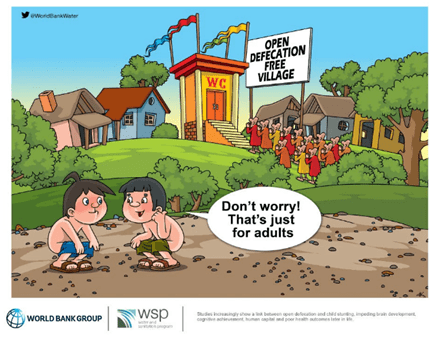
Whether it is a lake bund or any other water body, people do not hesitate to relieve themselves. And this is not an isolated case. And the situation is not just in rural areas, but Urban areas too. India is not yet open defecation-free (ODF), although the Government of India constructed 630000 public toilets under the Swachh Bharat Mission – Urban. This may sound exaggerated, but it is true. This count includes public and community sanitation facilities built to provide toilets in markets, bus stands, railway stations, parks, and other public places. Government data indicates that most villages have achieved ODF Plus status. However, external reports from various sources suggest that having a toilet does not guarantee its use. Neither the number ensures cleanliness of the public conveniences. Mindset is also an important factor. Many villagers prefer to choose open area. Lake bunds and river sides are easy targets. During our walk along the river and lakeside, just a fortnight ago, we were personally witness to this bitter reality. Most of the Southern states have access to household toilets, but in some northern states, such as Bihar, the situation is far below. Some may have a wrong notion that human waste is biodegradable and nothing to worry about. Years back, a data was released about the water quality of river Yamuna at Delhi. At Okhla, a test conducted by researchers revealed that the Coliform bacteria (found in fecal matter) was a formidable 11.8 Crore in 100 ML as against the tolerant level of 5000 bacteria in 100 ML. So the bacteria may cause harmful disease if left in the open. Children may be infected easily. But we must not forget the reality. A full-fledged socio-cultural change besides economic improvement among common men need to blossom to accept the health aspects of cleanliness
| DO YOU KNOW? 3.4 billion people still live without safely managed sanitation services – nearly half the world’s population. 354 million people still practise open defecation, increasing the risk of disease and harm, especially for women and girls. (SOURCE: WHO/UNICEF, 2025) |
 Dr V Selvarajan