
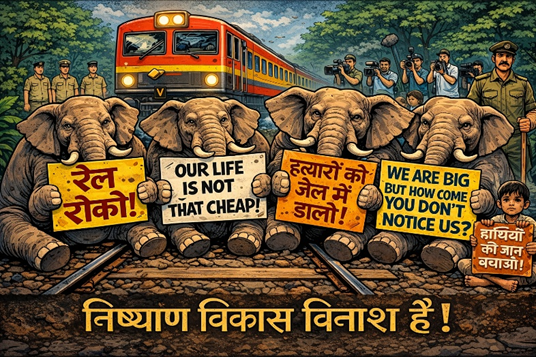
Elephants are always the soft victims! In December 2025, a high-speed New Delhi Rajdhani Express collided with a herd of elephants in the Jamunamukh–Kampur section under the Lumding division in Assam. The incident resulted in the deaths of seven elephants, including calves, and injured one more. Five coaches of the train were derailed due to the crash. Unfortunately, such incidents are common in India. At night, visibility may be a challenge for the drivers. But it is not clear how massive animals, even when they come in huge numbers, go unnoticed. We have quite often heard that elephants come out of the forests in search of food and damage agricultural lands and villages adjacent to the forest area. Often, social media posts show elephants stealing sugarcane from trucks in highway. At least, this is understandable.
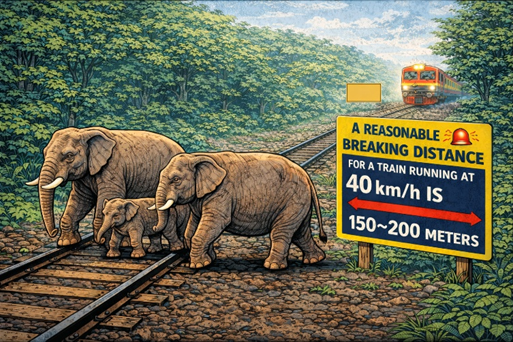
When it comes to the killing of elephants within their natural habitat, no excuse is acceptable. It is unreasonable to lose valuable wildlife because of drivers’ negligence. While drivers may argue that it’s difficult to stop high-speed trains when they spot wild animals at a distance, the real question is why these trains are allowed to run at such high speeds in the first place. When such accidents happen, no one raises their voice for the voiceless. Or we may say that the animals could not ventilate their anger in any way. Occasionally, the naturalists come across mild forms of protest through comics and stories, like what we are doing right now. To reduce elephant-train collisions, we need to explore measures such as Technology-based early warning systems (e.g., camera or sensor networks) to alert trains about elephant presence. In fact, these suggestions have been advocated for a long time. But they have not taken any tangible shape so far. Underpasses, skyways and modified track designs in high-risk zones may help. On highways, we see signage in known elephant-crossing zones. The same can be of use in jungle areas. Environmentalists say that linear infrastructure projects should avoid passing directly through wildlife sanctuaries, suggesting longer, alternative routes to protect the park’s biodiversity. We are left with minimal national parks and limited wildlife. Is it not necessary to protect the valuable natural assets?
 Dr V Selvarajan