Will wild-safaris promote eco tourism ?

Published in Dwarka Express on 23.4.23

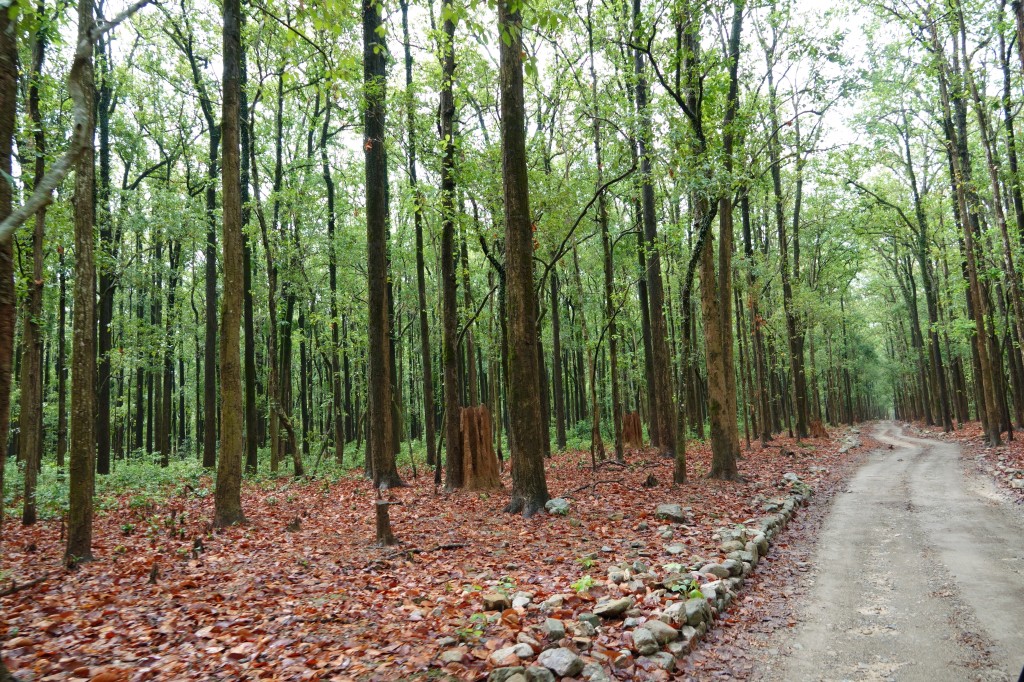
A Jeep with tourists in North east was attacked by one horned Rhino and providentially no one was injured. My own impression about a jungle safari has suffered a change after participating in a Jeep Safari in Sariska. In my young age a lot of trekking was undertaken by me during nature camps in Western Ghats, crazily longing for a tiger darshan. But now, I wonder whether ecotourism is commercialized heavily. Hiring a jeep in Sariska at Rs 3500 for 2 hours made me think, ‘Are we really following norms when we enter into a tiger reserve?

Several thoughts brewed up after sitting in the safari jeep. My jeep was open and there is every possibility that a wild animal, leave alone a tiger, will attack. Why they are taking a risk? Are we taken for a ride by the agencies? Is eco-tourism commercialized? While questions were bubbling up, an abrupt question by the guide whether we want to go to Hanuman Mandir pulled me back to the current moment. The idea of Hanuman Mandir visit was negated by me, because in a Tiger land, I firmly believed that there could be none above a tiger. The Guide took us in a different route and we had no much disappointment as we could have plenty of wild animals like Spotted Deer, Nilgai, Crocodiles, Indian Hare, Jackals besides variety of avians. Yes, the thrill of riding in a dry deciduous scrub jungle is not a small experience though there was bleak chance of tiger sighting. Suddenly there was a commotion. Mobile phone information from similar Safari guides made several jeeps, rounding up a 10 KM area. I could see similar tourists in about a hundred jeeps on various sides of the encircled area curiously waiting for the tiger to come out from bushes. Nothing happened and everyone returned with disappointment.

 Let’s appreciate one thing. No one is permitted in the core areas of a jungle. In more than 800 Sq kms of Sariska, only 20% is open for safari. Same is the situation in any forest. On interaction with the guide, I understood that we have a chance of sighting M-12 (a chest number allotted to each tiger). After my discussion with the guide and seeing that 100 jeeps surrounded an area giving false hope to tourists, I am of the opinion that sighting tiger naturally in the natural habitat is perhaps a kind of a concoction by the ecotourism operators to create a hype and lure more tourists. In one or two locations I saw a PET bottle or a Kurkure pocket. No guidelines or strict instructions were given by tourists to follow the ‘law of the jungle’. Perhaps, the phrase ‘Jungle law’ was rightly coined to indicate the boisterous dictates of an appallingly dominant political parties with brutal majority. Eventually, it is also applicable to such ‘callous tourists’ in forests who are least concerned about the rules

The National Tiger Conservation Authority guidelines in 2012, amended from time to time prohibits tiger safaris in core and critical areas but permits Only in non-core, buffer areas to reduce pressure on wildlife. While a jackal or unpredictable Nilgai was seen just in 30 feet distance, I wonder why a spotted deer even doesn’t shy away human intrusion. Because it has become a routine for them. Even a lion in Gir is undisturbed by a human visitor. For them, its life as usual. Perhaps, they are as domesticated as that of caged animals. A Supreme court enabled CEC panel recommended withdrawing of approvals to allow the safari in fringe areas too. But will the forest conservation act 1980 recently amended, reconsider the decision is a question mark. So, until some good decisions taken in the lines of global best practices, in my opinion Safari is not just like wearing a Safari suit. A Safari if permitted has to bring a change in the mindset of visitors and organizers. It should not be a ecotourism business

DR V SELVARAJAN

200 Tigers added but 889 Sq km forests disappeared !

Published in Dwarka Express on 15.4.23

On 6.4.23, a question was asked by a BJP Member Sushil Kumar Modi in Rajya Sabha about the area of forests diverted in the last 5 years.  Ashwini Kumar Choubey, the Minister of state in the ministry of environment, forest and climate change (MoEF & CC) answered that during the last 5 years, various approvals for diversion of forest land for non-forestry purpose including for infrastructure and industrial projects, involving an area of 889.03 Sq. kms have been accorded by the Central Government under the provisions of Forest (Conservation) Act,1980. Or on a comparative term, a forest land equal to Sariska Tiger Reserve (881 Sq kms) has vanished.

Interestingly it is claimed that during the last 4 years, 200 tigers have been added to the Indian count, taking the total number of tigers to 3167, almost three fourth of world tiger population. Out of the 889 Sq. kms of the sacrificed forest land, 194 Sq. kms have gone to ROADS, 188 Sq kms for MINING and 133 Sq kms for IRRIGATION. As per the tabled data, the forests have given way to about 26 avenues such as railways, defence etc. which are treated necessary for development.

According to Dr Ullas Karanth, a Conservation Zoologist, who dedicated his life for tiger conservation, we have 380000 Sq kms available for tiger conservation. Even if a set of 5 tigers have a territory of say, 100 Sq kms, India would have a minimum of 10000 tigers by now. He laments over lack of scientific temperament to achieve the same. Besides, the effective conservation of wildlife squarely depends on the political will and the only way it is possible is by increasing the much-needed forest cover. Not only tigers but reports indicate that elephants and wild animals emerge out of the jungles in search of food and water while locals make a big hue and cry for their safety, resulting in man-animal conflicts. This is the reason why scientists and environmentalists become vociferous, seeking tangible solutions, whenever an infra project encroaches forest areas. When affected locals protest, they are branded as pro-environment, anti-development proponents. When places like Joshi Math disappear, then we do a post mortem and conclude that the destruction is due to tunnelling and large infra projects. Environmental Impact Assessment provisions are flexed so that the existing stringent norms do not come in the way of developmental projects. It is emphatic that the environmental clearances are accorded in an equitable manner

FIR against silent protesters in Sankey, Bangalore !

Published in South Express on 8.4.23

Sankey is not an isolated episode. History has seen many such episodes. In 18th Century, 363 Bishnoi’s laid down their lives for the protection of Khejri trees in the Khejarli village of Rajasthan. One of the 29 principles of the community speaks about protecting trees and the other  stresses the need for protecting animals. The world renowned Chipko movement had lots of challenges. The unfortunate death due to his 111 days fast unto death agitation of Gurudas Agrawal, an ace environmentalist, engineer, religious leader and professor demanding action against polluting industries of river Ganga evoked lukewarm interest among the bureaucracy and political bigwigs. Bhopal tragedy has not yet faded from our memory. Similar examples are innumerable.

Whether it is citizens’ voice against Char Dham Road project of Himalayas, anti-Sterlite agitation in Tuticorin or Central Vistas of New Delhi, Aravalli agitation, activists are blamed for the activism and condemned as anti-development protagonists. On the one hand our leadership only makes tall claims of voicing our strong views in COP 27 at Egypt and pledges that India will strictly adhere to net zero emissions. On the other, we circumvent the time-tested legal provisions of the land to appease the corporates who are least cared about environmental concerns. When disasters happen and Joshimath’s disappear, expert committees do postmortem just to pile up the papers in the dusted record rooms of Government departments.

Coming back to what happened in Bangalore is astonishingly strange when the century old trees were paving way to the Sanky Flyover construction project in Sankey road , Malleswaram Bangalore adjacent to Sankey tank. It was a peaceful march wearing black shirts to save 55 heritage trees. The protesters hugged the trees and demanded shelving the projects. Signature campaigns were held. All these in non-violent manner. What prompted the law makers to file FIR on April 1st against 60-70 protesters is not clear though the charges indicated that wrongful confinement, unlawful assembly and obstruction of public ways. Under sections 341,141, 149 and 283 of IPC. Threatening people will never silence the lawful people’s movement. History has seen many such onslaughts and may continue to see in future too.. One thing is clear, the residents are determined to take the movement forward. Already many videos have gone viral. Everyone knows that the garden city is slowly losing its charm. Lakes are drying and birds are vanishing. Once known as retirement heaven, Bangalore is slowly becoming a garbage city. Bangalore is no more a garden city with increasing population, mushrooming of IT industries and concrete jungles.

The hasty decision of the Police makes one wonder whether they are unknowingly helping the protesters to ‘make the movement’ go viral. They may also quote the usual excuse, ‘uper se pressure’ (pressure from higher-ups). Interestingly, the local MLA is allegedly against the protests.Perhaps he has forgotten that the election is round the corner. State election has been declared already. Hardly one month is left out. And of course, the politicians are busy hunting vote banks and have no time for all such ‘trivial’ issues. The civic and environmental problems of the city are plenty.  Felling trees will further aggravate the microclimate. Will the officials understand the seriousness of the issues and take corrective measures?

Garbage – burning is not disposal

Published in Dwarka Express on 16.3.23


Garbage, the unmanageable..! 
Garbage intrinsically is not an issue as long as it is managed professionally, but the bone of contention is that Corporation, municipal or village Panchayats who are entrusted with the responsibility fail to lift the trash on daily basis. One is the EYE SORE seeing the trash and the stray animals or rag pickers skimming the same. The other is the health issues from stinking mixture of dry and wet waste. Plastic and hazardous waste obviously form a part of the trash piled. The officials fail to address the issues promptly on the one hand quoting insufficient manpower while blaming the people who are littering or show the CCTV footages to prove the same. Undoubtedly manpower shortage or lack of civic sense are concerns. A tax payer or a consumer has the right to question the officials on one hand while the officials blame the insufficient budget provision to manage the garbage. The fact is growing population, faster urbanisation and dependence on use and throw materials add fuel to fire.

Garbage burning is a punishable crime! Nevertheless, non-lifting of trash on daily basis result in accumulation or piling up of waste while the more serious concern is burning the same. Come the summer months, the garbage burning become the burning problem in almost all metros and urban areas. The environmentally conscious citizens resort to social media to ventilate their anguish. Almost 10 major fires are reported in cities like Bangalore. While some are extinguished by fire brigades, minor fire incidents remain unattended to. In many a time, residents attempt extinguishing themselves. As per Section 19(5) of the Air (Prevention and Control of Pollution) Act, 1981, there is a complete ban on burning of solid wastes dry leaves in open places within the jurisdiction of BBMP and other urban bodies like panchayats. The city is provided with sufficient landfill sites. The penalty for garbage burning is Rs 1,000-2,000 for the first time and Rs 5,000 for the second time. There are display boards everywhere, but the interesting part is burning happens right under the display board at times.

Burning is a health hazard! Garbage burning is a source of harmful carcinogens like dioxins, furans and black carbon. These pollutants deteriorate the quality of air and contribute significantly to air pollution and climate change besides affecting human health. It leads to breathing problems and aggravates respiratory diseases such as asthma and bronchitis. People’s health on the one hand and environmental concern on the other, the problem is a serious matter.

Swachh Bharat Mission: Swacch Bharat Abhiyan was a great initiative by the Government of India, with a aim to make the country garbage free. To accelerate the efforts to achieve universal sanitation coverage and to put the focus on sanitation, the Prime Minister of India had launched the Swachh Bharat Mission on 2nd October 2014. When the mission is completing a decade on 2nd Oct 23, we need to revisit the effectiveness of the same and assess the efficacy of the ongoing mission. There is no point in burning the garbage which is the easiest form of disposal. Whether callousness or deliberate attempt to burn the trash, both are unacceptable.

Stray (vs) Pet animals!

Published in Dwarka Express on 11.3.2023

Stray dog menace cannot be ignored as a stray incident. A recent incident of a preschooler being mauled to death by stray dogs in Hyderabad draws everyone’s attention to the status of the stray animals in India. Legally, there is enough of protection to animals in India and as per Section 3 of the Prevention of Cruelty to Animals Act, 1960, it is the duty of every person having care or charge of any animal to take all reasonable measures to ensure the wellbeing of such animals and to prevent infliction of unnecessary pain and suffering. This is applicable for all types of animals.

In any civilized society, we may find two kinds of animals, one is stray and the other is pet. Pet care is given more impetus than what they deserve, perhaps. Pet owners go to the extent of getting themselves recognized as pet parents. In fact, they spend more time and money than what they could afford even, treating the pets as their children. Of course, it’s not questionable as there are many emotional aspects attached to pet care.

We are more concerned with the stray animals. Feeding stray animals is not a sin but a generosity and we do understand. For animal activists, food, shelter and safety of the animals are matter of  animal right, which also cannot be disputed. However, what needs immediate attention is the harm and hardships caused by stray animals to an innocent person who become a victim of animal attacks, most of the time by stray animals. Animal care is as equally important as that of human safety. There cannot be any compromise on either of them. When animals behave or react aggressively, perhaps in their natural animal instinct or due to any occasional provocation, the repercussions are disastrous. Most of the attacks of stray animals on human beings happen due to the basic animal instinct. The Hyderabad child was killed because something must have induced them to perhaps a possible attack or threat. In most cases, it happens to be a defensive act with isolated cases of behavioural dysfunctions

As per 2019 census, total population of stray dog and stray cattle in the country was more than 2 crores. The next census is due in 2024. This is going to be much higher and incidents of attacks and loss of lives also are not going to stop. Animal welfare organisations while ensuring compassion to stray animals, also must ensure that children are safe from ferocious animals.  Timely anti rabies vaccination, adoption of stray dogs by pet owners, public shelters and charity homes, timely intervention by sanitary workers including sterilisation will address the problems to a larger extent  

Use & throw Culture (vs) Reuse & Recycle Culture

Published in Dwarka Express on 18.2.23

A beautiful golden plated pen gifted by someone was lying on my table for quite a long time. To use or not to use was my dilemma. If I use, I may not get the refill. Pen refill is not available in the market nowadays. After using the pen, I showed the refill to someone and curiously I asked someone what it was. Prompt came the reply ‘REFILL’. I was reminded of the ball point pen of yester years. The pen was costing Rs 2 in 80’s and refills were available in pockets of 10 pcs. Now the so called refills along with stylish pens reach landfills. One day, landfill will overflow, and perhaps we may not be able to refill. Those born in 50’s might be using ink filled pens. They used to go to nearby stationer to refill the pen. Ink filler was used to pour ink in the pen’s tummy. The 30’s born oldies were heard of carrying in ink bottle and  a wooden pen with nib to choke the same in the bottle and use for writing. Even the school desks were seen having a round portion to keep the ink bottle. Gone are those days of madness? Today anything and everything is disposable, including the old dependents! Recollect your daily use items. From a menstruation napkin, PET bottles, tooth brush, to all cosmetics, battery cells, containers, sachets, hospital syringes, kitchen consumables, packing materials, cello tapes, stickers and many more such items are part of our life. We are unable to get rid of the plastics, though Govt has enforced Single Use Plastic (SUP) Ban from 1st July 2022. Plastic reusing is literally seen only in slums where one can find your used TV or mobile phone or recycled plastic buckets. Literally slum dweller are the real environment friends. They repair, refill or reuse many items rejected by common man in day today life.

Circular Economy, a tool for climate change?

Published in Dwarka Express on 11.2.2023

If anyone climbs up Gazipur (Delhi) landfill, she can very well have a sighting of Qutub Minar’s top at her eye level. This is indeed a true but tongue-in-cheek comment of an environmentalist, who is fed up with the ever-increasing landfills. If alone, waste is properly managed, there is no need to address the economic problem of the country. Waste recycling is critical, given the fact that the population growth is unabated. When PM Modi mentioned about the Circular economy, a term which was much unknown in India, it received some attention from all quarters.

What is circular economy and how it is different from linear economy? In linear model, which has been in existence in India for long, factories, the manufacturers use raw materials, make end products, supply the same for consumption. Consumers use the same and throw them which end up in landfills and oceans. On the contrary the circular economy advocates a model of MAKE, USE, REUSE & RECYCLE again and again.

India desperately needs the circular economy and we have to encourage proper waste management in place. “The Circular Economy gives us the tools to tackle climate change and biodiversity loss together, while addressing important social needs. It gives us the power to grow prosperity, jobs, and resilience while cutting greenhouse gas emissions, waste & pollution control.” – Ellen McArthur Foundation.  Circular economy will be fully operational only when we depend fully on the renewable energy sources instead of fossil fuels. Whatever we extract out from earth will never get replenished and some critics argue that circular economy in true sense is near difficult. But with advancement of science and technology, a day will come when circular economy is feasible in totality.  Better augmentation of resources is not utopian task. India badly needs it. And as the country envisages green growth as the maxim for the new national objective, PM’s statement gathers attention. Budget allocation for green growth is one step towards it. But the implementation rests on the bureaucracy. Also India needs to focus on balanced growth duly incorporating poverty alleviation measures

Union budget signals Green Growth!

Published in Dwarka Express on 4.2.23

For a common man in India, especially the working class, FEB 1 is a ‘D-day’ at least from the income tax perspective. Sans this, swelling fiscal deficit, the bullish trend in Dalal street or plummeting Adani stock makes no impact on the aam admi, whose damp squib is managing his daily errands. While for many others, union budget as just an annual ritual, though this time, the FM seems to have caught up with the GREEN GROWTH. For one reason, the FM deserves a thumbs up, as the budget highlighted green growth in a popping way, indeed a big prominence is given unlike the past, though the PAGE 3 journalists as usual are averse to the term ‘environment’ apparently unaware that it is now part of lifestyle definition, going by Government’s new maxim i.e., LiFE (Liftstyle For Environment) initiative

While PM spoke about the AMRIT DAROHAR SCHEME during the recent Mann ki baat, FM has quoted the same in her speech while talking about GREEN GROWTH. She has mentioned that the RAMSAR sites has increased to 275 whereas the same was at 26 before 2014. Local communities have always been at the vanguard of conservation efforts for wetlands. The government will promote their unique conservation values through the Amrit Dharohar, a scheme that will be implemented over the next three years to encourage optimal use of wetlands and enhance biodiversity, carbon stock, eco-tourism opportunities and income generations for local communities,” she said.

GREEN GROWTH is treated by Finance Minister as one of the SEVEN PRIORITIES, called Saptarishi (seven sages) which is expected to guide the Amrit Kaal (next 25 years), which inter-alia speaks of Green Credit Program under Environment (Protection) Act to sustainable actions by all in tune with LiFE (Lifestyle For Environment) initiatives to reduce carbon footprints. PM- PRANAM (Program for Restoration, Awareness, Nourishment and Amelioration of Mother Earth).

When Finance Minister said old vehicles have to be replaced and in it is the Government policy, by slip of the tongue, she said “old politicians” instead of “Old polluting vehicles”, entire house went into laughter. She corrected it but there is genuineness in eliminating both.  (In lighter vein)
BUDGET FUN!

PM’s circular economy initiative envisages recycling of the 500 new ‘waste to wealth’ plants under GOBARdhan (Galvanizing Organic Bio-Agro Resources Dhan) including compressed biogas (CBG) plants, and community-based plants at a total investment of Rs. 10,000 Cr is expected to take off soon. A series of initiatives such as Coastal shipping, Mangrove initiative (MISHTI, Compensatory plantation, vehicle replacement to control pollution (not politician !!!) Bio-Input Resource Centres, National Green Hydrogen Mission, priority capital investments towards energy transition and net zero objectives, Battery Energy Storage Systems are lined up. All these tall promises paint a greener picture to the budget, though certain deficiencies and inconsistencies are predicted by critics and environmentalists. Even if it is criticized as election budget, the fact remains that the Government needs to prepare itself emphatically to meet the global zero emission targets. Let’s wait to see how these are going to be enforced

Lakes are lifelines, not picnic spots!

Published in Dwarka Express on 28.1.23

Harohalli lake is one of the untouched lakes of about 90 acres. Situated in North Bangalore, the lake falls under the maintenance of the Bruhat Bengaluru Mahanagara Palike, the fourth largest Municipal Corporation in India. 164 species of birds, including migratory birds have been recorded in 2021-22 in the eBird India site by various renowned birders. The water here is appearing clean though it may not be and the lake gets partially or fully dry during hot summers.

Most of the lakes in Bangalore are rainfed, else the untreated sewage water gets into the lakes. In some lakes, water gets treated before entry into the lake. As per Karnataka State Pollution Control Board notification, 78 out of the 106 lakes are polluted and are unfit for aquatic life.

Harohalli lake is not an exception. The Strom water drains feed the lake and hardly any filtering of grey and black water happens naturally. The lake has a compound wall, built by BBMP, but is broken at many places to allow illegal entry, since the lake is closed for public during night. But this is the best time suitable for unauthorised fishing. Even during the day time also fishing happens by authorised contractors. Only fish is taken, not the water, argues the less informed.  Who can challenge the bureaucracy that fishing should not be allowed to maintain ecological balance.

Water Birds reach a waterbody only if the lake has enough of fishes. The ecological balance gets disturbed in this way, ultimately to give up completely to the onslaught. Pervasive weeds like Ipomoea and hyacinth flourish in dirty water and one day, the said lake fails to exist. One day, a Real Estate giant targets the lake and builds skyscrapers and this story is endless.

 Every Bangalorean agrees that the lakes are our lifelines. Why then the number of lakes is dwindling? The once garden city has slowly turned into garbage city and a day will come when the city will be lack of lakes

How to destroy an urban lake?

Published in Dwarka Express on 21.1.23

Allow unscientific de-weeding: Unmindful de-weeding kills micro-organisms like algae, phytoplankton and zooplankton which are rich in nutrients. Unscientific de-weeding removes Vallisneria and other useful algae and leads to deterioration of the quality of water and imbalance of the ecosystem, leading to the disturbance of the food chain. Every living organism needs food, why don’t we realise this basic fact?

Allow Unauthorised Fishing: Water is for fishing, why can’t this be allowed? The birds or natural fishing within limits do not disturb the eco balance. But lakes, mostly urban lakes, which are very natural, rainfed are useful in recharging the water table depends on sustainability. Fishes play an important role

Concretize bunds: Quite often, an urbanite can see that the lake bunds are cemented or concretised. In olden times lakes were formed due to natural depression in land mass and thus the drained-out rainwater accumulates somewhere and form the natural waterbody.  Storm water drains have become a important link. But concretised bunds are detrimental to the natural waterbodies. The bunds are concretised to enable walkers to feel comfortable, but they really miss the natural heel therapy by walking in uneven terrain

Make the lake a picnic spot: With boating facilities, food courts and children play areas, the modern lifestyle may be boosted but the lakes will simply become a picnic spot, relegating the importance of the water resource management to backseat. In the process, the aquatic life is disturbed unfortunately. It is a slow poison and its impact become visible after years

Plant exotic species: Tree planting has become a fashion rather than a passion. Often exotic species of trees, mono culture and ornamental plants beautify the bunds. Either they perish or disturb the local eco balance. Plants like lantana have mushroomed out on many areas. Partheniums and other dangerous weeds are common scene.

Connect sewage lines: Rainwater drains have turned into sewers of late. Stormwater drains are either clogged or encroached upon by building mafias. Often, one can notice that residential sewers are connected to nearby waterbodies. Untreated water pours into the waterbodies harming the aquatic life.

Remove grasslands: In the eyes of myopic politicians, blinkered real estate mafia and bigoted bureaucrats, grasslands and scrub jungles are waste lands and need to be removed. But these are important links in the ecosystem and helps in energy flow and nutrient cycling. Abundant abiotic and biotic components of the grasslands are instrumental in lake ecosystem succession and development.

Permit constructions: In buffer zones of lakes, construction is not permitted. In Karnataka it is 30 meters around the lake in which no construction should come up, and in most of the lakes, one can see the violations. Most of the lake view apartments are lack of this wisdom, and all apartments throw the untreated water into the lake. The rainwater drains from residential areas have conveniently turned into sewage drains

Avoid desilting of inlets/outlets: Lakes are interconnected through rainwater drains, which are unauthorisedly used for letting out sewerage water from commercial and residential areas. Often, one can find the inlets and outlets clogged due to sedimentation. Inlets and outlets become an easy breeding ground for the mosquitos and other pests. Stagnant grey water speeds up the process

Allow light & sound This is the most cosmetic way to scare away birds and animals. Beautification is an ugly word for lake management and ensuring 24 hours accessibility in fenced lakes result in unlawful activities. Sound and lights add to pollution and results in disturbing the placidity and tranquillity of aquatic life

So…urban lakes are the easy victims for man-made destruction and the above are some of the tips to destroy lakes and the choice is ours!

Joshimath & Aftermath

Editorial by V Selvarajan in Delhi based weekly Dwarka Express dt 21.1.2023

Joshimath and its aftermath. It is the most discussed topic in media and social platforms nowadays. It is formidable, unpredictable and beyond human conception whether it is going to be a massive disaster. A recent report justifies our trepidations as there are cracks and alarm in Karnaprayag which is just 82 kms southwest of Joshimath. Is it an indication of the ensuing calamity? Frequent landslides and cave-ins are routine occurrence for the hill dwellers and they are well accustomed to it. But flash-floods, cloudbursts and massive cracks indicate that the Himalayas speak loud about the vulnerability of man-made disasters. It has been understood that homes in a number of hill areas like Uttarkashi, Nainital, Karnprayag, Gopeshwar and Mussorie have developed major cracks. Activists have vehemently questioned the bursting of dynamite and drilling for the purpose of the Rishikesh-Karnprayag railway line project and the Char Dham road expansion Project. As usual the decision makers show callousness to the early warnings

Himalayas always have been in news whether its Ketarnath cloudburst or landslides, earthquakes or flash floods elsewhere, though the most vulnerable region in Himalayas had always been Garhwal division. From 1976 till date, several committees by various Governments sounded dire consequences if proper environmental impact assessment (EIA) is not undertaken. However, under the garb of development and economical growth, we have ignored the environmental concerns always. Whenever there is a cry from environmental organisations, the investigation panels undertake a spot visit and submit their report on the basis of physical investigation. However, such investigations reportedly do not include geophysical, geotechnical or hydrological study. It appears that the Disaster Management Authorities have come out of the hide to ensure proper investigation, of late.

So, the aftermath of Joshimath can’t be ascertained at the moment and the future of the hill dwellers and travellers are bleak. Some of the immediate priorities are evacuation, rehabilitation, stoppage of the hill cutting works and heavy explosion infra projects, besides warranting controlled population pressure and discouraging tourists to visit the affected areas. Giving a lame excuse to stop the infra projects and jeopardizing the precious lives of the people will land us nowhere.

Will Single use plastic (SUP)vanish at least in 2023 ?

Published in Dwarka Express on 7.1.23

 To enable citizen participation, an SUP Public Grievance App was launched by Hon’ble Minister EF&CC, Shri Bhupender Yadav and comprehensive directions have been issued to all stake holders. By doing so, the Government has proved its seriousness to control SUPs. So, CPCB is hell bent to enforce SUP ban from July 22. India is a vast country with 140 crore population most of whom might not have gone through the new set of rules. It is therefore understandable that implementation would take time. It is the duty of every Indian to raise to the occasion to address this issue seriously. South Express expects that there would be many violations reported in the App. It is going to be a formidable task to address all grievances. Nevertheless, it is also true that if we miss the bus this time, it will not be possible to return to the plastic free era. Will the SUPs vanish? Let us not wait and watch, but ACT NOW!”

Ban on SUP was enforced from 1.7.22. South Express recently made a country wide survey, to find the effectiveness of the ban. Many participated in the survey and the general feedback is that there is no visible change in the usage of SUPs. Some were of the firm opinion that there should be a strict ban on manufacturing of the SUPs.

As per the Plastic Waste Management (PWM) Rules, 2016, there is a complete ban on sachets using plastic material used for storing, packing or selling gutkha, tobacco and pan masala. As per PWM (Amended) Rules, 2021, the manufacture, import, stocking, distribution, sale and use of carry bags made of virgin or recycled plastic less than seventy-five microns has been banned with effect from 30th September, 2021 as opposed to fifty microns recommended earlier under PWM Rules, 2016. Additionally, the notification of 12th August 2021, prohibits manufacture, import, stocking, distribution, sale and use of the identified single use plastic items, which have low utility and high littering potential with effect from the 1st July, 2022. All said and done, the SUPs are yet to bid adieu!