Politicians must learn what is ENVIRONMENT

‘Please do not listen to environmentalists. They will say that the place has 300 types of ants and butterflies. Who counted them?’ a quote by a politician in a daily newspaper drew our attention. He was very sharp in passing such a strong statement, advising people to ignore the environmentalists. Such statements from politicians are not uncommon nowadays. It is ample proof of the shallow knowledge about the very meaning of the environment. Let us believe, the next time, if someone calls them to chair a convention on biodiversity, they will refuse the same.

During the last few decades, Indian forest acts have been diluted to accommodate many activities such as mining and other infrastructure projects to encroach the forest lands. Pristine forests are slowly giving way to avoidable developmental activities. Sustainable development is only in papers. The latest trend is to convert forest land into parks. The forest department is made to hand over sizable land to state governments or local authorities. The local authorities will then develop the acquired land into amusement parks with enclosures for animals and space for food courts. In due course, the converted land will lose its forest tag and get ready for some commercial activity.

People may not be aware of the clever moves of politicians. To appease the environmentally conscious people, who may not know the repercussions, converting forest lands to ‘people-friendly’ amusement parks is an easy excuse. To achieve such nefarious moves, politicians have to direct their anger against environmentalists. Such conversion moves may help politicians to accommodate contractors and suppliers who use the opportunity to fill up their coffers. Simultaneously politicians also turn into multimillionaires. If awareness grows and people muster the strength to protest, the agents of politicians will suppress peaceful environmental campaigning. Sometimes politicians even take the lead role in spearheading the environmental movement, to sabotage the movement silently. Innocent protesters fall prey to the evil traps of the politicians-bureaucracy combo.

Every day, we hear a lot of climate events. Melting glaciers, rising temperatures, unusual rains, failing monsoons, and flooding cities are all evidence of a climate emergency. If temperature rises beyond a certain tolerance level, life on earth will become miserable. The presence of an ant, a bee, or a butterfly does not impede human existence. They are the important links in our food chain. Naturalists and researchers count them, list and measure their worth, and explain the need to save the whole ecosystem. Reintroducing a cheetah saving a tiger or stopping a tree felling is not just an environmental activity, but an effort to stop the climate emergency, that is looming large on this planet. Will politicians listen or fill their pockets? The answer is known to all. If they cut the trunk, sitting on the delicate branch of a tree, they will fall as well as the tree.

Wild animals are losing their ‘wild’ tag!

Who realizes that a pet was once a wild animal? Recently a pet parent was going behind a pet dog without a leash. When asked why he didn’t use the leash, he replied that his pet did not want to be chained. No pet wants to be leashed.  Leashes are used to prevent animals from harming strangers. Fortunately, that unleashed pet did not harm the children or passersby. But in gated communities, there is a general rule that no pet could be taken for a walk without a leash. An animal is born to have five senses and tamed animals obey their masters for fear of punishment. Sometimes, pets perform feats for rewards. Until recently, we saw that bulls or horses were punished with whips. Nowadays, this torture is slowly coming down as people are scared of animal welfare activists. Bullock and camel carts were man’s inventions when no automobiles were there. However, we have forgotten their evolution.

All domestic animals were once wild animals and were domesticated by human action. Men were depending on animals from time immemorial. Elephants, horses, and camels were used extensively in wars. Contemporary domestic animals like dogs, cattle, horses, or camels were once wild but unfortunately, no one may believe that those were also once wild. Trained elephants in circuses and temples dance to our tunes literally. However, tamed elephants are seldom healthy.

The huge ‘leucodermic’ trunks and ears found in domesticated elephants are clear evidence that they are nowhere comparable to the natural wild elephants. Annual elephant camps are organized in states like Tamil Nadu to give a boost by making them live in a natural atmosphere. Elephants in the wild are healthier and gorgeous. Most of the time, we found the chained elephants in temples weaker. There is a dire need for the existing wild animals in the jungles to preserve their wild character. But what we experience is contrary to reality.

Wildlife tourism has taken a heavy toll. 100s of jeeps are being plied by the Forest Department inside the protected reserve forests. Of course, such Safaris are professionally organized by the department. But it is forgotten that we are intruding on wild animals’ privacy and disturbing the silence of the forests. The moment any jeep spots a big cat, the driver communicates to other jeep drivers and the next minute the jeep convoy surrounds the animal, making the animal retreat inside deeper zones.  In a recent safari, it was found that a tigress was casually lying on the ground, unmindful of the visitors. On seeing strangers, the big cat neither attacked nor growled or roared. In many cases, the tigers and leopards in the forests get accustomed to tourists on their safari. In another case, the elephant trumpeted and moved towards the jeep when the driver comforted the tourists that it was a mock charge and there was nothing to worry. The status is similar, either in Bantipur Tiger Reserve, Karnataka, or Sariska Tiger Reserve in Rajasthan.

In any case, these are not good developments. There is nothing wrong with conducting a Jungle Safari, which is expected to create interest in conservation. But wildlife tourism must undergo serious changes. Wildlife authorities should revisit the existing safaris all over India. Keeping a safe distance from wild animals, avoiding noise pollution, stopping rushing the other jeeps, and limiting the tourists are some of the measures that can help keep the wild animals, wild. The argument that the Forest Department will lose its revenue does not hold water. The government should pump in more money for protecting the wild assets.

“Tree falling: natural or man-made?”

‘Massive tree falls on a car’ the caption is almost a daily affair in any newspaper, especially during the rainy season. Whenever some car is damaged or someone gets severely wounded, the usual mudslinging game starts. The municipality is at fault, according to a resident always. Why does a tree fall? It may be due to various reasons. One excuse is that the tree has become old. Sometimes, termites kill a tree. Mostly the falling of a tree is during a monsoon time. Heavy rains, cyclones, or floods may uproot a tree. While natural disasters are also mostly due to human apathy, this may be excused as acts of God and beyond control.

But man-made tree falls cannot be exempted.  India has been losing its forest cover drastically over the last few years. Urbanization has taken a heavy toll on urban green cover. Bangalore, once lauded as a garden city has shed its tag now. Some signature trees are seen here and there. But the age-old trees are falling victim to the axes of the Municipality which once felt proud of greening the city. About two years back, the Bruhat Bengaluru Mahanagara Palike (BBMP) went for a massive plantation along the roadsides. The same BBMP is cutting huge branches of well-grown trees as they are creating impediments to traffic. In some of the main roads like Palace Road, trees were felled to expand the roads. It is not just Bangalore that has lost its charm. Many cities face the same fate. Deeply concerned residents raise their voices against felling here and there. But authorities do not seem to heed to the feeble voice of the people.

Why do trees fall suddenly? During a recent tree-falling incident, residents insisted that the white topping was the major reason. White topping is a technique used to resurface roads by laying a layer of Portland Cement Concrete (PCC) on top of an existing road. It is claimed that white topping is a long-term solution for strengthening or rehabilitating roads and is often used to address potholes and poor drainage. For instance, on the road from Mekhri Circle to IISC in Bangalore, where white topping was attempted, there was no need to axe the trees, as the purpose was not road expansion, but to strengthen the road. The authorities made a grave mistake. Similarly, in Delhi, the Delhi Tree Preservation Act advocates a penalty for concretization of the tree base. Trees lose their breathing space because of the cementing of the base. Cutting off the taproots or secondary roots while laying underground cables destabilizes trees. Sometimes, nailing the barks to fix the ad boards weakens the trees or tying serial lights to decorate places like banquet halls and malls. We only blame the authorities vehemently but when it comes to civic responsibilities, the common man is also to blame as he lacks civic sense. Road widening for infra projects has become a major excuse for uprooting well-grown trees. The tree falling is primarily a man-made activity but the blame is shifted to natural calamity conveniently. Nature obviously will take its toll if she is not cared for properly. (Courtesy: Representative picture from the internet)

No honey bees, no food!

“Honey, I love you!”  

Does honey symbolize love? Do bees personalize briskness? It doesn’t look so from the treatment meted out to bees. Honey also plays a major role in medicine. But we do not want honey bees in our proximity. If honey bees can talk, they will say, ‘We have not come to your place, you have encroached on our place’. But it does not bear any logic or rhyme with the common man. ‘I cannot live here, my children are in danger, I cannot open the balcony,’ says an annoyed Rupa a flat owner on the 15th floor of an apartment in Bangalore. She has gone to the extent of suing the Apartment Management if they do not kill or drive away the bees immediately.

The supporting voice is loud. Many joined her in making the protest as strong as possible. Mr. Kumar also quoted a recent happening to substantiate the ‘menace’. In a recent incident, 50 people including 20 women and a girl child were attacked in Chennimalai when they assembled at a temple for a marriage function. Heavy smoke from the marriage hall (probably from the kitchen) engulfed a bee hive in a nearby tree, which made the swarm attack the marriage crowd. All were hospitalized and are getting first aid. No causality was reported. But the fear in people’s minds is very high. Residential colonies often adopt to serious measures like smoking with chemicals and killing the bees to pacify the residents. But many residents complain that the bees again invade and therefore it is only a temporary solution. Alert conservation activists always fight with the management to save bees as they pretty well know that killing bees would cut the important link in the food chain, as bees are said to occupy a major share of pollinators, while butterflies, wasps, beetles, and birds also pollinate. Interestingly the bees are treated as vermin and the pesticide manufacturers give treatment solutions. However, as per one study, human life may also come to a standstill when the bees are eliminated. This is because 80% of pollinations are suggested to be done by bees. If pollination does not take place, we may not get fruits or any agricultural produce. When such an important link in the food chain is neglected by law there is no protection for honey bees in any of the schedules of Wildlife Act. Of all the bees, rock bees (Apis dorsata)are giant bees found all over India in sub-mountainous regions up to an altitude of 2700 m. They construct single comb in open about 6 feet long and 3 feet deep. They shift the place of the colony often. Rock bees are ferocious and difficult to rear, though they produce about 36 Kg of honey per comb per year. Beekeeping is a recognized activity that can be taken up to address the persisting problem. It is lucrative also while it can address the bee sting problem. If properly managed, bees can be a potential wealth generator besides being pollinators.

No honey bees, no life on earth! And… honey can create wealth too!

What is wrong with wolves?

Wolf is in news for quite sometime now. We are reminded of Akela, the wolf which brought up Mowgli in ‘Jungle Book’ by 19th century author Rudyard Kipling. The book is still being the favourite of children all over the world. Kipling’s effort to stop human-animal conflict through a fun filled story is perhaps unacceptable, at least in Utter Predesh, where children are repeatedly carried away by wolves in a Bahraich village. Bahraich district has seen 10 deaths and about 50 attacks. Out of the 10 deaths, nine are children. The traumatised villagers are perhaps hell bent on finishing the wolf species and the UP Government has declared the tragedy as an environmental disaster.

The latest news is that the Forest department has captured 5 out of a pack of 6 wolves and the last

one may also be captured at any moment. The department has used drones to track them. The officials say that the captured wolves will be sent to zoos. The forest team has chased away the beasts first and captured them later. Elephant dung and urine were used to scare away the animals from the villages nearer to jungles. The UP-forest department has named the search as “Operation Bhediya” (Bhediya is Wolf in Hindi) to catch the wolves responsible for attacks in 25-30 villages under Mahsi tehsil. It has also installed cameras in Sikandarpur village around six caves, which appear to be the habitat of wolves.

An environmental tragedy happens due to the lack of preventive measures. It is shocking to note that the affected families that live in proximity to the forests do not even have money to erect doors in their houses. This makes the villagers fall an easy victim to the wolves. Man-animal conflict is not new. The wild animals cannot understand the difference between a forest and a village. Their foremost activity in life is to find its food. A study reveals that the food pattern of the wolves changed of late. Instead of attacking livestock, they have started feeding on available carcasses. Stranded animals enter into nearby villages which is inevitable as the deforestation is growing steadily. Children become easy victim to such animals. All said and done, human life is in danger and the wolves too are endangered.

Wolves generally avoid human beings. According to a report on wolf population, about 3000 wolves are known to exist in India. The normal life span is 12 to 15 years. On one side, intensive conservation exercise is going on to save the endangered species. On the other side, the traumatized people want the animals to be killed immediately. The forest department is taking a cautious step by capturing and rehabilitating them in zoo parks. In fact, the killing of children by wolves is not a new phenomenon. There is a mention about this wolf behaviour in S H Prater’s 1948 publication, ‘The book of Indian animals.’  When driven by hunger, any animal does not have the rationale thinking to differentiate between man and beasts. India is losing its rich biodiversity gradually. Killing of wild animals is justified due to the fear caused by them when they slip into human territory. But we should not forget that such man-animal conflict will continue as long as the deforestation continues. Saving wildlife without conserving their habitat is meaningless.

Festival season is here again!

‘Ganpati Bappa Morya’ yes, the chanting reverberates at every home and apartment throughout the country. The residential complexes resonated the rituals to welcome the God of prosperity and also have geared up to give a fitting farewell. Almost all festivals as per Hindu mythology are very close to nature. The Pancha Bhuta depicts the very basis of cosmic creations and are duly adored in all festivities. It is time for thanksgiving to the Creator. If we deeply look into the very nerve of the religious sentiment, we will realize how the nature is intertwined with the religious rituals that we practice. For instance, Lord Krishna is seen with cows. Ganesha is a known as elephant God. Ma Durga is seen sitting on a lion. Hindus start the day with Surya Namaskar. We celebrate the harvest festivals in different formats all over the country. It is more than obvious that we are always for nature from time immemorial. For us trees are more than just giving oxygen or shade. We have a religious link with many trees. In the Bhagavad Gita (15:1), Lord Krishna says that the banyan tree is representing the entire Cosmos. The purity of peepal tree (pavitratha) is nothing new to all

In fact, every faith is leading to the path of love and compassion to the various living organisms as well as nature. Irrespective of any particular faith, the entire human race firmly believes in protecting Mother Earth. Prophet Muhammad demonstrated the value of resource preservation, sustainable consumption, tree planting, compassion for all creatures, and upholding a clean and safe environment. According to Islamic teachings, all living things, not just humans, have a right to share in nature’s basic elements, namely water, fire, wood, and light. The importance of preserving the environment and its resources has been underlined by Islam. Islam instills environmental preservation in its followers and Muslims hold the view that God will hold mankind accountable for their actions should they not protect the planet. Christianity also has a long historical tradition of reflection on nature and human responsibility towards nature.  Jesus asserted that all creatures have intrinsic value in the eyes of God. Christmas tree symbolizes Xmas. So, what is preventing us to care the nature and fellow living beings?

Having discussed the connectivity of festivals, a logical question arises as to whether we are expected to save nature. Why then, we should use plastics and non-biodegradable items during the celebration. All waterbodies will be full of idols soon. Why should we pollute our water bodies with idols made of chemicals which are not going to biodegrade? Why should we kill the animals on the festival eve? Why should we waste food on these occasions? Why should we burst crackers and pollute the environment? Why should we raise the noise of our loudspeakers beyond the permitted decibels? Let us try to make clay models of idols and dissolve it in rivers and waterbodies.

This is our age-old tradition; the rest are recent arrivals!

Do animals & birds communicate?

Donald Duck, Micky mouse, Goofy, Pluto, Oswald, Bambi, Winnie, Lago, Tigger, Dory… The list is endless. The world-renowned Walt Disney had done a great justice for conservation of animals and birds, through his cartoon characters. Some are still being the choice of children all over the world. Whatever may be the inspiration, he has brought life to these animals and equated with human beings. When a child looks at an animal that could speak and communicate, naturally the child feels closer to the animal and starts loving them naturally. In our opinion, this is a great awareness program during 20th century when animation was insignificant. He relied on sequencing 1000s of sketches to make a motion picture. His mission was indeed successful.

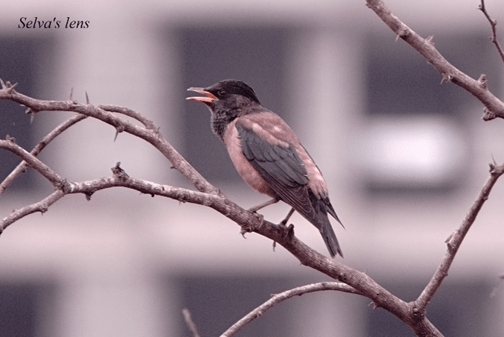
Similar thought haunted me, when the nature photographer Karthik shared with me his latest photos. On looking at a few Photos clicked by him in the same branch of a tree, in just an hour, a story emerged in my mind. Perhaps, it is only imagination, but there was some truth in it. First a Coppersmith barbet finds a Chikku and comes with its pair. They eat half of the fruit and leave. An Indian White Eye takes the leftover. Now the fruit is not there when a squirrel reaches the branch, and therefore it makes a sound. It appeared as if the squirrel requests its mate sitting in other branch not to come to avoid disappointment. (See picture). There is perhaps some kind of communication between animals, but we still can only imagine or interpret in our own way

Naturalists always try to decode the animal behaviour. But science is still evolving and there are many grey areas which is beyond man’s comprehension. The trumpeting of an elephant, the chirping of a bird, the roaring of a lion or barking of a dog tend to communicate something or other. Over a period of time, man mastered the art of communication between animals to a certain extent. The communication through sound, visual display, touch and chemical secretion are a few known ways the animals communicate. Right from hunger or happiness to love and sex, animals do express themselves from time to time. The courtship of birds is interesting and visible in fact.

But some of their communications are yet to be decoded. A new born baby cries when it feels hungry or when there is an insect bite or simply when she feels any discomfort. A mother by her experience and keen observation understands the child’s needs and comforts her. But many invisible emotions or discomforts often need medical intervention. Even a child specialist is not able to dragonize the behaviour often.  As for as animals and birds are concerned, such behavioural interpretations may help conserving the species. Especially if the children are taught the behaviour in a lighter way with creativity and imagination in place, the desire for conserving them will be inculcated. Developing this interest in conservation is a science as well as an art. The educationalists should explore ways in lines of Walt Disney to create interest in animals.

Freedom from plastics, when?

1947 freedom struggle was an amazing event in our history. Our freedom fighters had a challenge to get out of the clutches of the British. Now it appears that we need a different freedom struggle, yes, freedom from plastic. A QUIT INDIA MOVEMENT is needed for plastic. As India just celebrated 78th Independence Day, remembering the freedom struggle, in reality, we need to achieve freedom from many social evils, some of them start with the letter “P”, namely Poverty, Population, Pollution and Plastic. While all of them are serious concerns that affect the civil society, it seems that Plastic is the one menace that can not be eliminated at all, while others are also formidable. Everyone knows that it is not that easy to come out of the clutches of plastics. It was indeed a slow poison a few decades back. But by the end of the last century, plastic proliferated and spread like a cancer in the society. From packaging function to preservation work, plastic has become an ‘inevitable’ necessity. Today if we say NO to plastics, we will be castigated as one who lives in a fool’s paradise.

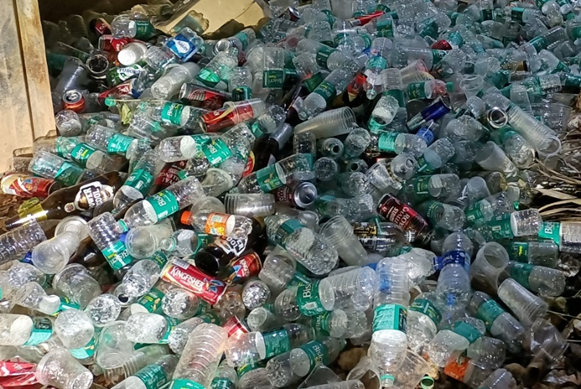
A close audit of one’s house will reveal that the house contains more than 500 items made up of plastic easily.  When plastic cannot be eliminated fully, the next midway to address the irking plastic menace is to eliminate single use plastics (SUP). Plastic Waste Management Amendment Rules, 2021 defined Single-use plastic item as a plastic commodity intended to be used once for the same purpose before being disposed of or recycled. The adverse impacts of littered single use plastic items plastic on both terrestrial and aquatic ecosystems, including in marine environment are globally recognized. Taking cognizance of the above, the ban of Single use plastics on July 1st, 2022. Interestingly the banned list of SUPs was not exhaustive. A few glaring misses were the PET bottles and plastic balloons, to mention a few.  Though PET bottle was a glaring omission, which was criticized by environmentalists and citizens alike, many environmentally conscious institutions and homes, voluntarily avoid them. But balloon is a very unfortunate miss. Very strangely balloon sticks are banned but not the balloons.

During the present Independence Day events, many gated communities and business houses decorated their party halls and entrance gates with colourful balloons made of plastic. A debate was going on in social media that balloon is not a banned single use plastic, only the balloon stick is, said the organisers of celebrations. Asserts a resident, ‘personally I am environment conscious, but collectively enjoyment is more important than environment’. Balloon makes the occasion grand but harms the environment. Of course, a latex balloon made of rubber is biodegradable as it comes from a rubber tree (Hevea brasiliensis). Even the latex balloons take months and years to biodegrade. Today, no one is using latex balloon, because plastic balloons look stylish. SUP items may be just 10~20 percent of the total plastic. But eliminating the SUPs will play a major role in saving our waterbodies and soil and also can easily be responsible for micro plastic generation, which is more harmful. We hope that the Government will expand the scope of SUP items and make it exhaustive. Stringent rules must come up to stop manufacturing the SUPs.

Freedom from SUP is the need of the hour!

Construction waste, growing fast!

‘I don’t like this floor, we must change the tiles’, said Ramesh. ‘Let’s go for a makeover of the entire house’ suggested his better half. For this MNC couple, there is no dearth of funds. One eating out costs them 5K and all Sundays are for exploring a new food joint. There is no wonder they think of spending for a new ambience. Interior designers are brilliant business people, who could lure them to improve their budget to Rs 25 lacs easily. Just 3 years back they shifted to this new flat, spending a huge sum towards interior. The interior guy added few bucks for shifting broken tiles and construction waste to somewhere. When asked curiously, ‘where he would dump the construction waste?’, he said, ‘there are agencies for this purpose. Perhaps it goes to some landfills or outskirts of the city.

On a recent visit to a rural segregation centre in Bangalore it was found that the dry and wet waste management was satisfactory. They dispose sorted waste of plastic for a price to the recyclers while wet waste was composted. The waste management appeared manageable because the segregation centre catered to the need of a Panchayat division comprising of eight villages only. After visiting the waste management facilities at that rural segregation centre, we came out to see a vast dump yard outside with heaps of construction waste. We were told that the construction waste was lying for along time and the segregation workers were clueless as to what to do with the same.

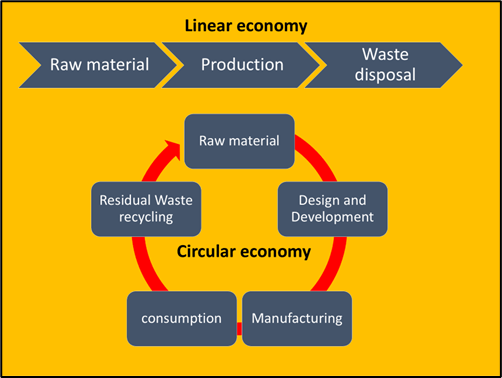
While the construction industry per se is raising the carbon footprints as the levels of air, water and noise pollution increase on the one hand while the loss of biodiversity due to conversion of land use on the other. Besides the unavoidable byproducts are growing waste and raising particulate matters due to cutting, sizing and removing excess material which may or may not be of any economic value for the developers. In fact the Construction and Demolition (C&D) waste accounts for 40% of the waste generated worldwide, according to a www.worldmetrics.org data. It is feared that the construction waste is growing in an alarming rate globally, painting a gloomy picture of the environmental impact of the building industry worldwide. Debris of demolition and construction are extremely high in China, UK and US while other developing countries also follow suit. Perhaps the need of the hour for the construction industry is to revisit its approach, to encompass sustainable practices and innovative solutions to reduce, reuse, and recycle to ensure a more responsible and efficient future in building our world.

Besides we should not forget one important issue related to the labour intensive construction industry. But the working conditions of the workers are pathetic as they survive amidst dust and particulate matter. Most of these workers who come from states like Bihar, UP, Jharkhand, Odisha and North east live in a precarious condition. The level of pollutants which are breathed by them result in chronic diseases. Most of their families live near the construction sites in unhygienic conditions and shift to next construction site once the project is over. Not long ago, we all lived in same old house for generations as joint families with limited comforts. We lived happily in a cleaner environment under zero waste conditions. Today, zero waste is only in papers!

Wayanad… ‘Landslide’ victory for whom?

Published in Dwarka Express on 10.8.24

‘Landslide’ is over, but mutual mudslinging has begun though the pandora’s box is not yet open fully! Sooner than later, many hidden truths will surface, though the buried bodies may not perhaps be unearthed or traced.  By and large, the blame is on the destruction of environment at Wayanad. It appears that everybody realized the human blunder in allowing construction in the eco sensitive zone. As usual, media, social media, social activists and all have started blaming ‘deforestation’, ‘unmindful construction’, ‘encroachment’, ‘violations of land conversion rules’, ‘ignoring scientific advice’ and so on are quoted as responsible for the recent landslides in Wayanad in south and Himachal Predesh in north. News headlines like ‘Family missing’, ‘village washed away’, ‘bodies are found 50 KMs away’, are the headlines in media. Suddenly scientists like Madhav Gargil are remembered as their predictions have come true.

Wayanad was to happen in any case. The course of the river has been changed by crazy constructions and encroachments. Lot many resorts have come deviating the construction norms. Some of the key mistakes include monoculture plantations, indiscriminate quarrying, allowing red category polluting Industries besides violating the eco sensitive zone norms. The warning that there will be disasters of unprecedented magnitudes were ignored. Madhav Gadgil knew pretty well that his warnings would be overlooked. His words were ignored, and we can say with confidence, ‘THE WARNINGS WILL CONTINUE TO BE IGNORED IN FUTURE ALSO’. There is one repetitive thing in history, i.e., ‘history repeats’. It is unfortunate that the recommendations of the Western Ghats Ecology Expert panel (WGEEP) headed by Madhav Gadgil that 75% of Western Ghats be declared as eco sensitive areas (ESA) was rejected by Government which accepted Kasturi Rangan Committee recommendation for declaring only 37% as ESA.

The Western Ghats is one of the top eight biodiversity hotspots of the world and India feels proud to have it. However, the human greed for materialistic lavishness has clearly shown the disasters in the making. This is not the first time. Cloud burst of Kedarnath and many more man-made disasters have not given any lesson for mankind and it is life as usual. If hockey team wins the Olympic gold medal (wish so!), perhaps, it will be hailed as ‘landslide victory’ or lauded it as ‘unprecedented one’. But all such metaphors can never even visualize what an actual landslide and the pathos the human race faces be. Anyone who really wants to imagine the meaning ‘landslide’ should close their eyes and visualize a WHAT IF situation, bringing their dear and near ones being washed away in the floods or buried live. Perhaps this may be the only sensitization of the magnitude of the loss. But we all have amnesia to the reality.

After some time, everything will be forgotten as nightmares and it will be life as usual. Affected families will remain helpless and for them also, after sometime, they need to come back to routine for their livelihood. Again, the decision makers will ignore the scientific cautions and go for dam, tunnel roads, mines and resorts in identified eco sensitive zones. The Environment Impact Assessment (EIA) rules will be relaxed to give Environmental Clearance (EC) for infra projects to enable the contractors to fill their coffers for three generations. It is generally said that the poor is the worst affected due to environmental tragedies, though Wayanad floods engulfed resorts and homes that are posh too. The game is over here but in reality, no one is the winner!! Environmental losses are irreparable. Time is running out! We should mend our ways by collective wisdom. Will it happen?            (Image Courtesy: Representative pic from Net)

Small deeds but big impact!

Published in Dwareka Express on 3.8.24

‘Think globally, act locally’ is a loud thinking. Many feel that environment is a complex subject and needs more time and effort to do some visible work. And some are of the firm belief that the environmental protection and nature conservation are the responsibility of the Government and authorities. Some are of the opinion that carrying a cloth bag to a shop will not make a difference in environment. Recently we came across one ‘Mr. Green’, who vociferously challenged our advisory (see picture), saying that he would use cloth flag but would not give up balloons, as they are just 0.001% of plastic dumped. He comfortably had forgotten that the balloon is a part of Single use Plastic (SUP) category which was banned in India on 1.7.2022. Even the manufacturing of SUPs was banned on that day. When we pointed out to the inclusion of balloons in SUP, Mr. Green shamelessly vanished from WhatsApp Chat (posting a ‘folded hand’ Smiley). Unfortunately, social media has become a garbage dump and everyone use it liberally. So.., we are still using polythene bags and balloons. Street vendors say that they are left with no option. At least id there any economic value for a balloon? Can’t we think of other eco-friendly way of celebrating the occasions.

Economic conservatism and environmental conservatism go hand in hand. Let us try small deed such as ‘switch off the lights not in use’, ‘fix aerators in our water tabs so that water consumption can be reduced’, ‘do not fill up full water in glass and take only as per your need’ or ‘walk small distances’, ‘travel by buses’ and ‘avoid private automobiles wherever possible’. The list is not exhaustive but just indicative. Lot more ways are there. Many of my friends who visit USA or any other developed nations come back to say that the roads are spic and span. Is it not possible for the fifth largest economy to remain cleaner? It is all in our commitment and determination to keep the nation clean. India has brought Swachh Bharat Abhyan a decade ago. Single Use Plastic ban was enforced from July 1, 2022. So, where do we fail? Any reader will obviously rest the blame squarely on enforcement authorities. But are we adopting simplest eco-friendly ways which could easily be enforced?

Nation building is every one’s responsibility, not just that of the Government alone. In history, there were occasions when certain things were thrown out of circulation. Unfortunately, paper pockets, banana leaf parcels, reuse of one-sided papers, refill pens, cycling for shorter distances, using ever silver plates and glasses have all almost vanished. It is not possible for an ordinary citizen to recreate a destroyed forest. But one can do small things which will have a direct bearing on environment. A small voluntary organization may at the maximum plant 10000 trees. A school may educate the children not to waste anything. Or a corporate may check water misuse. In fact, there are 100 small ways to contribute to environment.

Simplest way is to give a thumbs up to those who contribute in even a small way!