
In Bangalore, the current temperature (April) is 3°C to 4°C above normal, resulting in significant heat stress throughout the city. Bengaluru often gets “Mango Showers” in April, which provide temporary cooling. However, when the mercury exceeds 35°C, Bengalureans start lamenting climate change and blame the reduction of green cover as the main cause.
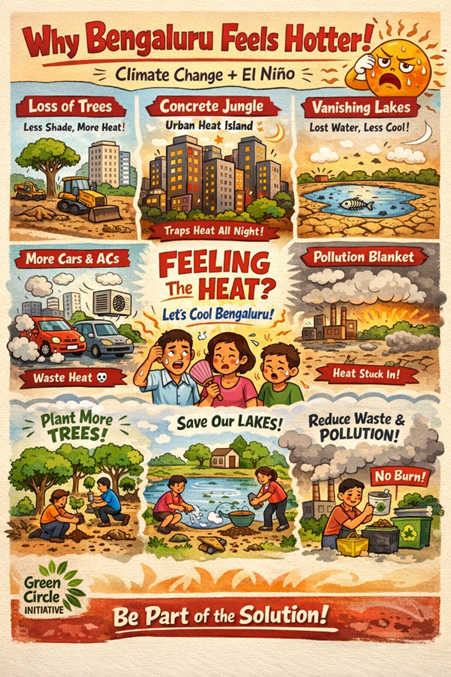
Bengaluru is not an isolated case. Interestingly, Delhiites say that the temperature is as usual hot and are prepared to face the usual extreme summer phase with forecasts reaching as high as 45°C by the end of the month. Some people have discussed the El Niño effect, which refers to the natural warming of the Pacific Ocean that occurs every few years and alters global weather patterns. So, can we attribute the current weather conditions to El Niño? In India, this phenomenon often leads to hotter summers and, at times, weaker monsoons. Thus, we can say that El Niño contributes to a temporary spike in temperatures that are already on the rise. However, this does not negate the impact of climate change. To put it simply, while climate change is a gradual and ongoing challenge, El Niño acts as an accelerant. Ultimately, the rising mercury levels are influenced by multiple factors, both natural and man-made, and these conditions are significantly affecting the livelihoods of everyday people. The question is whether we can reduce global warming, which is a big-picture concern and what little can be done at the local level. The octogenarian Bengalurean who saw the beautiful garden city once upon a time just laments and concludes, ‘We are already one step out, nothing could be done, it is the fate!’. A bureaucrat is half-minded. He has already subscribed to the ‘impossible’ intonation. As usual, politicians are relying on vote bank politics. The youth are preoccupied with their pursuit of a “bright” future and have little time for anything else. Meanwhile, the business world is focused on accumulating profits and prefers quick, shortcut methods to achieve its goals. The question of whether we can “pin hope” on the next generation is profound, as they inherit immense challenges while wielding unique strengths. Gen Z and Millennials exhibit remarkable resilience in facing global crises like COVID-19, passionately tackling systemic issues such as racial healing and environmental sustainability. Growing up in a digital world, they harness technology to solve complex problems, embodying kindness and ethics that inspire inclusive leadership. This generation is a force of transformation in fashion, culture, and politics, advocating for a brighter future. Our apprehension is how many will care for environment?\

