Now the biggest problem is microplastics, not plastics

Can you see the microplastics? Where is it? For those who are not familiar with microplastics, they are extremely small plastic particles that range in size from 1 micrometre (µm) to 5 millimetres. To clarify, 1 micrometre (commonly referred to as a micron) is equal to 1/1000 of a millimetre. Because they are so small, we cannot see them, but we eat and drink them unknowingly. In particular, many researchers have been warning people to avoid drinking water from PET bottles. They claimed that the chemical reactions between plastic packets and bottles can induce cancer and other terminal diseases. However, it has been challenging to discourage people from using these bottles. Recently, a court made a landmark decision that may provide some respite in this matter.

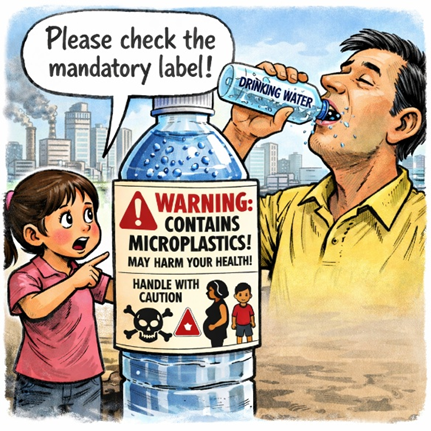
The Madras High Court has raised serious concerns over the presence of microplastics in plastic-packaged food and drinking water, calling on the Government of India to introduce mandatory warning labels to inform consumers about potential health risks. The Madras High Court has raised serious concerns over the presence of microplastics in plastic-packaged food and drinking water, calling on the Government of India to introduce mandatory warning labels to inform consumers about potential health risks. Hearing writ petitions on plastic contamination, the Court observed that consumers have a right to know about exposure to microplastics—minute plastic particles that enter the human body through food and water. The judges likened the proposed warnings to health labels on liquor bottles, stating that such disclosures enable informed consumer choice. The Court highlighted emerging scientific evidence indicating that microplastics could pose health risks, particularly to pregnant women, children, and future generations, and also flagged the environmental consequences of plastic pollution entering the food chain. During the hearing, the Court was informed that the Food Safety and Standards Authority of India (FSSAI), under the Union Health Ministry, is conducting studies to identify and quantify micro- and nano-plastics in food and beverages. The research involves institutions including CSIR-Indian Institute of Toxicology Research, ICAR-Central Institute of Fisheries Technology, and BITS Pilani. Government submissions revealed preliminary findings indicating the presence of microplastics in commonly consumed items such as salt and packaged drinking water in several states. Pending final scientific conclusions, the Court stated that warning labels would serve as an interim consumer protection measure. Warning labels have no meaning in our humble opinion. We should not forget that the mandatory warning against smoking has not stopped the smokers. The stringent measures against public smoking alone had some impact. Soon, we will see one more slogan.  SAY ‘NO’ TO MICROPLASTICS!

What to change? Waste management rules or enforcement?

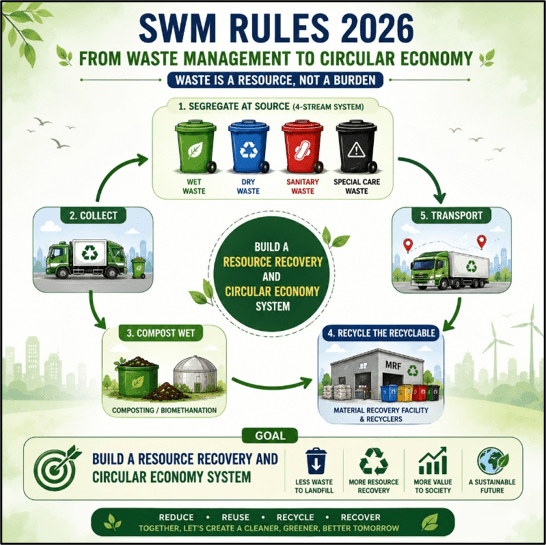
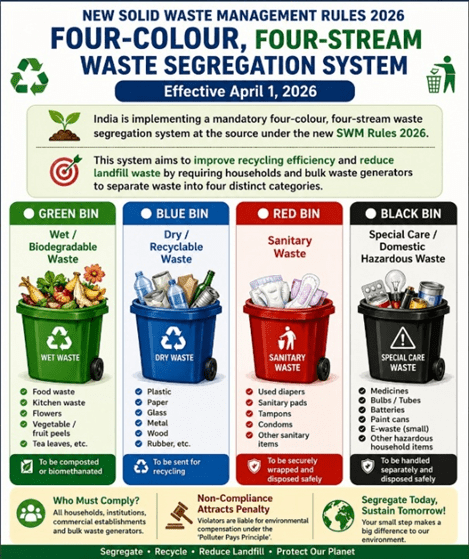
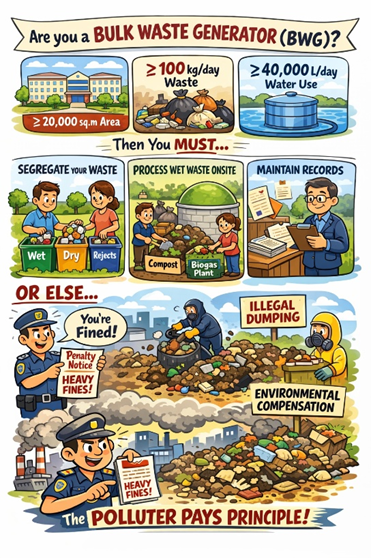
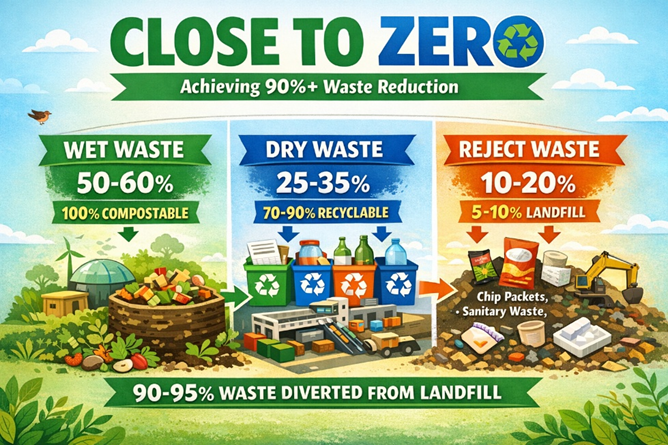
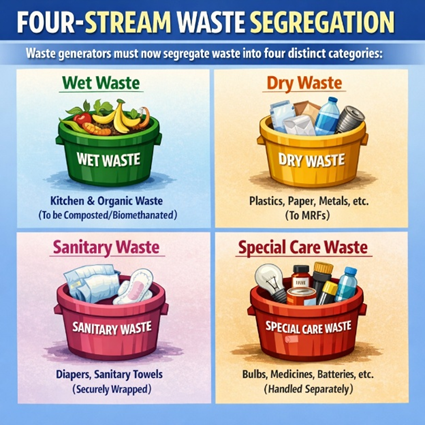
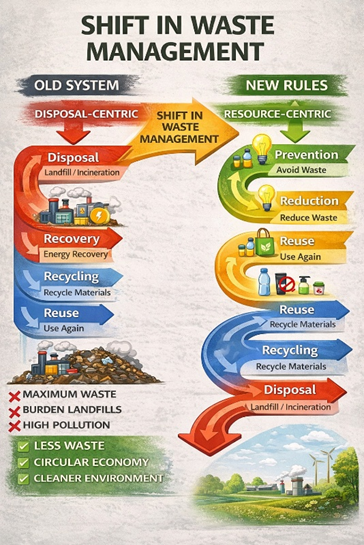
After a decade of solid waste management rules 2016, the present SWM Rules, 2026 is expected to strengthen solid waste management across urban and rural India, aligning with the circular economy and polluter-pays principles. Undoubtedly, there is a shift in waste management. From disposal orientation, we are moving towards resource orientation. The new rules are targeting mandatory 4 Stream Segregation at Source. This means that the waste generators must now segregate waste into four distinct categories: Wet waste, Dry waste, Sanitary waste and Special care waste. While the common man is somewhat familiar with dry, wet and Sanitary Waste, he may not be clear about Special Care Waste. They are bulbs, paints, expired medicines, batteries, etc. Segregation at source is now mandatory for all households, institutions, and establishments. Were the 2016 rules not mandatory?  Anyway, there is no point in doing a post mortem. Bulk Waste Generator (BWG), a new term coined in the 2026 act, includes a new class of entities called buildings with 20,000 m² area, Entities consuming 40,000 litres of water/day and places generating 100 kg of solid waste/day. All BWGs must ensure segregation, collection, transport and environmentally sound processing of waste (e.g., onsite composting). If onsite processing isn’t feasible, obtain an Extended Bulk Waste Generator Responsibility (EBWGR) certificate. If enforced, 30 % of waste will be processed at source, reducing the burden on local bodies. According to the new rules, digital monitoring will ensure compliance. Improper segregation and false reporting will be penalised as per the ‘Polluter Pays’ principles.

Landfills will be used for the recycling of non-recyclables only, and not for dumping. The circular economy is given weightage in the new rules by strengthening Material Recovery Facilities (MRFs) and promoting the reuse of waste as Refuse-Derived Fuel (RDF) in boilers/cement kilns. The idea is to reduce dependency on fossil fuels. Visitor waste management fees will be implemented in hill areas to regulate tourist numbers according to waste capacity.  The SWM Rules 2026 significantly enhance waste segregation, introduce digital oversight, increase accountability for major waste generators, limit landfill use, remediate legacy sites, and promote circular waste management in India—all from April 1, 2026. While the 2016 rules did not bring about any significant changes, will the 2026 rules set a new standard? All eyes are set on enforcement!  We all live with hopes only!

Trains kill elephants

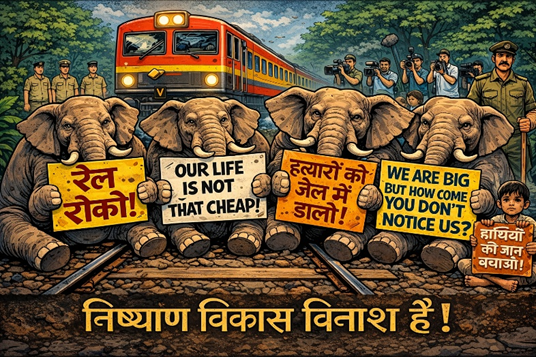
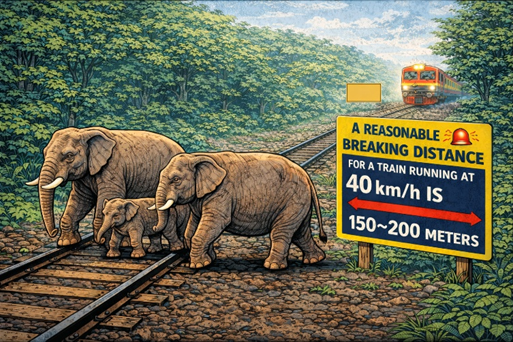
Elephants are always the soft victims! In December 2025, a high-speed New Delhi Rajdhani Express collided with a herd of elephants in the Jamunamukh–Kampur section under the Lumding division in Assam. The incident resulted in the deaths of seven elephants, including calves, and injured one more. Five coaches of the train were derailed due to the crash. Unfortunately, such incidents are common in India. At night, visibility may be a challenge for the drivers. But it is not clear how massive animals, even when they come in huge numbers, go unnoticed. We have quite often heard that elephants come out of the forests in search of food and damage agricultural lands and villages adjacent to the forest area. Often, social media posts show elephants stealing sugarcane from trucks in highway. At least, this is understandable.

When it comes to the killing of elephants within their natural habitat, no excuse is acceptable. It is unreasonable to lose valuable wildlife because of drivers’ negligence. While drivers may argue that it’s difficult to stop high-speed trains when they spot wild animals at a distance, the real question is why these trains are allowed to run at such high speeds in the first place. When such accidents happen, no one raises their voice for the voiceless. Or we may say that the animals could not ventilate their anger in any way. Occasionally, the naturalists come across mild forms of protest through comics and stories, like what we are doing right now.   To reduce elephant-train collisions, we need to explore measures such as Technology-based early warning systems (e.g., camera or sensor networks) to alert trains about elephant presence. In fact, these suggestions have been advocated for a long time. But they have not taken any tangible shape so far. Underpasses, skyways and modified track designs in high-risk zones may help. On highways, we see signage in known elephant-crossing zones. The same can be of use in jungle areas. Environmentalists say that linear infrastructure projects should avoid passing directly through wildlife sanctuaries, suggesting longer, alternative routes to protect the park’s biodiversity. We are left with minimal national parks and limited wildlife. Is it not necessary to protect the valuable natural assets?

Green fuel! Green crackers! Names are just greenwashing!

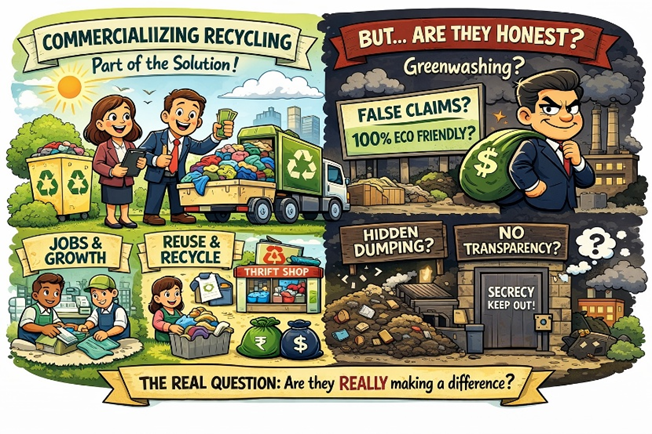
In today’s world, the terminology surrounding eco-friendly living is often both confusing and misleading, undermining the true essence of environmental responsibility. Could burning fuel be green? Could we burst crackers and call them green? Or do we really use biodegradable plastic? Green fuel refers to fuels that are considered eco-friendly because they emit lower greenhouse gas emissions and less pollution compared to conventional fossil fuels, namely coal, petrol, or diesel. However, the term is often used loosely, and sometimes misleadingly, in the public domain. CNG was considered an early green fuel. Non-conventional energy forms such as solar, wind, tidal energies are also considered eco-friendly and therefore ‘green’. And some advocate biofuel.When a fuel burns and emits carbon, how can it be green? Similarly, green crackers are just an ‘accommodating invention’ to appease the dogmatic beliefs. Green crackers are a category of firecrackers developed in India (mainly by CSIR-NEERI) to reduce air and noise pollution compared to conventional crackers. They were promoted especially after the Supreme Court restrictions on firecrackers. They are not ‘zero-pollution’ crackers but less polluting. The bitter truth is that the green crackers still emit particulate matter, sulphur compounds, nitrogen oxides, and CO₂. We can use the degrees of comparison for the ‘greenness’ of anything – green, greener and greenest. For instance, green crackers are greener than conventional crackers, but they are not the greenest. In that way, we can conclude that there is no greenest cracker. PM 2.5 peaks out during festivals, especially Diwali. We have reduced the bursting time to 2 hours, but not the volume of bursting.

Biodegradable plastic is not a solution to plastic pollution. Many products labelled as “biodegradable” do not actually break down in natural environments. For instance, Oxo-degradable plastics are not biodegradable but conventional plastics with metal salt additives. Microbes do not eat them, but they actually break down into smaller microplastics and nanoplastics. Plastics made from organic matter may degrade under industrial composting. Some plastics biodegrade but are costly. Some are partially biodegradable, as the plastic part remains as microplastics. One thing is clear, the world is yet to eliminate PLASTICS but tries to patch up, using biodegradability to its advantage.

In any case, GREENWASHING continues for sure!

Don’t use WhatsApp/Instagram frequently!

‘Your e-papers rely on circulation through social media. So, why are you stopping others from sharing these important messages?’ I can hear the whispers! That’s why I have cautiously used the word ‘frequently’ in the title. When we wanted to reduce paper usage, environmentally conscious persons started advocating the use of emails. Now it is time to caution against social media posts, or at least greetings. Digital greetings save trees and transport emissions, but excessive images, videos, and mass forwards quietly increase carbon footprints through energy-hungry data systems.  But the carbon footprint for online texting is better. We do not dispute it. The concern is about the huge volume of online messages. Data centres consume electricity as they process and store data at data centres, that run 24×7. They require electricity for servers and cooling devices, which is partly generated from coal or gas power. Every time we send a WhatsApp message, it travels through multiple servers. A Text message may consume very low energy, while a photo requires 10 times more data. Obviously, a video greeting requires hundreds of times more data. Sending the same video to many groups causes repeated downloads, multiplying energy use. Each greeting causes Screen lighting, CPU processing and Battery charging (indirect power use). So we can say that one message is tiny, but if it circulates a billion times, it matters together. Online greetings are still far greener than physical alternatives, but not zero-carbon. Cards with simple text or low-size images may be termed low-carbon cards. It is advisable to prefer them over repeated videos and autoplay videos. Deleting messages frequently is always good. We have given in the box the carbon emissions of online greetings, but they are only estimates, not precise. Understanding the impact helps. Instead of ignoring this topic, let us try to minimise usage to reduce harm to environment. Environmental challenges are subtle. It isn’t easy to decide what to give up and what not. Someone whispered to me that even our breathing releases CO2. That does not mean that we should stop breathing. When there is a significant impact on environment, it requires review.

“Digital greetings are greener than paper, but excessive images and videos quietly burn energy in remote data centres. Let us think globally and act locally”

Definition of mountains changing?

‘What is a mountain?’ If a teacher asks a primary class student, the future students may reply, ‘Any big rocky structure above 100 meters is a mountain’

Mountains that are less than 100 meters in height may not be classified as mountains. This observation is from the Supreme Court’s judgment in the Aravalli case on 20-11-2025, not my own definition. The Aravalli range has largely vanished, leading to protests in North India, particularly in Rajasthan, Haryana, and Delhi. I have nothing new to say, as the subject has already been extensively presented by the media and on social media. My only question is how this 100-meter benchmark has been finalised. Why 100 meters, why not 50 or 25 meters? I do not find any logic or rhyme in such a decision. The decision is arbitrary and challengeable. However, the decision is currently on hold. We need to wait for the Supreme Court to review its decision and possibly consider new definitions in January 2026.

The Aravalli Range is one of the oldest mountain systems in the world, and it faces multiple serious environmental and governance issues, especially across Rajasthan, Haryana, and the Delhi NCR. The core issue is illegal Mining. Extensive mining of stone, marble, and quartz has been occurring. Environmentalists argue that the mining leads to hill flattening, loss of vegetation, groundwater depletion, and dust pollution. The mining mafia is not ready to yield. The second important issue is the clearing of forests for real estate, roads, resorts, and agriculture, which leads to soil erosion and loss of native species. The Wildlife corridors are slowly destroyed due to rampant urbanisation & Real Estate activities. Forest land reclassified as “non-forest” or “revenue land” to permit construction, especially in Gurugram, Faridabad, Alwar, and Delhi NCR areas. The Aravalli range serves as a natural groundwater recharge system, but its destruction has exacerbated the water crisis in Rajasthan, Haryana, and Delhi. The loss of the Aravallis removes a natural barrier against desert dust from the Thar and contributes to severe air pollution in Delhi–NCR. The reduced carbon sequestration has already started creating havoc. There is a threat to biodiversity, and invasive species are seen replacing the natural flora. When the court takes up the case again in January 2026, we hope that some goodwill will prevail and the Earth’s oldest mountain will be saved from destruction. In the name of development, let us not dilute definitions just to accommodate vested interests and then do the mutual mudslinging at the cost of sustainable development

Are trees a solution to pollution?

The title may perhaps generate inquisitiveness and encourage environmental activists to understand my perspective. Let me clarify why I chose the topic. The trigger was a project work, initiated by a student, pursuing his MCA. As part of his project work, he was doing an in-depth analysis of Bangalore’s ward-wise tree cover and its role in combating the rising Air Quality Index (AQI). Unlike Delhites, AQI is a term, perhaps, new to many Bengalurians, not discussed widely so far.  Now, everyone in Bangalore knows what AQI is, as Bangalore’s air is also turning ‘toxic’, having crossed the 100-mark. At least this is what netizens are annoyed about nowadays. But, Delhites, don’t take this the wrong way—Bangalore isn’t trying to compare itself to you. You are top-notch when it comes to air pollution levels, with AQI readings at 800. It might take Bangalore years to reach your level. However, don’t underestimate the city’s potential. Bengalurians are confident that the AQI will reach your level. They pin their hopes on developmental activities: the ongoing metro construction, the upcoming tunnel road, the booming IT industry, and the influence of real estate interests, along with a government that often hesitates to heed expert advice.

Let me come back to the student’s thought-provoking study on satellite-based tree cover mapping and the area-wise relative AQI status. The research team called me to have my views on the study. I appreciated his efforts to map the tree cover and the AQI status even in small segments like Panchayats and wards. The research team was willing to consider my views. My first question was, ‘Will trees really come to the rescue in our battle against air pollution?’ The truth might surprise you: the answer is a resounding NO! Let’s explore why! Trees absorb carbon, but they cannot do the same for particulate matter (PM 2.5, PM 10) on leaf surfaces. Some studies show that the suspended particulate matter that gets deposited on leaves blocks stomata (small pores) on the leaves. Stomata in leaves are important for carbon absorption. In regions like Bangalore, with good rain (monsoon failures apart), those dust particles are washed, grounded, and leaves get cleaned up. But what about rain-starving places with more dust and carbon? Of course, trees act as natural filters to filter dust. However, the dust level remains uncontrollable due to ongoing construction activities in urban areas. While trees play a vital role in improving our environment, they cannot eliminate air pollution, as current pollution levels are too high to manage. A holistic time-bound approach is needed

Is open defecation still a problem in the 21st century?

My friend cautioned me, ‘Please be careful while walking.’

A few days ago, we went birdwatching at a location between Bangalore and Mysore. I prefer not to disclose the name on this platform. My friend was right in cautioning me. When I looked down, I noticed human waste everywhere. A long time back, I used to travel by train from Delhi Cantonment to Gurugram. On both sides, we used to see many people relieving themselves, unmindful of the train passing next to them. A luxury train (palace on wheels) used to pass the same route every Wednesday, carrying foreigners to see Jaipur, Jodhpur etc. We used to wonder what the tourists would think of our country.

Whether it is a lake bund or any other water body, people do not hesitate to relieve themselves. And this is not an isolated case. And the situation is not just in rural areas, but Urban areas too. India is not yet open defecation-free (ODF), although the Government of India constructed 630000 public toilets under the Swachh Bharat Mission – Urban. This may sound exaggerated, but it is true. This count includes public and community sanitation facilities built to provide toilets in markets, bus stands, railway stations, parks, and other public places. Government data indicates that most villages have achieved ODF Plus status. However, external reports from various sources suggest that having a toilet does not guarantee its use. Neither the number ensures cleanliness of the public conveniences. Mindset is also an important factor. Many villagers prefer to choose open area. Lake bunds and river sides are easy targets. During our walk along the river and lakeside, just a fortnight ago, we were personally witness to this bitter reality. Most of the Southern states have access to household toilets, but in some northern states, such as Bihar, the situation is far below.  Some may have a wrong notion that human waste is biodegradable and nothing to worry about. Years back, a data was released about the water quality of river Yamuna at Delhi. At Okhla, a test conducted by researchers revealed that the Coliform bacteria (found in fecal matter) was a formidable 11.8 Crore in 100 ML as against the tolerant level of 5000 bacteria in 100 ML. So the bacteria may cause harmful disease if left in the open. Children may be infected easily. But we must not forget the reality. A full-fledged socio-cultural change besides economic improvement among common men need to blossom to accept the health aspects of cleanliness

DO YOU KNOW? 3.4 billion people still live without safely managed sanitation services – nearly half the world’s population.   354 million people still practise open defecation, increasing the risk of disease and harm, especially for women and girls. (SOURCE: WHO/UNICEF, 2025)

Torturing animals is suicidal!

Published in South Express on 13.12.25

Disturbing visual! Why don’t admins remove video clips of animals being tortured?

A social media post caught the attention of the admins in a WhatsApp group. Indeed, the clip was quite disturbing! It showed a live crocodile being skinned. A Chinese woman used a knife to remove the top layer of a crocodile’s skin to create a stylish ladies’ handbag. If a weak-hearted person sees the clip, he would even faint. Now the question is whether the post is scary or the action. In another clip, it was explained how shuttlecocks are manufactured using feathers plucked from live pigeons. Shockingly, millions of feathers are taken from these birds while they are still alive. We do not want to debate whether such practices should be banned, but it is a fact that animals are being tortured. Cruelty toward animals for meat, milk, eggs, leather, wool, or silk is a major ethical concern worldwide. We cannot stop killing animals for meat. Any debate for this will end in controversy. But unconfirmed sources quote the world’s non-vegetarians as between 75% and 90%. However, in India, A 2021 survey found that about 39% of Indian adults describe themselves as “vegetarian.”  Slaughterhouses, in general, claim to kill animals at one go and without torture. This is what we understand, and we may be wrong. The animals are part of the food chain, which we acknowledge. Our concern lies with the cruelty inflicted on animals.

What is more painful to hear is that many wild animals and birds are tortured and killed for purposes other than food. Tigers are poached for their nails, teeth and bones. Metal traps used for killing them cause slow and painful death. Monkeys are forced to perform in street shows, kept in chains, and beaten until they obey commands. In traditional practices like “dancing bears” (now banned), bears had their teeth broken and noses pierced with hot rods. Crocodiles are killed brutally or skinned while alive for leather. Snakes are nailed to trees and skinned alive in illegal markets. Snake charmers remove fangs, causing infection and starvation. In Tamil Nadu, for kili josiyam (parrot astrology), flight feathers of rose-ringed parakeets are cut painfully so they cannot fly away and are used to pick fortune cards, even though they are protected under Schedule 4 of the Wildlife Act. It is an offence as per the law. The above are only indicative examples, not exhaustive. Instead of condemning social media posts that show cruelty towards animals, just because they induce palpitations, group members must come forward to become the voice for the voiceless. People who forward such posts must add a sentence cautioning the weak-hearted people to avoid seeing them. In our opinion, bringing such horrible episodes to the limelight will help create awareness and stop cruelty to animals.

Cyclone – brings strangers, raises brows!

Published in South Express on 6.12.25

Yes, I am referring to the Amur falcons that were carried to Point Caimere by the strong winds during the recent cyclone. This attracted media attention and raised the eyebrows of environmentalists. It is but natural that a cyclone creates havoc. Obviously, Cyclone Ditwah also brought heavy rain and strong winds to the Tamil Nadu and Puducherry coast. After creating havoc in Sri Lanka, it has slowly lost its intensity as it crossed the Indian shore. But there were some unusual developments during this cyclone. Various marine species and birds were washed ashore. Two Amur falcons were blown off course during their migration and landed on the Point Calimere (Kodiakarai) coast. These birds are passage migrants and typically migrate through Gujarat and Maharashtra, but the cyclone forced them to divert from their usual route. Are these isolated cases, and could they be neglected? We need to wait and see whether these falcons will stay in the eastern coast or will return to their regular migration route in the western shore. In general, the Amur Falcon stays in India for a brief time. We do not know how the stranded birds will respond to this change. (Picture courtesy: birds of the Indian Subcontinent by Richard Garmmett & others)

This is just one side of the game. I recently came across a viral video showing an elephant saving a spotted deer stranded in floodwaters caused by the cyclone. In another instance, a leopard climbs onto an elephant to escape the floods. These animal behaviours are abnormal and misleading. Comments have already indicated that these video clips are AI-generated. Why these social media champions pass false and fabricated videos is anyone’s guess. Perhaps, more followers may help them monetise their page. But in the process, they pass on misinformation. Today’s netizens must ensure twice that a viral video is genuine or doctored. Else the misinformation would spread like wildfire. The fallout of such misinformation will be harmful and create disturbance to the behavioural pattern of human beings.

Cyclone is a serious matter. Today, Sri Lanka is under a nationwide state of emergency after Cyclone Ditwah triggered catastrophic flooding across the western provinces, killing at least 366 people and leaving entire neighbourhoods submerged. Residents wade through chest-high waters, stranded without food or shelter as they plead for urgent assistance. It seems to be the worst disaster in the country’s history. According to the Disaster Management Centre, key infrastructure like roads and bridges, power and rail networks are damaged and over a million people are affected. While Cyclone Ditwah has weakened into a deep depression near Tamil Nadu, officials warn that floodwaters may take days to recede. Under such a serious calamity, spreading rumours and misinformation will add more damage than good

Is Bangalore inching towards Delhi?

Published in South Express on 29.11.25

AQI in Bangalore has crossed 100

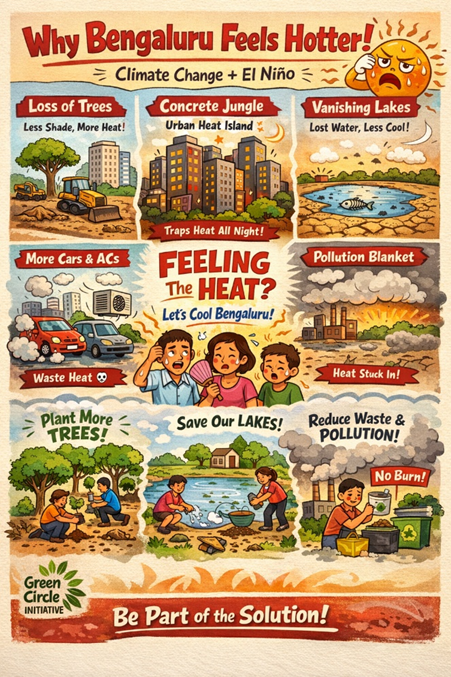
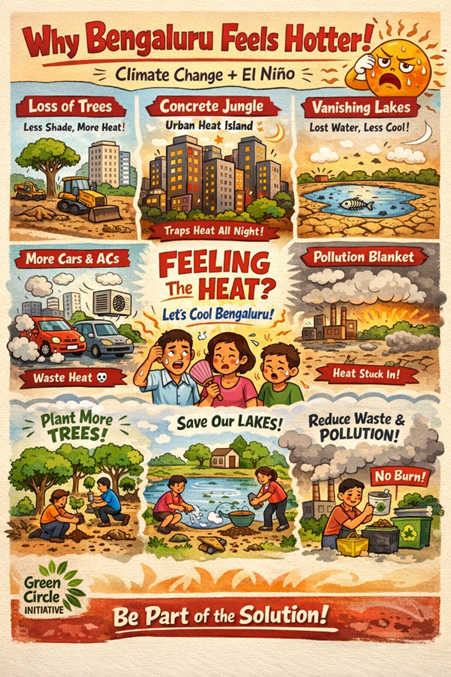
This is the top news nowadays. For residents of Bengaluru, the fact that the Air Quality Index (AQI) has breached the 100 mark has led to widespread cynicism. Many people are vociferous about the increased air pollution levels caused by heavy traffic and ongoing construction works. Indeed, the city is no longer the historical “Garden City” it once was. The innumerable residential construction projects and corporate skyscrapers have caused more harm than good. It is high time that the policymakers put a halt to the licensing of such construction and consider expanding to nearby towns like Tumkur. The increased migratory population has slowly started telling upon the most preferred Bangalore weather. Summers are prolonging, and more air conditioning units are seen near every balcony. Lifestyle changes have led residents to go for a second car. But comparing Delhi, Bangalore is far better. Delhi’s air pollution, which has breached 400 mark, is turning the city into a gas chamber. The situation is grim and worse when compared to top cities of the world. While Bengalurians may console themselves by comparing Delhi, they need to understand that Bengaluru is nowhere better than Delhi. Situated in the Gangetic plains, Delhi’s terrain resembles a bowl, which allows air pollutants to linger over the city for extended periods, particularly when mixed with winter fog. In contrast, Bangalore is located on the Deccan Plateau, giving it a convex shape. This topography causes air pollutants to disperse more easily, creating the impression that pollution is better managed in Bangalore. However, if increasing pollution is not addressed promptly, the city could eventually face the same challenges as Delhi.

Delhi faces several urgent challenges, including high vehicular pollution levels, ongoing construction, and harmful practices such as garbage and stubble burning from neighbouring states. These issues have been lingering for years, with no tangible solution in the near future. Doctors started advising patients to leave Delhi. While neighbouring states report a notable decrease in stubble burning, it is clear that the measures implemented by authorities in Delhi are insufficient. Additionally, residents of Delhi are often reluctant to step out of their comfort zones and opt for public transportation, despite the excellent Metro connectivity available in the city. In Bangalore, the situation is getting worse and inching towards a stage of no return. The fact that the AQI has crossed 100 is also a dangerous indication. If there is no tab on the new constructions, the PM2.5 level will definitely go up. Metro and flyover construction is severely delayed. Damocles’ sword hangs over the city as the 16.7 km, ill-conceived, unscientific Tunnel project prepares for its ground-breaking ceremony in February 2026. While Bangalore is gearing up to face the increased traffic snarls due to the tunnel project, it is worrisome to imagine where PM 2.5 levels will reach. God alone can save Bangalore!

Rare bird alert: Bangalore birdwatchers are in a frenzy!

Published in South Express on 22.11.25

Himalayan Rubythroat spotted in Bangalore! This newspaper headline drove bird watchers mad, including me. Recently, when I was at Bharatpur Bird Sanctuary, as I came out of the ticket counter, an authorised guide tempted me to show the Himalayan Rubythroat. I hired him crazily, but instead of Rubythroat, he showed me cormorants and herons, the most common birds. When I returned to Bangalore, I heard that the bird had been spotted in Bangalore. This tiny bird with its bright red throat and distinctive calls is indeed a birdwatcher’s delight. It generally inhabits the Himalayas in the alpine meadows and dense bushes at elevations of about 3,000 meters above sea level. But how is it found in Bangalore? This is no surprise, as there are records in Kerala and Tamil Nadu of seeing this cute little bird. But the moment it is reported in the media, hundreds of birders start invading this place. Why do birders go crazy to photograph these birds? It is interesting to learn about human behaviour than bird  . Do they want to see more of the rare birds? Why are so many of them focused on spotting rare species? Why does sighting a rare bird catch the attention of the media? Is their main intention to record these rare birds and help save them from extinction? Many of the birds are slowly disappearing, including the state bird of Karnataka, the Indian roller.  Are we realising that these birds become rare due to habitat loss? What may be the thought process when they go in search of such rare species? Fun, adventure, hobby or commercial interest, what is it?

For a common man, when sparrows disappeared, it evoked little concern because he had more important things to worry about. For a media person, a bird’s disappearance or reappearance is just a headline to gain brownie points. For a politician, including an environment minister, there are many other priorities. For a bird photographer, what is his main objective in searching for a rare bird? There are a few kinds of nature photographers, one who has a commercial interest in rare sightings and the other who finds pleasure in posting rare birds on social media to attract more followers. For a naturalist, it is a conservation issue.  So what, if a few birds disappear? Coming back to the common man who has seen the extinction of a Dinosaur, it is the way the planet Earth will either eliminate the most unfit living beings (does it not remind us of Darwin’s theory of the survival of the fittest?) Ultimately, the small group of dedicated bird lovers passionate about birdwatching should focus on raising awareness about birds and taking practical steps to conserve them. They need to keep in mind the broader context of conservation as it evolves. Bird watching is not only a pleasurable activity but also plays a significant role in habitat conservation. We appeal to birders to emphasise the importance of rare birds, and all information about them, like their food sources and habitats. They must raise awareness on all platforms and contribute to the conservation of the ecosystem. “Birds can thrive without us, but humanity cannot thrive without birds”, said the renowned Indian ornithologist Dr Salim Ali. Let us not forget the golden words! (Photo courtesy: Social media post)