
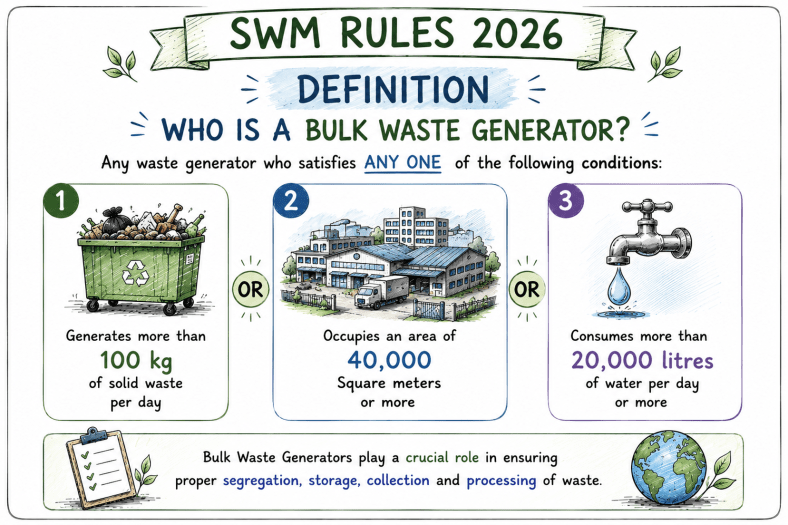
This message is intended not to instil concern among large apartment complexes, which are now classified as Bulk Waste Generators, but rather to serve as a precautionary advisory. I have gathered feedback from numerous friends, both in South India and North, and it appears that many apartments and institutions are not prepared to comply with the new regulations. First and foremost, do you fall under the definition of the Solid Waste Management (SWM) Rules that require tighter regulations? If so, it is crucial that you strictly adhere to the government guidelines and compliance mandates.
If you do not comply, you may face penalties. Of course, if no investigation is held by sleeping Babus, you may feel at ease. However, if a diligent official takes notice, you could find yourself in significant trouble. If you are generating more than 100 KG waste or the built-up area is more than 20000 sq. meters or the water consumed is more than 40000 litres per day, you are a Bulk Waste Generator (BWG) or a big campus in simple terms. You have five major responsibilities, defined in the picture. It is clearly stated that the BWGs are expected to handle the wet waste on-site, or in simple terms, the wet waste must be composted. If the campus is very big, it is better to compost the wet waste, which mostly comes from flats and homes. The non-biodegradable items (dry waste) must be handed over to authorised waste collectors, and proper documentation is emphasized in 2026 rules. The penalty could be 10000 for the first deviation and may extend up to 25000, also, besides the denial of certain services. Bulk generators as per one data, constitute 30 per cent of the entire waste generated in the country. This is the reason the Government has decided to tighten the belts. Rules apart, it is everyone’s responsibility to contribute to the better environment envisaged by the Government and pave the way for Circular economy envisaged by the Prime Minister of our country



Leave a Reply