
1947 freedom struggle was an amazing event in our history. Our freedom fighters had a challenge to get out of the clutches of the British. Now it appears that we need a different freedom struggle, yes, freedom from plastic. A QUIT INDIA MOVEMENT is needed for plastic. As India just celebrated 78th Independence Day, remembering the freedom struggle, in reality, we need to achieve freedom from many social evils, some of them start with the letter “P”, namely Poverty, Population, Pollution and Plastic. While all of them are serious concerns that affect the civil society, it seems that Plastic is the one menace that can not be eliminated at all, while others are also formidable. Everyone knows that it is not that easy to come out of the clutches of plastics. It was indeed a slow poison a few decades back. But by the end of the last century, plastic proliferated and spread like a cancer in the society. From packaging function to preservation work, plastic has become an ‘inevitable’ necessity. Today if we say NO to plastics, we will be castigated as one who lives in a fool’s paradise.
A close audit of one’s house will reveal that the house contains more than 500 items made up of plastic easily. When plastic cannot be eliminated fully, the next midway to address the irking plastic menace is to eliminate single use plastics (SUP). Plastic Waste Management Amendment Rules, 2021 defined Single-use plastic item as a plastic commodity intended to be used once for the same purpose before being disposed of or recycled. The adverse impacts of littered single use plastic items plastic on both terrestrial and aquatic ecosystems, including in marine environment are globally recognized. Taking cognizance of the above, the ban of Single use plastics on July 1st, 2022. Interestingly the banned list of SUPs was not exhaustive. A few glaring misses were the PET bottles and plastic balloons, to mention a few. Though PET bottle was a glaring omission, which was criticized by environmentalists and citizens alike, many environmentally conscious institutions and homes, voluntarily avoid them. But balloon is a very unfortunate miss. Very strangely balloon sticks are banned but not the balloons.
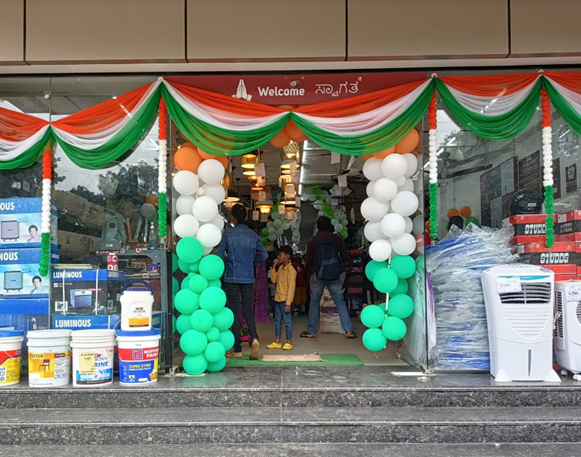
During the present Independence Day events, many gated communities and business houses decorated their party halls and entrance gates with colourful balloons made of plastic. A debate was going on in social media that balloon is not a banned single use plastic, only the balloon stick is, said the organisers of celebrations. Asserts a resident, ‘personally I am environment conscious, but collectively enjoyment is more important than environment’. Balloon makes the occasion grand but harms the environment. Of course, a latex balloon made of rubber is biodegradable as it comes from a rubber tree (Hevea brasiliensis). Even the latex balloons take months and years to biodegrade. Today, no one is using latex balloon, because plastic balloons look stylish. SUP items may be just 10~20 percent of the total plastic. But eliminating the SUPs will play a major role in saving our waterbodies and soil and also can easily be responsible for micro plastic generation, which is more harmful. We hope that the Government will expand the scope of SUP items and make it exhaustive. Stringent rules must come up to stop manufacturing the SUPs.
Freedom from SUP is the need of the hour!


