Corporate Culture, Caring Nature!

Published in Dwarka Express on 1.7.23

It was an MNC (Multi-National Corporations) in Gurugram, Haryana! After signing in, a guest entered the restroom. The mirror in restroom of an MNC welcomed him with the slogan ‘SAVE ENVIRONMENT’! The tissue dispenser cautioned him, ‘Do you really need a second tissue, just think of ME (Tree),’ (with a tree pic). He showed his hands in the wash bowl. The sensor enabled tap, dispensed water for 7 seconds. He got into snack bar to have a coffee and searched for a disposable paper cup, but instead, there was a reusable mug at coffee dispenser, with an instruction to ‘wash and reuse’. One who was environmentally conscious, would have felt delighted at all such eco-friendly efforts. In fact, MNCs care nature, not just in words, but also in deeds. Simultaneously we also hear someone whispering that the entire building is air-conditioned and huge electricity consumption destroys nature. That is also true.  There are many ways that a corporate could contribute to environment besides planting trees and ideas mentioned above. Dry wet waste segregation is one area which has been always ignored. It is true that the corporates provide separate bins for both non-biodegradable and biodegradable waste. But it is often seen that the users drop waste unmindful of what is written on the bins. One area where the corporates are successful is paperless communications. Internet communication has eliminated the usage of paper and thereby tree felling is remarkably reduced. Digitalization has minimized the use of paper currency. However ever increasing infra development projects are posing challenge to the green cover. It is essential that corporates double up their ecofriendly ways.

Reducing carbon emissions is one of the vital CSR (Corporate Social responsibility) directives in all countries. In terms of the latest Egypt convention, the large institutions in all countries. should have specific and time bound targets to reduce carbon footprints. While providing visual delight in the form of well-maintained greeneries and stylish reception halls with ecofriendly slogans, displays, products made from waste and landscape wall paintings add aesthetic value to the ambience, it is necessary that large institutions like resorts, hotels, MNCs, Gyms, restaurants, professionally managed gated communities etc should make small efforts to keep the environment clean and green. Undoubtedly ambience is essential to pursue the aesthetic lifestyle on the one hand and to promote business on the other. However ecofriendly environment is not always emphasized by all quite a lot of Indian Corporates with a few exceptions. The Corporate and Institutional sector occupies a major percentage in Indian economy. No economy may survive without the care for ecology. Under this backdrop, the pivotal role played by corporates assumes importance in the upkeep of the environment.

Dr V Selvarajan

South Express completes one year!

Published in Dwarka Express on 17.6.23

It is indeed a milestone for South Express, as we have completed the first year and during this period, we have brought out 50 weekly issues. A year ago, the Founder of the Delhi based weekly newspaper, Dwarka Express,  Robin Sharma ji, a social activist himself, called me to expand his paper in South India. Before that, as a Dwarkaite, I used to interact with him about various environmental issues when I was in Dwarka. I accepted this job on honorary basis, and asked him whether we should cover political and socio-cultural contents, he surprised me, saying, “kindly cover environment only as that is the need of the hour. There are many newspapers and channels to cover various other contents and features, but environment gets neglected”. South Express, ever since focused on environment and nature mainly. I must thank all our readers who give a lot of suggestions and feedback. From December 2022, Dwarka Express having a circulation of about 100000 print copies of their weekly paper in Delhi, has gone online besides e-copies. Now South Express also posts all its e-paper contents online and are available at any time to readers.

Kindly read all South Express contents now in online platform of Dwarka Express in the following exclusive page at  https://www.dwarkaexpress.org/category.php?catid=5  or simply go to the website of https://www.dwarkaexpress.org and look for the South Express page. The idea of this page is to encourage all those who are doing good work in the field of environment and nature and showcase the hidden talents. We request readers to share articles, research papers and stories on their experience and experiment. In fact, many people from South India settled in other parts of the country are also showing interest in our paper. We get many success stories on the achievements of budding environmental entrepreneurs also.

Ecology and Environment need attention and concern. Entire world is striving to keep the global temperature at less than 1.5 degree more than the pre industrialization era but it is also a known fact that the temperature has breached the cutoff point and is heralding to 1.7 degree which is formidable. Warning bells have rung already. What are we going to do? Are we going to mend our ways or bend our heads before the nature’s fury. We need to leave green trails, not carbon footprints to posterity.

Please do not hesitate to contact us through the email IDs and numbers given. Your experience may help or inspire someone to resort to an eco-friendly way of living. From Dwarka Express, we thank you once again for your patronage to this mission. Dr V Selvarajan

Solutions to Plastic Pollution!

Published in Dwarka Express on 10.6.23

June 5th 2023. World Environment Day. This year marks the 50th anniversary of World Environment Day, which focuses on solutions to plastic pollution, using the hashtag and slogan #BeatPlasticPollution. The whole world is showing concerns to the plastic trash. Our oceans are filled with plastic bottles and we have been seeing a lot of video clips in social media of turtles and whales being caught into the fisherman’s plastic nets. In the last fifty years, there is incredible growth of plastic. Plastic has become an inevitable and integral part of our lives. Out of 430 million tonnes of plastic produced and used every year worldwide, less than 10 per cent is recycled. It is estimated that 19-23 million tonnes end up in lakes, rivers and seas annually. 

The most dangerous Microplastics (tiny plastic particles up to 5mm in diameter) are going into our stomach along with our food, water and air. It is estimated that each person on the planet consumes more than 50,000 plastic particles per year. Next time when you are proudly holding your paper cup with coffee, please be rest assured that those paper cups have also some micro plastic elements in their making. In July 2022, when the GOI banned the use of single use plastics, we were all breathing easy and thought that the single use plastic will be completely eliminated. But still we have not come out of its grip. Discarded or burnt single-use plastic harms human health and biodiversity and pollutes every ecosystem from mountain tops to the ocean floor. With population edging 142 crores, any action program initiated by Governments seems to be challenging. Ultimately it ends in the blame game and avoidable political skirmishes.

If we seriously think of eliminating Plastics, at the first instance, we must strictly enforce ban on SUP production. If the candy sticks, ear buds, ice cream sticks, balloons, cups, forks, packing materials and carry bags below 120 microns are not available in the market, where is the question of using them? Simultaneously we need to explore alternatives. We also need to help the SUP manufacturers switch over to alternatives. Enacting law is fine, but what is more important is enforcement. Are we ready for that?

Dr V Selvarajan

Sparrows everywhere in Ooty

Published in Dwarka Express on 10.6.23

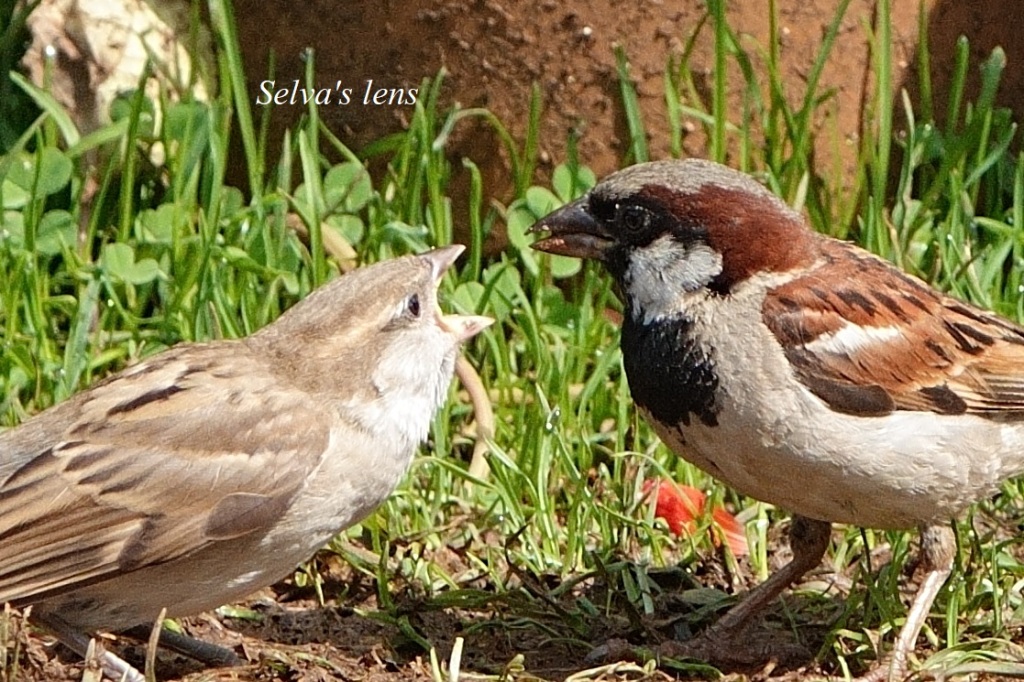
I had gone mad in Ooty on seeing sparrows. Yes, my purpose to go to Ooty was to see the flower show and engage my lens with colourful flowers. But I went crazy on seeing sparrows. In fact, one can find sparrows anywhere in Ooty. Someone has to make a research study about the secret of the survival of sparrows in Ooty. Whether it is near a street vendor, or near a flower garden, one will not miss this bird. What fascinated was when I saw a male sparrow feeding a juvenile. When I reached the Bazaar to have my grub, a few sparrows were picking up the spilled food particles. I went to boat house, there were hundreds of them. An enraged tourist never bothers to look at this little bird which is the talk of the world. In botanical garden, I was a bit angry that the crazy lot are more concerned about documenting themselves in Selfie mode. I called my sister to show this rare discovery. She quipped, ‘Yes, I remember seeing it in my childhood’. Nilgiris is a paradise for varieties of colourful birds. But I changed my idea to go for birding after looking at these sparrows. I mean, I can compare my happiness to that of a child who got her favourite strawberry ice cream. Almost about 500 birds, I might have counted. When I left Ooty, I had a life time satisfaction as I have done my PhD in sparrows!

Ooty Flower Show – The flipside

Published in Dwarka Express on 3.6.23

The schools are reopening as well as the Ooty flower show is over on 23rd May itself. Ooty is supposed to breathe easy, but my perception was wrong. The crowd for the annual flower show at Ooty is unprecedented with thousands of cars entering the city for a few kilometers in the ghat road were seen queued up, patiently waiting long hours and inching ahead. This ‘procession’ was going on even after a week. Otherwise also, the tourists inflex often exceed tolerance limits during summer holidays. Whoever visits Botanical Garden or Boat house will have to wait in long queues. It is the same case in Doddabetta peak or Dolphin nose in Ooty. The local authorities are struggling to regulate the traffic on the one hand and clear the trash generated due to heavy rush.

Coming to the Flower Show at Botanical Garden, it’s really a worth seeing annual event with its 125th edition of the flower show which started on 19th May 2023 and ended on 23rd May 2023. About 5.5 lac flower plants in addition to 35000 potted plants were lined up. For a serious botanist, who wants to study the varieties, one day is not enough. There were exotic species too with almost every country was represented. Its quite natural for anyone to think that the mad rush would be over on the last date of the show. But when I visited the Botanical Garden on 30th May 23, my speculation that I can see the flowers in a relaxed manner proved wrong. The rush didn’t come down. More than flowers what fascinated me was the huge count of sparrows inside the garden and elsewhere in the town. This gave the bird lovers a solace that there is still hope for the sparrow race. At least I might have clicked 1000 snaps. Forgetting the purpose of my visit, I was excited watching a male sparrow feeding the juvenile.

When I reached the boat house for a boat ride, it is a huge waiting. I pretty well knew that the lake water is contaminated and is nothing more than a drainage. But the irrational tourists will never bother all these. Its sure that the Ooty lake is not what it was 50 years ago. The locals want revenue and they can only make hay while the sun shines, literally. The tourism Industry cannot give up their greed to fill up their cash boxes. A few environmentalists lament out of frustration as they feel that the city is losing its charm as a hill station. I was shocked to see a well-built Nilgiri gaur (bison), just on the road. I remember peeping into Sholas 30 years back to have the darshan of bison. They are just available like stray cows now. We need to give a second thought to the annual ritual of parading the flowers just to attract tourists to Ooty.

Global temperature breaches the cutoff point!

Published in Dwarka Express on 28.5.23

The “climate” will never listen to homo sapiens, for sure!  The planet Earth is warming up. Sooner than later, the global temperature is likely to surge to record levels. The world meteorological department predicts that there is 66% chance that the annual average near surface temperature will be breaching the set goals by the Paris Agreement. It was decided during Paris Agreement that the global nations together would endeavour to keep the global temperature within 1.5 degree above the pre-Industrialization level. This ambitious target does not seem like achievable. Every year the global climate convention takes place, the latest being COP 27 at Egyptian coastal resort city of Sharm el-Sheikh from Nov. 6 to Nov. 18, 2022. The Conventions appeared to be not more than an annual ritual with most of the plenary sessions dedicated to climate related themes.

The global summit was in fact an opportunity for the world leaders to meet and discuss how to protect the planet from warming up due to human activities. There were many themes that included biodiversity, water, gender and transport. A thought was shared that the Climate change has brought to the forefront political agendas as floods, drought, wildfires and extreme weather conditions since these issues affect millions of people as well as economies of under developed countries. The cool phase of La Niña ended in March 2023 and the warming up phase of El Niño is forecast to develop in the coming months. Typically, El Niño increases global temperatures in the year after it develops and so it appears that it will increase pretty well by 2024.

By the way, India’s population breached the 1.42 billion mark to surpass Chinese population recently. We are No 1 in the world now. Is it an achievement to feel proud of? Growing population coupled with depleting natural resources pose a tough proposition to adhere to the global commitments which we have proudly declared in the global convention. Already we have expressed our inability to do away with diesel. How are we going to ensure that we will meet the targets of carbon neutrality or net zero initiatives. The challenges are going to be innumerable and how we are going to ensure protection of our natural wealth such as clean air, drinking water and the carbon sinks is a question which remains unanswered.

Encroachment is the biggest social evil

Published in Dwarka Express on 21.5.23

According to a leading newspaper, about 8600 lakes out of 18000 lakes in Karnataka are encroached. It is not a surprising news at all. Everyday, we come across some encroachment happens in the country daily. It has become the part of life. Not only lakes, forest lands, buffer zones of forests are also being encroached in pretext or other. When you come to the roadside, you can pretty well see a hawker occupying platform for his petty shop, a juice stall or a workshop for an automobile repair. Encroachment is not the only culpability of street vendors. Even houses and big shops who officially have registered title deed of their properties tend to infringe into the roads, pavements and water fronts to get extra peace of land. Mushrooming of public land starts in a small scale, invisible or insignificant in the initial stages. One by one, encroachers claim the land their right. Marina Beach was once free from street stalls but now the beauty of the world’s longest beach is filled with filth and dirt. One shopping street has peeped almost to the sea. Encroachment has become the order of the day, and many a time, encroachers resort to under the table dealing with local politicians and bureaucrats. Corruption is rampant, by greasing the palms of local bureaucrats, the hawkers manage to pull along.

Legal Immunity, a blessing!

At the same time forget that the street vendors attain immunity from legal support and it will be near impossible to remove the existing encroachers in the name of street selling. Hawking has become legal, in a way. In 2013, the Supreme Court said the already existing street vendors policy should be treated as a law and passed this order. According to national urban livelihood mission, the court also sought a survey of street vendors and distribute ID cards to the identified ones and create hawking zones for them, which is not being done. In July 2014, the High Court of Karnataka issued notice to the Municipality (BBMP) to remove unauthorized encroachments and obstructions on the footpaths in Bengaluru under section 288-D of Karnataka Municipal Corporation Act, 1976. But subsequently, according to Street Vendors (Protection of Livelihood and Regulation of Street Vending) Act, 2014, street vending was treated legal. The BBMP is said to conduct a survey and issued ID cards to street vendors. In any case no one could be evicted.

In many of the cities we would have come across once atleast that the municipal bulldozers demolish the unauthorised construction and pulled down several roadside shops. But unfortunately in India we have become accustomed to such upheavals due to local vehement protests and agitations by residents against such encroachments. But nothing concrete has happened to stop such encroachments. In Delhi, unauthorised platform shops all were destroyed and removed by a court order in Dwarka. But very soon everything returned and it was like life as usual. In the process we forget that the platforms are for ensuring safety of pedestrians. But who cares. The same pedestrian walks towards the unauthorized fast food van to take a hot and cheap fish fry and he forgets all rules and regulations when it comes to him. So, encroachment has become a social evil!

Bengalurians’ top priority is lakes protection as per environmental survey

Published in Dwarka Express on 14.5.23

Yes! Election fever is here with us also as Karnataka goes for its assembly elections. But our fever is a variant slightly. We administered an environmental poll using Telegram App and the same was responded by 102 persons as at 7 PM on 11.5.23. Several options were given such as a) better garbage management b) planting more trees c) protecting existing trees d) pollution free traffic e) preserving waterbodies f) construction waste control g) stringent encroachment norms h) tab on migratory population i) better roads and infrastructure j) nothing  an work (NOTA).   Interestingly 60% of respondents indicate that the lakes and tanks must be the top concern for the Government, while better garbage management (57%) and planting more trees (44%) are considered for 2nd and 3rd place respectively.  The respondents were asked to choose top 3 concerns, though we are aware that all the above problems are important. The top 3 priorities chosen by Bengalurians Of course, in today’s scenario, any urban area is vulnerable to all concerns enlisted above. Perhaps in other cities, garbage management might have been the top priority, but in Bengaluru, lakes are drawing more attention and it is the need of the hour too.

Historically the lakes are called kere in kannada language. Most of the waterbodies are known to be man-made tanks which were formed during the erstwhile dynasties like Vijayanagara and chola dynasties ensured that there is sufficient water by digging new tanks and deepening the existing tanks. Visionaries like KembeGowda are remembered as the architects of the city as they took a lot of initiatives to save the watr resources. When the 70 Sq km area of Bengaluru has expanded 10 times, slowly 100s of tanks disappeared. Today, an ordinary citizen though do not have time for protecting the lakes, definitely laments about the depletion of these precious waterbodies. It is evident from the response in the survey. Next to waterbodies, a Bengalurian is also concerned with the persistent garbage issue.

Bengaluru had enforced the segregation of waste at source, a decade back. This is being religiously practiced in apartments and gated communities. But the mixed garbage which is spilled in streets is still an eyesore. No little effort by citizens groups is seen to show any positive change in the mindset of the authorities. Citizens are also to blame. However in many unauthorized places, residents conveniently dump wastes and then make a hue and cry that the authorities are in deep slumber.

While planting new trees in massive scale is the 3rd concern of the Bengalurians, saving the existing trees have become a concern has been relegated to 4th place in the survey, and perhaps Bengalurians have now lost hope since the massive tree felling in the name of Metro and road construction is going on unabatedly. Environment cannot be compartmentalized and moreover it has no jurisdiction or borders. If air is polluted it will affect all and if ground water doesn’t get recharged, the human survival will be affected. Waste cannot be eliminated but has to be managed judiciously.

As for as Karnataka elections are concerned, by the time this paper goes for printing, election results would have been announced. Follow on will be a slew of horse trading, if the results indicate a hung assembly. Someone will be lobbying for a ministerial berth while another MLA may be contemplating on some nepotism for his dear and near one. In any case, the burning environmental concerns may hardly draw any attention.

Dr. V Selvarajan

Needed a Green Manifesto!

Published in Dwarka Express on 7.5.23

Karnataka state elections are on 10th May 2023 and political parties are busy with hunting. Hunting of votes and the freebies galore is touching the sky. Castes, anti-incumbency, price rise, unemployment, poverty are the usual political gimmicks used by all parties. While the ruling party uses 6 promises starting with the first letter A, namely Anna (food security), Abaya (social welfare), Akshara (education), Arogya (health), Abhivrudhhi (development), and Aadaaya (income), the main opposition party bats for 5 guarantees namely Gruha Jyothi (family welfare), Gruha Lakshmi (poverty alleviation), Anna Bhagya (food), Yuva Nidhi (youth welfare), and Shakti (women welfare). Well, If Social welfare is important, one has to think of the earth where we live and the environment which enables the living. The manifestos have become just an election ritual.

Our scanner captured one glaring factor. There’s no mention of greener initiatives in any of the manifestos! Alas, it appears that there’s no green ideologies for any of the political parties. One fails to comprehend why this serious concern has been overlooked. Don’t we realize that even the Finance Minister of the Centre has highlighted several aspects of green budget and earmarked crores of rupees for green projects under the budget allocation for 2023-24. Prime Minister was mentioning once that the Circular economy should replace the existing linear economy. The circular economy talks about the recycling of waste and this is seen as one of the significant measures to achieve the climate change targets accepted by India in global Climate conference held in Egypt during November 2023. The political parties failed to stress this dire need to save the environment from a long term perspective.

Green Manifesto is the need of the hour. All political parties should emphasize on the need for protecting the green cover, natural resource management and forest conservation. Green cover is depleting day by day. Waste is not managed properly even in small towns and villages. Landfills are growing equal to a mountain. Air quality is deteriorating day by day. Failure of monsoon, man induced change in climatic condition, annual drought and floods still are looming large. Urban waterbodies are drying out and slowly disappearing. In the name of development, infra projects denude the country. Why can’t a political party promise to plant one crore trees every year. Why can’t a manifesto include clean city initiatives? Why can’t a political party promise to create green job and highly dynamic sustainable development, ensuring long term value creation?

SC relaxes rules for forest dwellers in Eco Sensitive Zones!

Published in Dwarka Express on 30.5,23

It is not that easy to protect the 662 National Parks and Wildlife Sanctuaries in India. Our conservation efforts depend on how serious we are in protecting these natural forests and its users. Encroachment in reserve forests is nothing new for India forests. Efforts are always made to prevent large scale deviations and intrusions. Quite often, the much controversial mining and Infra development activities are accorded environmental clearances for free access into forest areas. Resultant protests and litigations between locals, environmentalists and proponents of development are not new. Stringent guidelines become necessary to preserve the natural resources. When some stringent measures are initiated against forests being affected by such mega projects, it is quite natural that some innocent people get affected by such orders. One such order by Environment Ministry was in 2022 that ended detrimental for the forest dwellers as any development or construction activities were halted.  Deciding on the petition of  Godavarman Thirumulpad vs Union of India, Supreme Court delivered a land mark judgment on 26.4 23 showing justice to the affected villagers. The Supreme court bench headed by Justice B R Gavai and others on 26.4.23 classified 26 activities into 3 categories namely ‘prohibited’, ‘Restricted with safeguards’ or ‘permitted’. This has brought relief to the local villagers and tribals living in the eco sensitive zones in the borders of the National Parks and Wildlife Sanctuaries.

Most of the above natural forests have settlement colonies and villages in these protected areas, both inside and also in the eco sensitive zones (ESZs) which are within one KM of the protected forests, measured from the demarcated boundary of such protected forest as per existing guidelines of 2011. The villagers living in these areas have a right to their livelihood and they need to construct or reconstruct their shelters. Their population also grows and the expanded families also have a right to live. The reality is that such villagers never lead extravagant life but live contented with basic amenities.

The present SC verdict revisited the existing stringent guidelines and permitted certain activities while rejecting certain other activities outright. The activities which were rejected included commercial mining, polluting industries, hazardous chemical producing factories, saw mills etc. However certain other activities such as felling of trees, construction of hotels, resorts and infra structures such as schools and hospitals, introduction of exotic varieties, widening of roads, allowing commercial vehicular traffic in nights, display of signboards are some of the activities which are allowed in the ‘regulated’ activities. Ongoing agriculture and horticulture practices local communities, organic farming, rain water harvesting and adopting green technologies are coming under permitted categories. The clear definition of these 3 categories of activities gives a sigh of relief for the locals and at the same time controls the mining and polluting activities. While this is a people friendly judgment, there is a rider to this judgment that this will not affect the ongoing activities already identified and permitted prior to 2011 guidelines

So according to the petitioners, these relaxations will bring relief to the villagers, settled in the Protected Areas coming under the 6 provisions of Sections 18 to 25A of the Wild Life (Protection) Act, 1972. However, one cannot forget that the Indian Board for Wildlife held on 21st January 2002, recommended the “Wildlife Conservation Strategy-2002” which envisaged that lands falling within 10 KMs of the boundaries of National Parks and Sanctuaries should be notified as eco-fragile zones under Section 3(v) of the 1972 Act. However, the same have already been made flexible by reducing the ESZs to 1 KM. While relaxing rules to accommodate the deprived class is appreciable, it also should be borne in mind that such relaxations must do better than harm in the long run.


Will wild-safaris promote eco tourism ?

Published in Dwarka Express on 23.4.23

A Jeep with tourists in North east was attacked by one horned Rhino and providentially no one was injured. My own impression about a jungle safari has suffered a change after participating in a Jeep Safari in Sariska. In my young age a lot of trekking was undertaken by me during nature camps in Western Ghats, crazily longing for a tiger darshan. But now, I wonder whether ecotourism is commercialized heavily. Hiring a jeep in Sariska at Rs 3500 for 2 hours made me think, ‘Are we really following norms when we enter into a tiger reserve?

Several thoughts brewed up after sitting in the safari jeep. My jeep was open and there is every possibility that a wild animal, leave alone a tiger, will attack. Why they are taking a risk? Are we taken for a ride by the agencies? Is eco-tourism commercialized? While questions were bubbling up, an abrupt question by the guide whether we want to go to Hanuman Mandir pulled me back to the current moment. The idea of Hanuman Mandir visit was negated by me, because in a Tiger land, I firmly believed that there could be none above a tiger. The Guide took us in a different route and we had no much disappointment as we could have plenty of wild animals like Spotted Deer, Nilgai, Crocodiles, Indian Hare, Jackals besides variety of avians. Yes, the thrill of riding in a dry deciduous scrub jungle is not a small experience though there was bleak chance of tiger sighting. Suddenly there was a commotion. Mobile phone information from similar Safari guides made several jeeps, rounding up a 10 KM area. I could see similar tourists in about a hundred jeeps on various sides of the encircled area curiously waiting for the tiger to come out from bushes. Nothing happened and everyone returned with disappointment.

 Let’s appreciate one thing. No one is permitted in the core areas of a jungle. In more than 800 Sq kms of Sariska, only 20% is open for safari. Same is the situation in any forest. On interaction with the guide, I understood that we have a chance of sighting M-12 (a chest number allotted to each tiger). After my discussion with the guide and seeing that 100 jeeps surrounded an area giving false hope to tourists, I am of the opinion that sighting tiger naturally in the natural habitat is perhaps a kind of a concoction by the ecotourism operators to create a hype and lure more tourists. In one or two locations I saw a PET bottle or a Kurkure pocket. No guidelines or strict instructions were given by tourists to follow the ‘law of the jungle’. Perhaps, the phrase ‘Jungle law’ was rightly coined to indicate the boisterous dictates of an appallingly dominant political parties with brutal majority. Eventually, it is also applicable to such ‘callous tourists’ in forests who are least concerned about the rules

The National Tiger Conservation Authority guidelines in 2012, amended from time to time prohibits tiger safaris in core and critical areas but permits Only in non-core, buffer areas to reduce pressure on wildlife. While a jackal or unpredictable Nilgai was seen just in 30 feet distance, I wonder why a spotted deer even doesn’t shy away human intrusion. Because it has become a routine for them. Even a lion in Gir is undisturbed by a human visitor. For them, its life as usual. Perhaps, they are as domesticated as that of caged animals. A Supreme court enabled CEC panel recommended withdrawing of approvals to allow the safari in fringe areas too. But will the forest conservation act 1980 recently amended, reconsider the decision is a question mark. So, until some good decisions taken in the lines of global best practices, in my opinion Safari is not just like wearing a Safari suit. A Safari if permitted has to bring a change in the mindset of visitors and organizers. It should not be a ecotourism business

DR V SELVARAJAN

200 Tigers added but 889 Sq km forests disappeared !

Published in Dwarka Express on 15.4.23

On 6.4.23, a question was asked by a BJP Member Sushil Kumar Modi in Rajya Sabha about the area of forests diverted in the last 5 years.  Ashwini Kumar Choubey, the Minister of state in the ministry of environment, forest and climate change (MoEF & CC) answered that during the last 5 years, various approvals for diversion of forest land for non-forestry purpose including for infrastructure and industrial projects, involving an area of 889.03 Sq. kms have been accorded by the Central Government under the provisions of Forest (Conservation) Act,1980. Or on a comparative term, a forest land equal to Sariska Tiger Reserve (881 Sq kms) has vanished.

Interestingly it is claimed that during the last 4 years, 200 tigers have been added to the Indian count, taking the total number of tigers to 3167, almost three fourth of world tiger population. Out of the 889 Sq. kms of the sacrificed forest land, 194 Sq. kms have gone to ROADS, 188 Sq kms for MINING and 133 Sq kms for IRRIGATION. As per the tabled data, the forests have given way to about 26 avenues such as railways, defence etc. which are treated necessary for development.

According to Dr Ullas Karanth, a Conservation Zoologist, who dedicated his life for tiger conservation, we have 380000 Sq kms available for tiger conservation. Even if a set of 5 tigers have a territory of say, 100 Sq kms, India would have a minimum of 10000 tigers by now. He laments over lack of scientific temperament to achieve the same. Besides, the effective conservation of wildlife squarely depends on the political will and the only way it is possible is by increasing the much-needed forest cover. Not only tigers but reports indicate that elephants and wild animals emerge out of the jungles in search of food and water while locals make a big hue and cry for their safety, resulting in man-animal conflicts. This is the reason why scientists and environmentalists become vociferous, seeking tangible solutions, whenever an infra project encroaches forest areas. When affected locals protest, they are branded as pro-environment, anti-development proponents. When places like Joshi Math disappear, then we do a post mortem and conclude that the destruction is due to tunnelling and large infra projects. Environmental Impact Assessment provisions are flexed so that the existing stringent norms do not come in the way of developmental projects. It is emphatic that the environmental clearances are accorded in an equitable manner