Birds are vanishing fast!

Published in South Express on 18.10.25
Where No Vultures Fly, a 1951 British film directed by Harry Watt and starring Antony Steel and Dinah Sheridan, was an adventure movie based on the real-life story of the conservator Mervyn Cowie in the jungles of Kenya. Now vultures are rarely seen. I still remember the Gole market in Karol Bagh, which had meat shops in the 90s. I used to wonder at the huge flock of giant-sized vultures waiting for the leftovers. When I used to travel by a scooter from Gole Market towards East Patel Nagar, enjoying the winter weather, I never missed the migratory Swallows gregariously flying low and near me, while waiting at signals. Gone are those days, as flyovers and metro pillars dominate most signals. The Great Indian Bustard (GIB) is the state bird of Rajasthan. Recently, I saw a video clip in social media that tends to promote a whiskey brand called Godawan 173, relating it to the near extinction of GIB. The Rs 500000 per bottle of whiskey is Indian-made (Is it self-reliance?) Yes, you read it correctly. It is Rs 5 lac, coming in a beautiful Jaipur Blue bottle. While the researchers dispute the actual number of birds (not 173, they claim), it is a shame that a whiskey brand is promoting conservation of GIB without even caring to contribute to the conservation

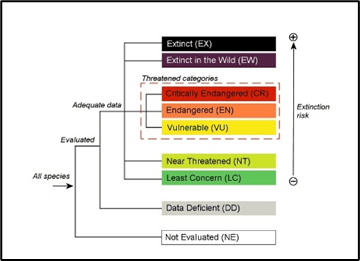
Rapid urbanization has taken its toll. Even the most common sparrow has become uncommon in cities and towns. But still, they are part of rural India. Recently, it was reported that the India Roller, Karnataka’s state bird (neelkanta in Kannada) has been downgraded to the ‘Near Threatened (NT)’ category by the International Union for Conservation of Nature (IUCN) from the earlier category of ‘Least Concern (LC)’. Whenever we go birdwatching in natural areas like lakes and rural scrub jungles, we seek out the Indian Roller, which is often regarded as one of the most beautiful birds. I still remember seeing this bird perched on power lines in large numbers back in the 90s. While travelling by train, it was fascinating to observe this bird, with its distinctive big head and bright blue colour, as it flew by. Unfortunately, it has now become a rarity. In Bangalore, the winter season has nearly begun, but migratory bird species are notably absent. Man-made climate change is believed to be the primary cause of the rapid decline of these rare species. This trend is evident in other regions as well. For instance, in Rajasthan’s Bharatpur National Park, migration has yet to start. Similar situations are occurring in many other places. Activities such as the beautification of water bodies, unregulated ecotourism, and careless development projects are causing us to lose our valuable natural assets. The vanishing of the bird species is a stark reality of how fragile migratory birds have become. Stronger global action is needed to protect rare species before they too vanish.  (Photo courtesy: Karthik, Bangalore, and IUCN website)

Stop torturing trees!

Published in South Express on 11.10.25

“Save trees! Plant more trees!” These are the most common slogans heard in any town. I wonder whether we truly care about the trees. Day in and day out, we encounter attacks on trees, especially in urban areas. Anurag ventilates his anger in social media when a poster or banner is nailed to a tree. Aswinikumar becomes vociferous about the concretization of the trees, which slowly destabilizes a tree. Kumar says that commercial organisations like hotels or malls seek publicity by using serial lights around trees without realizing that the electrification of a tree heats its bark and destabilizes its growth. But then, if there is no one to question, the bureaucrats and political parties will never bother. Recently, in Tamil Nadu, during a political rally by a film star, the crowd climbed a tree to avoid being crushed in a stampede. In the process, the branch of a tree broke down, wounding all those who climbed up the tree. When such conditions prevail, the tree is the victim. During the monsoon, trees reportedly fall due to heavy rain. But if we look at the fallen tree closely, we will realize that it was due to heavy concretization of the root zone. Nowadays, for every development project, trees are felled or transplanted. The common man has no clue about the number of trees felled or transplanted. We believe the data given by the authorities. Whenever some mass cutting is contemplated, environmentally conscious people raise their voice. If our voice is feeble, then the development project goes further without any checks.

Nails puncture the bark, damaging the inner layers, including the xylem and phloem, which are responsible for transporting water and nutrients throughout the tree. The protective bark of a tree shields the inner living tissue from pathogens and insects. Nailing punctures this defense, creating an entry point for infection. A healthy tree may grow over the wound, but a weak or young tree may not recover. Similarly, artificial lights wrapped around trees as decoration affect the lifecycle of the trees and the animals and birds associated with these trees. light at night can disturb the tree’s natural resting cycle and interfere with its process of photosynthesis. Similarly, covering the roots with concrete suffocates and starves the tree by preventing essential water, air, and nutrients from reaching its root system. Right from nailing to transplanting, trees are subject to untold miseries. India is the country that demonstrated to the world that trees are our brothers and sisters. Chipko movement raised the brows of world leaders who were awestricken at the kind of love shown by Indians. Trees occupy a very important role in our literature. Trees do not speak, yet they breathe life into everything around us. Let us become their voice, their guardians, and their companions in survival. For when a tree falls, a part of humanity falls with it.

Why do people throw garbage in unauthorised areas?

Published in South Express on 4.10.25

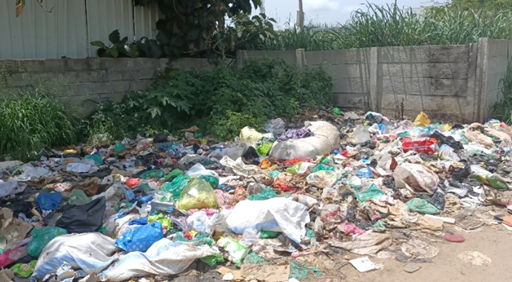
Swachh Bharat Abhiyan or Clean India Mission is a country-wide campaign initiated by the Government of India on 2 October 2014 to eliminate open defecation and improve solid waste management, and to create Open Defecation Free villages. As we enter the 12th year of Swachh Bharat Abhiyan, it is unfortunate that the mission has not evoked much interest. In other words, there is not much visible change in the garbage handling. Almost every municipality is struggling to manage the ever-increasing amount of garbage. I asked a question in a WhatsApp group to understand why individuals tend to throw garbage. From your WhatsApp survey, it seems people are aware of the problem but frustrated. Optimism exists, but anger dominates—showing that citizens want change but don’t feel empowered to make it happen. A few of the views that came up are as under “People lack civic consciousness.” “No dedicated garbage bins, periodically cleared.”“Independent houses have no lifting facility like apartments. “People don’t want to pay for garbage.” “No strict rules or enforcement of penalties.”

One member added, “7 years back, I was staying in Amrutahalli, Bengaluru. It was not so developed during those days. But garbage vans used to come, whistle near every house, and used to pick up garbage. The garbage pickers were responsible during those days.” In fact, this system is in vogue in some municipalities where even publicity songs are played by the collection van. Users put the garbage in the van daily. But all said and done, we still see the eyesore dumps in all cities. Talking about penalties, another member added, “Garbage cess is already imposed. Not sure whether the collection started? Community composting, as done in the HSR layout, is one option that can be thought of. Every street or group of streets can have a dedicated place for community composting for all the wet waste generated in the area.”  

It is a fact that civic sense and responsibility are missing or perhaps not much developed in India. Bengaluru was ranked the fifth dirtiest city in India in the Swachh Survekshan 2025 survey. Of course, this survey was made among the cities with a population above one million. Along with Bengaluru, Ranchi, Chennai, Ludhiana, and Madurai were ranked the top dirtiest cities. Unfortunately, some of the southern states that claim the highest percentage of education level have more unauthorized garbage dumping. Cleanliness is everyone’s responsibility. It is not fair if somebody keeps his home very clean but does not care about the surroundings. Every year, we remember Mahatma Gandhi on Oct 2nd, because not only is it his birthday, but also that the Swachh Bharat Abhiyan was rightly started by the PM on this day.

BBMP to GBA, is it ‘old wine in a new bottle’?

Published in South Express on 27.9.25

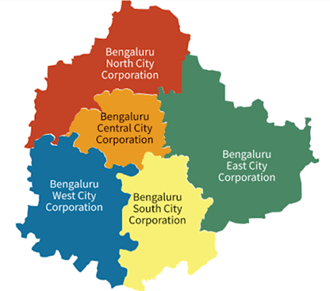
Will the Bruhat Bengaluru Mahanagara Palike (BBMP) perform better after being renamed as the Greater Bengaluru Authority (GBA)? Will the split of BBMP, now renamed as GBA work better? Will the five zones, that have now been formed serve the purpose for which they have been formed? GBA formed in May 2025, became fully operational in September 2025. The Authority has a three-tier governance structure, comprising the Authority at the apex, multiple City Corporations, and Ward Committees. It is hoped that the ward elections kept pending for more than 5 years will soon be held. As of now 350 wards are there in GBA’s jurisdiction. Even in 2015, it was decided to split the erstwhile BBMP into small corporations. The reason tabled by the Govt was that it was difficult to manage the city by a single corporation, given the ever-increasing population of Bangalore. The decision to split the former BBMP into smaller corporations was made in 2015. The government cited the growing population of Bengaluru as the reason, stating that managing the city with a single corporation had become increasingly challenging. In recent years, residents of Bengaluru have noticed a decline in the city’s overall condition, which is evident in areas such as garbage clearance, green cover, infrastructure maintenance, and other related services. Smaller municipalities achieve greater decentralisation, a key hallmark of good governance. There may also be a larger voice for the citizens and greater accountability towards them. In this regard, it may not be out of place to compare Delhi with Bangalore

In Delhi, there was a single corporation called ‘Municipal Corporation of Delhi (MCD)’ up to 2011. In 2012, the MCD was divided into three separate corporations: North, South, and East. The goal was to enhance regional efficiency since the area was twice the size of Bangalore. Delhi is not just another city. As the country’s capital, its governance has some special requirements. The trifurcation has led to economic imbalances, in addition to causing political controversies. In 2022,  Delhi reversed its decision and returned to a single corporation. Though there was a political hue and cry, it was finally decided to merge all three corporations. MCD thus had a rebirth. The citizens supported the remerger of the corporations since they hoped to get good governance, characterized by efficient and transparent service delivery.

In Bangalore, some experts believe that the division was unnecessary and implemented in a manner that will lead to uneven development in the city. Leaving aside politics, an effective decentralization will be in place if the authority is delegated to a dedicated committee. The city has to hold its Municipal elections immediately to ensure effective micro-management. Imbalances between corporations should be eliminated by apex-level policy management by the Greater Bengaluru Authority. The city is facing major problems, namely garbage clearance, potholed roads, overflowing drains, irregular water supply, and ever-rising traffic congestion. If decentralization can’t address these issues, then it will be nothing but old wine in a new bottle

(representative picture from the net)

Are cloudbursts due to climate change?

Published in South Express on 20.9.25

Cloudbursts are unpredictable events that occur within just a few seconds. A cloudburst refers to a sudden and heavy rainfall in a localized area. This phenomenon typically happens when warm, moisture-laden air rapidly rises, often due to local topography such as mountains or convection. This rapid ascent leads to intense condensation, resulting in a significant amount of rainfall over a short period. The recent cloudbursts in Uttarkashi, Uttarakhand and Kishtwar, Jammu and Kashmir have created havoc and taken a heavy toll. The question is whether the cloudbursts are natural or manmade. It is not a new phenomenon. The 2013 cloudburst in Kedarnath is still fresh in memory. In fact, cloudbursts occur especially in mountainous regions like the Himalayas or Western Ghats, not in plains.

Now, the common question is whether the frequent cloudbursts are unnatural. While cloudbursts are natural, the frequency is high due to anthropogenic activities. The atmospheric heat is amplified more than the average warmth. This, in turn, increases the rainfall intensity.  Climate change is affecting the monsoon patterns, resulting in flooding and devastation. Losses due to cloudbursts are huge when constructions are in flood-prone zones. In the name of promoting eco-tourism, ruthless construction and infrastructure development activities take place in the hills. So, climate change is increasing the frequency and intensity of cloudbursts by raising atmospheric moisture levels and destabilizing local weather systems.

In the Himalayas, the mountains are steep and tall. The valleys are narrow and bowl-shaped. Clouds become trapped in this area and cannot move out, leading to a literal explosion. Valleys are often crowded due to mushrooming ecotourism spots. This is the main reason for significant human losses. The visuals on TV channels paint a gloomy picture. We saw many multi-storeyed buildings that collapsed like a house of cards. There were alarming scenes of structures buried under mud and slush. We are all aware that man’s greed is endless. Acting without regard for the ground realities or conveniently ignoring nature’s course will only lead to disaster, if not today, then tomorrow. Immediate Government intervention is necessary to stop congestion in hill areas. Allowing such construction must be minimal, and after a proper study of environmental impacts.

Stay away from wild animals!

Published in South Express on 13.9.25

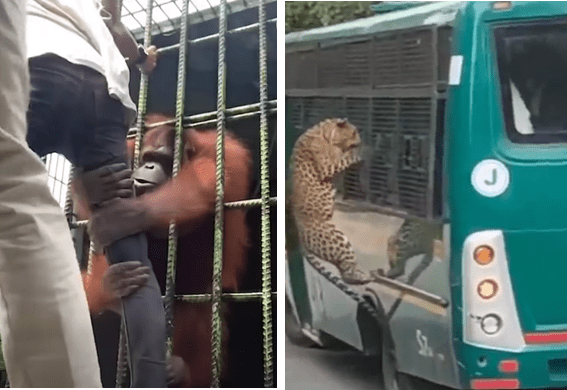
Recently, in the Bannerghatta forest area in Karnataka, a leopard climbed onto a safari jeep that was completely secured with a grill. The leopard attacked a boy inside the jeep by reaching its foreleg through the viewing hole. The incident was captured on video and went viral, as the boy was hospitalized for minor bruises. It’s important to remember that animals often act spontaneously and defensively. As for the safety measures in this case, there does not seem to have been any lapse on the part of the forest department. Even the boy was not at fault. An investigation is probing the cause. Perhaps the animal may have sensed a threat from the tourists and reacted accordingly. As the viewing hole was small, the animal could not enter the jeep.

Ecotourism everywhere has become a menace, disturbing the privacy of the wild animals. The tourists must indeed keep a safe distance from wild animals. More so in the case of stray animals. In one of the safaris, I found myself very close to a tigress. The jeep did not have grills to secure the tourists. In their excitement to capture close-up photographs, tourists often tend to put their heads and hands outside the jeep. Additionally, safari drivers quickly share information with other jeeps via wireless communication. In no minute, all the jeeps parade in the spot to get better scores from their passengers. Tourists comfortably forget that they are disturbing the privacy of the animals. Many instances of attacks by wild animals have been reported from various parts of the country. While wild animals are making headlines, we must also acknowledge the issue of stray dogs.

The behavior of stray animals is often unpredictable. Animals behave instinctively, while humans are rational beings. Neither the animals nor the affected people should be neglected. The grim stories about stray dogs continue. Even as the man-animal conflicts continue, both need a better deal. The revised court order gave some respite for stray dog enthusiasts. But the victims of stray dog attacks are at large. We should not forget that although humans are at the top of the food chain, they cannot live without other living organisms, right from carnivores to street dogs. The Government should take balanced action to protect both human beings and animals, as it is bound by the constitutional obligation to provide a better livelihood to all living beings. 

Lord Ganesha is not for polluting our environment!

‘Ganesh Bappa Maurya!’

The sounds resonate through the sky, capturing the deep faith of the devotees dedicated to the Elephant God. It is a significant moment for them as they bid farewell to their deity. However, we must remember that God does not want us to pollute the soil and water bodies with non-biodegradable substances. From Ahmedabad, an environmental activist says, ‘There is no law enforcement and so no political will to stop POP. While clay is increasingly being used, the progress is slow. Large idols present a significant challenge since they cannot be made from clay. Although immersion ponds are created along riverbanks for this purpose, some people still drop the idols wherever they find it convenient. This situation highlights a troubling reality

In Hyderabad, free clay Ganesha-making camps were organized, and free clay idols were distributed at the Press Club. In Bangalore, people tend to prefer POP idols because they are more affordable than pure clay ones. This allows them to purchase larger POP idols at a reasonable price. Additionally, many believe that POP idols are more visually appealing. Another contributing factor is tradition; older generations often choose to bring home the “fancy” idols they have used in the past. Chennai, which previously had little idol business due to Dravidian culture, is now gradually adopting the idol practices seen in Mumbai. In Chennai, idols were traditionally immersed in the ocean. But no one ic concerned about keeping the ocean clean. They only curse the environmentalists and social workers who want their water bodies to remain cleaner.

POP contains chemicals such as gypsum, sulphur, phosphorus, and magnesium. The dyes used to colour these idols may also contain mercury, cadmium, arsenic, lead, and carbon. Plastic and thermocol accessories are used to decorate these idols. Such materials are not biodegradable, hence are toxic when immersed in water bodies. The revised rules for idol immersion by the Central Pollution Control Board (CPCB) in 2020 stipulate detailed norms for manufacturers, local authorities, and guidelines for idol immersion in water bodies and the sea. As far as possible, low height and eco-friendly idols (made with natural clay, idols stuffed with eco-friendly food materials such as corn, spinach, wheat and vegetable powder), idols decorated with biodegradable, organic colours such as turmeric, chandan and gerua etc., There is no dearth of rules and norms in our country. Though the younger generation is slowly understanding the need to preserve our natural assets, society in general is not mature enough to abide by the law. Both the environment and Lord Ganesha deserve better care and treatment.

Dogs have 5 senses; humans have more!

The stray dog is in the news of late! It has become a controversial subject. A heated debate is currently shaking the social media and the media industry. When an animal is in the news, it goes without saying that Menaka Gandhi or PETA will also be in the news. Whether in Delhi, Tamil Nadu, Karnataka, or Maharashtra, incidents of dogs attacking kids or the elderly have become common. Why are such incidents increasing as days pass on? Who is to blame? On August 11, the Supreme Court issued Suo Motu orders regarding incidents involving stray dogs in Delhi. The court directed the Municipal Corporation of Delhi to relocate these dogs to shelters and pounds within eight weeks of the order. Following this, a three-judge bench reserved its decision on the pleas related to the directive on August 14, amid public outrage over the situation. The court is concerned that the precious human life is in jeopardy. Parents of innocent children who fell victim to the outrage of dog bites and the civil society want effective action. On the contrary, the animal activists are interested in protecting the voiceless animals. The dilemma is to find an effective solution and deliver justice to all. Is providing shelter a feasible solution for the entire country? It appears that even courts do not consider the questions of feasibility and pass orders on knee-jerk reactions. The stray dog enthusiasts also do not seem to take cognizance of the deaths of the kids all over the country.

In the ecological pyramid, humans occupy the top position. Decisions made by man impact flora, fauna, and natural resources. Certainly, stray dogs cannot decide to do birth control, sterilization, or any preventive measures within their limited scope of the 5 senses. It is the rationale of man that can change the situation.  According to the Animal Husbandry Department’s report of November 2023, there are approximately 1.53 crore (15.3 million) stray dogs roaming the streets in India. As Menaka Gandhi says, it is not feasible to house all stray dogs in pounds. However, nothing prevents policymakers from planning a multipronged approach that encompasses all strategies, such as sterilization, isolating ferocious dogs, awareness creation, encouraging private dog homes, etc. The local municipalities must take prompt action. Feeding the stray dogs is not a sin. It is imperative for dog feeders to assume the added responsibility of identifying dogs exhibiting undesirable behaviour and to notify the appropriate authorities for their rehabilitation. Pet owners often invest significant amounts of money in their pet dogs; therefore, it is worth considering why they do not adopt at least one stray dog. It is hoped that sound judgment will prevail among individuals within society.

STOP PRESS: On Aug 22nd, SC has ruled that its Aug 11th Order is paused and a more balanced & pragmatic verdict is given. Pleased to inform that our editorial suggestions are almost similar to the verdict

Plastic hospitals! Plastic medical fraternity!

‘All that glitters is not gold, but plastic’

I am confident that my new proverb sounds clear and loud. I have the right to mention this, as I was discharged from the ICU. My two-night nightmare was not about the tubes that connected me to the digital screens. At least once in a lifetime, any human being, like me, is subject to the medical ordeals invariably followed by the insurance tortures, and I am not an exception. A sudden hospitalization requires you to first go to the emergency ward, then ICU, and then the general ward before you are dumped into a wheelchair to bid farewell with a due date for post-hospitalization follow-up. By that time, you would be exhausted physically, mentally, and monetarily. The purpose of my writing here is not to share my pains or gains. And my ailment was not a big deal for me, but to my shattered family. Conscious, I looked around to see what was happening in ICU. As someone who is environmentally conscious, I was particularly struck by the use of plastic wraps, gloves, syringes, bandages, swabs, and needles, as well as the overwhelming number of disposable wraps for various medical items handled by the staff. And yes, this was in addition to food packages, spoons, plastic straws etc, which are banned in the outside world under the SUP category. This is not the first time I’ve seen an ICU, I must admit that the outlook of hospitals has undergone a significant change. From a single hospital, a substantial amount of disposable waste is generated; consider the impact of thousands of hospitals in every city! As I thought a plastic audit was needed, a nurse came to assist in my daily routines, put on gloves, and in a few minutes, dumped it in the dustbin. Perhaps she might have dumped about 100 pairs of gloves on that day for patients. As usual, I am reminded of the golden era of the 20th century when hospitals were filled with stainless steel utensils, scissors, and knives, in the clinics and operation theatres. Where have they vanished now? Even 10 years back, the ICUs were not like this. It is not that we do not want technology advancements? But are we progressing sustainably? In the outside world, we are vociferous when someone uses a PET bottle. Here in a hospital, are we following SUP norms? Are the medical fraternity aware of how much plastic they dispose of without any sensitization? It is important to recognize that infectious medical waste requires careful disposal, often necessitating incineration in specific circumstances. In addition to managing these unavoidable waste types, conducting a plastic waste audit in hospitals can be highly advantageous. This approach helps to minimize the use of disposable items while maximizing the use of reusable alternatives, ultimately contributing to more sustainable waste management practices.

The magic of changing 30 to 3!

‘It is so easy, just remove 0, what is a great magic in it?’

Yes, I can hear some whispers. Once you’ve read this editorial, you will agree that this truly is magic. For the Karnataka Tank Conservation and Development Authority (KTCDA),it is, of course, a simple trick, not a big magic. For the common man, it is a shock, when they read in newspapers that the mandatory buffer area, which was originally 30 meters from the waterbodies and canals, may become 3 meters at the stroke of a pen. According to the NGT, the buffer zone for lakes is 75 meters. For lakes or tanks, it was further reduced to 30 meters for lakes by the Hon’ble Supreme Court in 2019. The present proposal to reduce the buffer area further.

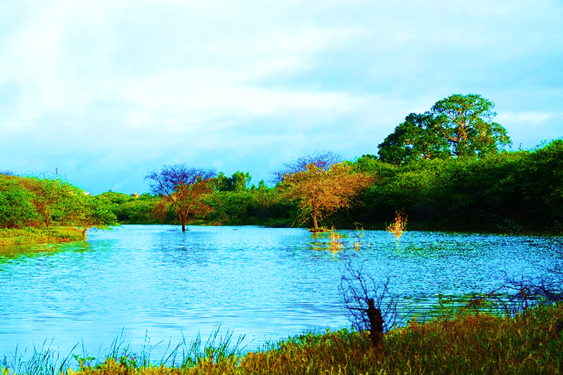
Once known as Lake City, Bengaluru has been a witness to many onslaughts by the real estate mafia, who have been instrumental in the disappearance of 1000s of stormwater drains (SWDs) and canals (kaluve in Kannada). Most of the Rajakaluve (bigger canals) have been reduced to sewage drains. Majestic Bus Stand is situated on Dharmambudhi Lake. Many lakes have given way to stadiums, sports complexes, and residential layouts to date. A handful of lakes left out are also under threat. Instead of saving them, the present proposal is going to be a slow poison, if implemented. Most of the canals are there only on maps, not in reality.  Understanding the rationale behind such move is difficult. According to some viewpoints, smaller lakes require a larger buffer since the vulnerability is high. Buffer areas must not be used for roads or construction purposes but left as it is for ecosystem development.   It has also been suggested that the modifications are intended solely for the development of public utilities. However, proponents of this reduction must clearly explain how they will maintain ecological balance and ensure that the ‘reclaimed’ buffer areas do not become targets for the real estate mafia. KTCDA should conduct an Environmental Impact Assessment (EIA) by an expert panel and then enforce the proposal as per their advice.

So, by this time, you might have realized the secret of the magic.

Tiger Zinda Hai!

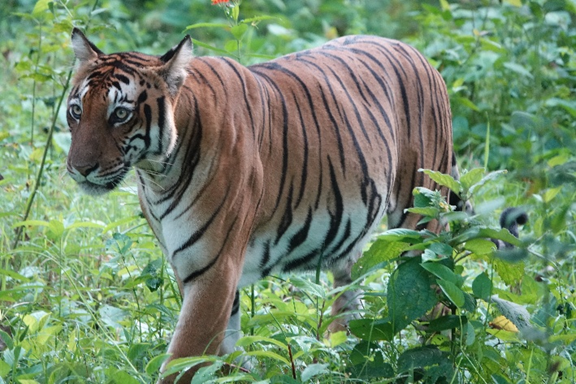
International Tiger Day (also known as Global Tiger Day) is celebrated every year on 29 July to raise awareness about tiger conservation and the urgent need to preserve their natural habitats. The day highlights ongoing threats such as poaching, habitat loss, and human-animal conflict that have led to a sharp decline in the global tiger population. Approximately 5,574 wild tigers remain worldwide, based on the Global Tiger Forum’s 2023 estimate, out of which India proudly houses 3,682 wild tigers. There are tigers in captivity also. India’s tiger population represents 75% of the world’s total, yet they occupy only 18% of the global land available for their survival. In many areas, humans are sharing the land with animals, which increases the likelihood of conflicts between them. While we Indians may take pride in having the largest tiger population, it is concerning that the forest area housing them is diminishing. During a recent workshop for children, I asked the participants if they had ever seen a tiger. Almost all of them nodded in agreement. Most had seen tigers in circuses and zoos, or through pictures and films. While encountering a tiger in its natural habitat is uncommon, it is clear that their population is declining. Ecotourism has brought both excitement and challenges to the world of wildlife. Unfortunately, the surge in crowded safaris and the exuberance of tourists can intrude on the natural privacy that these majestic animals need. During one safari, a tigress was observed moving casually despite the presence of numerous jeeps nearby. The jeep drivers communicated with each other to inform their peers about tiger sightings, leading to a situation where almost 100 jeeps surrounded the animal. Despite the activity around her, the tigress fell asleep, showing no signs of aggression towards the surrounding vehicles and their occupants. As the world celebrates International Tiger Day, it is essential to ensure that these animals are effectively protected. The maximum lifespan of a tiger is 20 years, and if we ignore the conservation efforts for a few year, we are sure to downgrade the animal to the ‘critically endangered’ category. Then tiger “nahi zinda hoga”

Lockdown lessons unlearned!

‘Bhool gaya sub kuch, yaad nahi ab kuch’

I am reminded of the above lines from a song in the popular old Hindi film Julie. Yes, we have forgotten everything we learnt. COVID-19 was a global crisis that demonstrated how nature would beh

ave if we do not take corrective steps. The lockdown call alerted every nation that immediate action was needed to avoid a point of no return. Nature also showed us how the world would appear if we were locked inside homes for a fortnight. The roads were empty, and the pollution index slipped to low levels at places like Delhi. People were inside their homes but breathed fresh air, as there was no human activity outside. The coronavirus was discovered in Wuhan, China, in November 2019, and was named COVID‐19. The disease is a class of epidemics with human‐to‐human transmission caused by severe acute respiratory syndrome coronavirus 2 (SARS‐CoV‐2). Later, the medical fraternity discovered several mutated variants. By 2022, the world reported 551 million cases in 194 countries, out of which about 6 million fatalities resulted.  While the exact animal source remains unconfirmed, evidence suggests bats as the natural reservoir and potentially an intermediary animal host, such as a pangolin, civet cat, or raccoon dog, as the direct source of transmission to humans. Primarily, the man-animal conflict is a major concern in conservation. When nature is disturbed, aberrations in the food habits of wildlife tend to happen. Coupled with this, habitat destruction also leads to changes in the animals’ behaviours. When it was discovered that the pangolins, bats, and Civet cats were the carriers of the COVID-19 virus, it was shocking because these wild animals have been in existence for millions of years in the evolutionary tree. Suddenly, how do these animals become the carriers?

One more interesting thing that happened during the lockdown period was that many wild animals, like leopards and tigers, roamed freely in towns. During COVID, many on social media expressed their concern for protecting wildlife and our forests. Simultaneously, people breathed clean air. Many wondered whether this lockdown period is a cautionary bell to human beings to mend their ways and lead an eco-friendly lifestyle. That’s all. It appears that we do not learn from mistakes.

“Learn, Unlearn, relearn” seems to be the maxim we follow, I guess.