
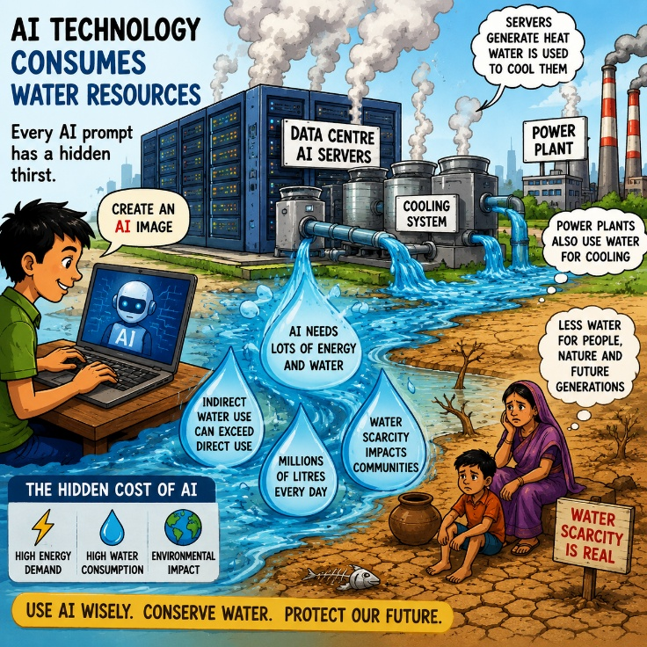
A recent social media post in our environmental group drew my attention. The guy who posted this in the WhatsApp group was a bit agitated. For a while, I felt that he was a not short of an exaggerator. But a second thought made me think that there must be some truth that needs to be explored. I had no answer or clarity for the problem stated. The only way to understand the gravity of the issue is to search online. I decided to seek clarification through an AI route for this AI-related problem. I searched a lot. I had posed many questions to the AI browser. I had a convincing reply. But as AI says always, ‘AI need not be correct always’ Yes, AI does consume significant amounts of water. I systems run in large data centres filled with servers. These servers generate enormous heat and need cooling. Water is often used in cooling systems. AI requires huge amounts of electricity. Many power plants (especially thermal and nuclear plants) also use water for cooling. This indirect water use can exceed the water used inside the data centre itself. In an earlier editorial, (South Express 10.1.2026, I expressed concern about the high level of energy consumption in digital greetings. Though they are greener than paper, excessive images and videos quietly burn energy in remote data centres. In today’s editorial, I wish to bring to the kind attention of all readers about the water consumed on using AI technology. This does not mean that I am against technology but it is essential that we are aware of the issues involved. For that matter, history has showed how every innovation brings with it some concerns. We have seen how the fossil fuel is exploited in the last few decades and is now witnessing the symptoms of depleting natural resources. Similarly we all have witnessed the scarcity caused due to lavish use of water or for that matter any other natural resources. Here is the key role of Sustainable development. Hope that the planners and users of latest technology will take into account, all these concerns and work for a balanced growth.

