
Recently, I came across a social media post that made me think: “What is the expiry date of water?” At first, this seemed like a simple question, but it raised interesting ideas about how we see water. Living in a busy city, I notice that our access to water affects how we think about it. For example, when I pour tap water into a glass and leave it out, I often feel it is “stale” by the next day.
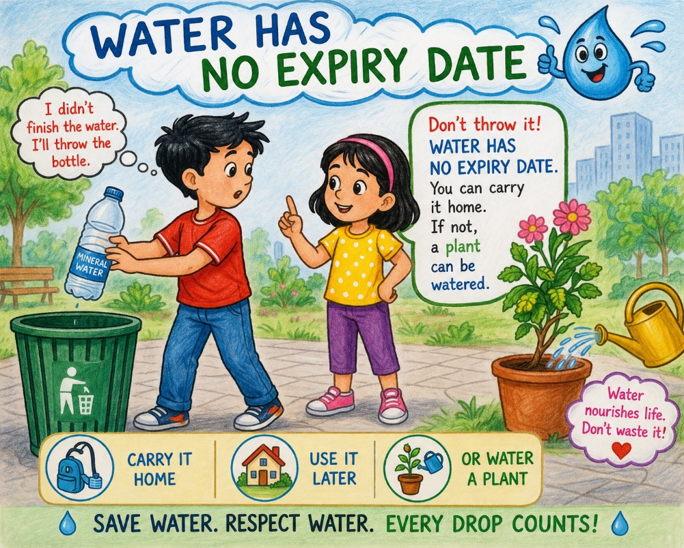
This belief feels automatic, as if water should have an expiry date. In other places, like villages where water is only delivered every few days, people treat water with great respect. For them, water can stay fresh for a week. This shows how those who depend on it cherish it, using it wisely in situations of scarcity. At events like weddings, a new bottle of Bisleri is often seen as better than one that has been sitting around for a while. In just minutes, people decide that the older bottle is no longer useful. Here, the expiry clock ticks quickly. In a recent mass marriage event in rural Bangalore, my volunteering team engaged in collecting leftover water from half-empty Bisleri bottles and poured them into a bucket. Later on, we used the water for plants in the nearby garden. In the desert, every drop of water is precious. While hiking under the hot sun, the water you carry is life-giving. Each drop remains fresh until you reach your next source, with its value depending on your journey, not a set time. Natural bodies of water, like lakes and ponds, can stay fresh for years, enduring droughts until the next rainy season. They remind us that the value of water is linked to the environment and our respect for nature. Water from borewells can be hundreds or thousands of years old, and it is often seen as very safe and pure. This highlights that what we easily discard in one situation is highly valued in another. All this makes it clear that water doesn’t have a true expiry date. How fresh we think water is depends on our mindset, environment, and its availability. When water flows freely, we may take it for granted. During times of scarcity, we appreciate its true worth. We must use this valuable resource wisely, with gratitude. Otherwise, our careless actions could leave future generations in need. I share this not just for reflection but as a call to action. Let’s value water and encourage conservation. Your actions today can make a difference tomorrow. (The story is based on a social media forward.)

